With Sony's PS3 store set to close in 2027, preservationists are mobilizing to archive game data, urging community support.
⚡ Dev Impact
Developers involved with emulation or game preservation should focus on contributing to projects like RPCS3. This involves testing builds, identifying bugs, and helping to archive game assets and system software. Understanding the PS3's architecture and the challenges of emulation is key to ensuring the longevity of its digital library.
JavaScript's new Temporal API addresses the limitations of the built-in Date object and Moment.js. Learn how to migrate.
⚡ Dev Impact
Developers must update date parsing, formatting, and arithmetic logic. Libraries like Moment.js will be deprecated. Temporal offers immutable objects, explicit time zone handling, and distinct types for dates, times, and instants, reducing common bugs. Start refactoring critical date logic to Temporal now.
Understand the fundamental differences between static UI forms and dynamic rule-engine forms in React and Next.js.
⚡ Dev Impact
Developers should recognize that forms in React/Next.js can be either static UI elements or dynamic rule engines. Static forms are suitable for simple inputs, while rule engines offer scalability for complex, adaptive workflows. Consider abstracting form logic when requirements involve significant conditional display or validation changes.
A new CSS property, `corner-shape`, finally offers native support for beveled, scooped, and squircle corners, ending years of complex workarounds.
⚡ Dev Impact
Developers can now declare beveled, scooped, and squircle corners directly in CSS using the `corner-shape` property, eliminating the need for `clip-path` or SVG workarounds. This simplifies UI development, improves performance, and allows for more sophisticated, branded aesthetics with less effort.
The proliferation of digital tools often leads to complexity, not efficiency. True value lies in integrating existing functionalities into familiar workflows.
⚡ Dev Impact
Developers must shift focus from building isolated, feature-rich applications to creating tools that integrate seamlessly with existing ecosystems. Prioritize API-first design, robust webhook support, and consider developing plugins or extensions for popular platforms. Rethink your product's role within broader user workflows rather than just its standalone capabilities.
The new Popover API transforms UI elements like tooltips and modals, shifting complexity from JavaScript to the browser itself.
⚡ Dev Impact
Developers can now implement tooltips, menus, and modals with significantly less JavaScript. The Popover API handles visibility, focus management, and Escape key dismissal natively. Start by replacing custom tooltip and modal implementations with the <code>popover</code> and <code>popovertarget</code> attributes.
A new tool allows voice commands for GitHub Copilot, potentially changing how developers interact with AI.
⚡ Dev Impact
Developers can now interact with GitHub Copilot using voice commands, potentially reducing context switching and improving workflow efficiency. This tool allows for dictating code, asking for explanations, and requesting refactors through spoken language. Developers should explore Vox to see if voice-based interaction can speed up their coding tasks and improve accessibility.
Raycast's new tool, Glaze, allows users to create custom Mac applications using natural language prompts, democratizing app development.
⚡ Dev Impact
Developers can leverage Glaze to rapidly prototype ideas or build simple internal tools without writing boilerplate code. Expect to see more niche, user-generated Mac applications. While Glaze abstracts away much of the complexity, understanding Swift and SwiftUI will still be crucial for advanced customization or debugging AI-generated code.
The telecom giant is migrating its virtual machines away from VMware as a lawsuit over perpetual license support escalates.
⚡ Dev Impact
Developers relying on VMware infrastructure will need to adapt to potential platform changes. If T-Mobile migrates to KVM or Hyper-V, expect shifts in management tools and potentially different performance characteristics. For those building applications, ensure your deployment pipelines are flexible enough to handle different hypervisor environments. Monitor T-Mobile's chosen platform for any new APIs or management interfaces that emerge.
The seventh cycle of the Women in Tech Accelerator program selects 11 promising Nigerian startups for intensive support.
⚡ Dev Impact
Developers in these 11 startups will gain enhanced skills in scaling technology solutions, focusing on product-market fit and user acquisition strategies. They will learn to build robust platforms capable of handling growth and integrate with emerging fintech, edtech, and healthtech ecosystems. Expect to see more agile development cycles and a focus on data-driven product iteration.
New BI platform feature allows users to trigger external actions directly from their dashboards.
⚡ Dev Impact
Developers can now embed custom scripts and API integrations directly into BI dashboards, enabling automated workflows triggered by data events. This reduces the need for separate automation platforms and allows for tighter coupling between data insights and operational tasks. Building these actions will likely involve understanding Basedash's specific integration patterns and potentially developing custom connectors.
A new pilot in the Democratic Republic of Congo aims to test stablecoin-based payments for M-Pesa users, integrating Visa and local fintech Onafriq.
⚡ Dev Impact
Developers should monitor the APIs and SDKs released by Visa and Onafriq as this pilot progresses. Understanding how stablecoin transactions are integrated into existing M-Pesa wallets and how they interact with traditional payment gateways will be key for future integrations. Expect potential new tools for cross-border payment processing and wallet development.
Africa produces skilled youth, but education, industry, and finance disconnects hinder their digital economy participation.
⚡ Dev Impact
Developers need to be aware that curricula often lag behind industry needs. Focus on acquiring practical, in-demand skills through bootcamps, online courses, and personal projects that align with current AI and digital economy trends. Seek out internships and collaborative projects to gain real-world experience that educational institutions may not provide.
Treating accessibility as an operational capability, not an afterthought, is key to faster, more sustainable development.
⚡ Dev Impact
Developers must shift from treating accessibility as a post-development fix to integrating semantic HTML, ARIA, and keyboard navigation from the outset. Embrace accessibility checks in code reviews and CI/CD pipelines. Leverage accessible component libraries and design systems to ensure foundational elements are inclusive by default.
Two French fintech leaders, Qonto and Pennylane, are carving out distinct but overlapping territories in SME finance, sparking both competition and potential collaboration.
⚡ Dev Impact
Developers can leverage the APIs of both Qonto and Pennylane to build integrated financial workflows for SMEs. Expect to see more third-party tools that connect banking transactions with accounting entries, reducing manual reconciliation and improving data accuracy. Consider building applications that automate invoicing based on Qonto payment data or expense categorization within Pennylane.
Leverage Workable's public endpoint to programmatically access job listings and descriptions without authentication.
⚡ Dev Impact
Developers can now programmatically access Workable job listings without authentication. Implement logic to query the public jobs endpoint, fetch full descriptions via a secondary call, and normalize location and remote fields for consistent display in your applications. This integration offers a standardized way to pull job data that can be compared to Ashby, Greenhouse, and Lever APIs.
The latest release of the container engine focuses on hardening its security posture and improving the developer workflow with a stable API.
⚡ Dev Impact
Developers gain a more stable API for building integrations, reducing breaking changes. Enhanced rootless security allows for safer development on shared systems. Improved Docker and Compose compatibility simplifies migration and existing project use.
New platform aims to bridge the gap between social media virality and e-commerce revenue.
⚡ Dev Impact
Developers can integrate Fypro's APIs to embed shoppable links directly into their TikTok content, potentially creating custom storefronts or product discovery widgets. This requires understanding Fypro's data structures for products and orders, and handling webhook events for status updates. Developers should benchmark Fypro's conversion rates against existing e-commerce solutions to validate its effectiveness.
An open-source project leverages I-JEPA for SVG generation, offering a new approach beyond traditional methods like Flux or Stable Diffusion.
⚡ Dev Impact
Developers can explore the OpenJepa GitHub repository to understand how I-JEPA is being adapted for SVG generation. The MIT license allows for integration into new projects. Experimentation with dataset expansion and fine-tuning I-JEPA for vector output is encouraged.
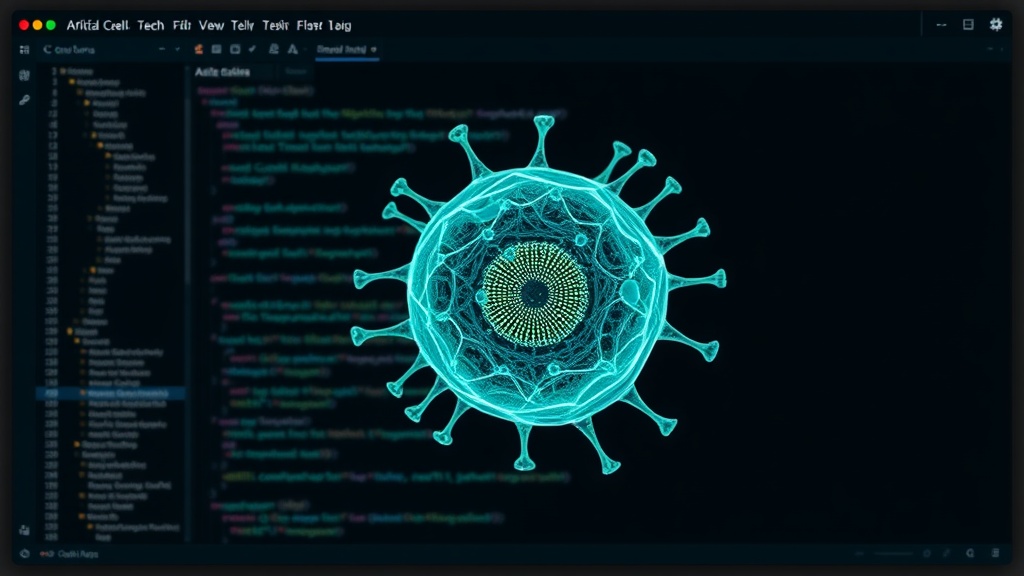
Researchers engineer a synthetic cell capable of self-replication for several generations, a key step toward creating truly autonomous artificial life.
⚡ Dev Impact
Developers can explore building modular synthetic biology components that interface with these artificial cell systems. This could involve designing DNA constructs for specific protein expression or developing new lipid formulations for membrane stability. Understanding the precise chemical inputs required for sustained division will be key to engineering custom replication protocols.
RIFT Digest
Get daily tech insights, AI audit breakdowns, and curated tech grant alerts direct to your inbox.
No spam. Unsubscribe at any time. Powered by Beehiiv.