
Beyond Insights: From Data to Action
Business intelligence tools have long focused on providing insights. They surface trends, highlight anomalies, and offer dashboards that tell the story of your data. But what if your BI tool could do more than just tell the story? What if it could help you act on it? Basedash is introducing a new feature called Basedash Actions, aiming to bridge the gap between data analysis and operational execution.
Traditionally, extracting actionable insights from a BI tool meant a multi-step process. You'd identify an issue or opportunity in your dashboard, then manually switch to another application or system to perform a task – perhaps sending an email, updating a CRM record, or triggering an API call. This manual handoff is not only time-consuming but also introduces friction and potential errors. Basedash Actions aims to eliminate this friction by allowing users to initiate these external tasks directly from within their BI environment.
Think of it less like a static report and more like a smart control panel. You're not just looking at customer churn data; you can, for instance, click a button on that churn report to automatically send a personalized re-engagement email to a specific at-risk customer. This capability transforms a passive viewing experience into an active workflow.
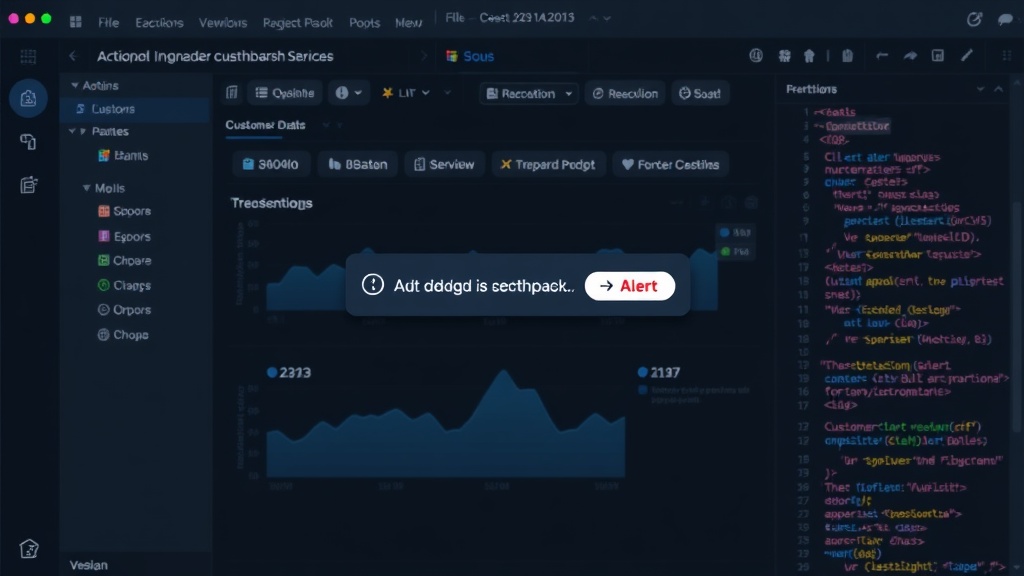
How Basedash Actions Work
The core concept behind Basedash Actions is the integration of external services and custom scripts directly into the BI dashboard interface. Users can configure these actions to be triggered by specific data points, events, or manual user interaction. This means that when a certain metric crosses a predefined threshold, or when a user clicks a button next to a specific record, a pre-configured action can execute.
The implementation involves defining triggers and corresponding actions. A trigger might be a user clicking a button on a table row representing a customer with a low Net Promoter Score (NPS). The associated action could then be a sequence of operations: updating the customer's status in a CRM to 'At Risk,' sending a Slack notification to the account manager, and logging the interaction in a separate audit trail table. This level of automation within a BI context is a significant step towards creating more dynamic and responsive business operations.
For developers and technical users, this opens up possibilities for building custom workflows tied directly to their data. Instead of relying on complex ETL pipelines or separate automation platforms for every data-driven task, they can leverage Basedash Actions to encapsulate these operations. This could involve integrating with popular SaaS tools via their APIs, running custom Python scripts for data manipulation or analysis, or orchestrating internal microservices.
Use Cases and Implications
The potential applications for Basedash Actions are broad. Consider a sales team monitoring their pipeline. If a deal status in their BI dashboard is flagged as 'Stalled' for over two weeks, an action could automatically send a reminder to the assigned sales rep or even escalate the deal to a manager. For support teams, an alert triggered by a spike in negative customer feedback could initiate an automated outreach to affected customers or flag urgent tickets for immediate review.
In operations, if inventory levels for a particular product dip below a reorder point displayed on a dashboard, an action could automatically generate a draft purchase order in an ERP system. For marketing, a campaign performance dashboard could include buttons to pause underperforming ads or allocate more budget to high-performing ones directly from the interface.
What remains to be seen is the breadth of integrations Basedash will offer out-of-the-box versus relying on custom API connections. The true power will lie in how seamlessly users can connect to their existing tool stacks without requiring extensive development effort for each new action. The ability to define complex, multi-step actions that involve conditional logic and data transformation will also be key to its adoption by sophisticated teams.
The Shift Towards Actionable BI
Basedash Actions represent a growing trend in the BI and data analytics space: the move from purely analytical tools to platforms that facilitate operational execution. This shift acknowledges that the ultimate value of data lies not just in understanding it, but in using it to drive tangible business outcomes. By embedding actionability directly into the data consumption layer, companies can reduce the time between insight and impact, fostering a more agile and data-driven culture.
This approach democratizes action. Instead of requiring specialized roles to build complex automation, business users can potentially trigger pre-configured actions themselves, provided the underlying logic is well-defined and governed. This could empower front-line employees to respond more effectively to real-time data, whether it's a sales rep reaching out to a hot lead or a support agent proactively addressing a customer issue.
The success of Basedash Actions will hinge on several factors: the ease of configuration, the robustness of the integration framework, and the security implications of allowing direct action execution from a BI tool. If executed well, it could redefine what users expect from their business intelligence platforms, moving them from passive observers to active participants in their data's narrative.