
Glaze by Raycast: AI-Powered Mac App Creation
Raycast, a popular productivity hub for macOS, has introduced Glaze, a new tool designed to let users build their own Mac applications through conversational AI. This move signals a significant shift towards democratizing software development, potentially enabling individuals with no traditional coding experience to create functional applications.
Glaze integrates directly into the Raycast ecosystem. Users interact with Glaze via natural language prompts, describing the functionality they want their application to have. The AI then interprets these requests and generates the underlying code and structure for a new Mac app. This approach abstracts away much of the complexity typically associated with software engineering, such as syntax, build tools, and framework management.
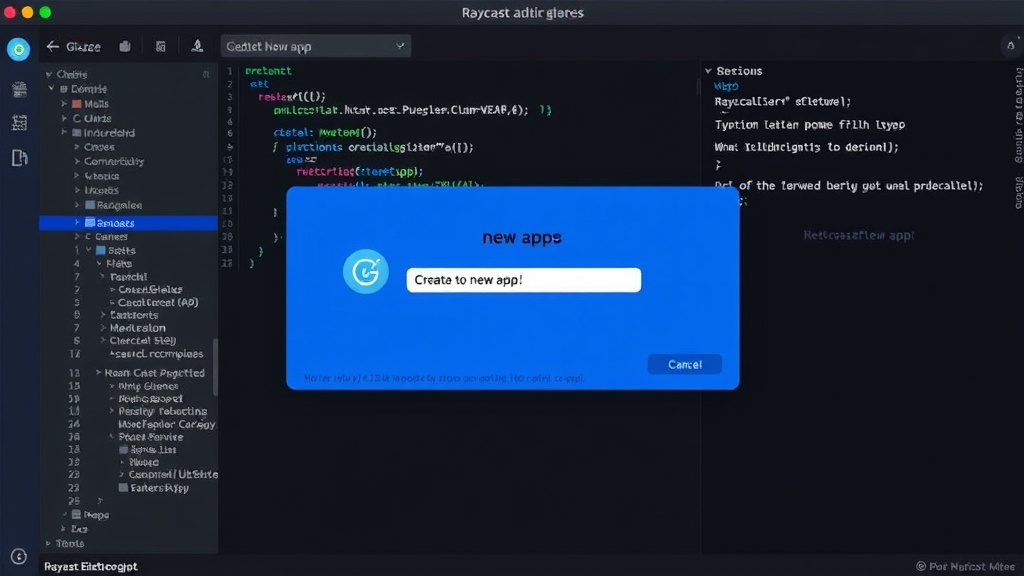
How Glaze Works
The core of Glaze lies in its ability to translate human intent into executable code. Users can specify features, user interface elements, and desired behaviors. For instance, a user might ask Glaze to create an app that fetches weather data for a specific city, displays it in a clean interface, and allows the user to switch between different units (Celsius/Fahrenheit). Glaze would then handle generating the necessary Swift code, potentially leveraging SwiftUI for the UI, and integrating with relevant APIs for data retrieval.
This process is iterative. Users can refine their requests, ask for modifications, or add new features to the app as they develop it with Glaze. The AI acts as a co-pilot, translating these iterative changes into code updates. This conversational development paradigm is a significant departure from traditional coding, where changes often require direct manipulation of code files and a deep understanding of programming logic.
The output of Glaze is a native macOS application. This means the generated apps are not just scripts or web wrappers; they are compiled binaries that can be installed and run like any other application on a Mac. This native capability ensures performance and integration with the macOS operating system.
Democratizing App Development
The implications of Glaze are far-reaching. For years, the barrier to entry for app development has been a significant hurdle. While low-code and no-code platforms have made strides, they often come with limitations in customization and native integration. Glaze, by contrast, aims to provide a more powerful, yet accessible, pathway to creating bespoke applications.
Think of Glaze less like a drag-and-drop website builder and more like having an incredibly fast, albeit literal, junior developer on demand. You tell it what you want in plain English, and it builds it. If you want to tweak a button’s color or add a new data source, you just ask. This drastically lowers the cognitive load for aspiring developers and empowers users to build tools tailored precisely to their workflows.
This could lead to a proliferation of highly specialized, niche applications created by individuals who understand a particular problem domain but lack formal programming training. For small businesses, researchers, or even individual power users, the ability to quickly spin up a custom tool without hiring a developer or learning to code themselves is a compelling proposition.
Potential and Limitations
While Glaze represents a powerful new paradigm, it's important to consider its potential limitations. The complexity of applications that can be built will likely be constrained by the AI's understanding and the underlying frameworks it utilizes. Highly complex applications requiring intricate logic, advanced graphics, or deep system-level integrations might still necessitate traditional development expertise.
Furthermore, the maintainability and scalability of AI-generated code are areas that will need to be closely watched. While Glaze aims to produce clean, native applications, the nuances of long-term software maintenance, performance optimization, and security patching might present challenges for AI-generated codebases, especially as applications grow in scope.
The success of Glaze will also depend on its ability to evolve with the macOS platform and Apple's developer tools. As Apple introduces new APIs, frameworks, and design patterns, Glaze will need to be updated to incorporate these changes to ensure the apps it generates remain current and compatible.
The Future of Development with Glaze
Raycast's Glaze is more than just a new feature; it's a potential harbinger of a new era in software creation. By bridging the gap between user intent and executable code through AI, Glaze empowers a broader audience to become creators. If successful, it could lead to a significant increase in the number of custom applications built for the Mac ecosystem, each precisely tailored to the needs of its creator. The question remains: what novel applications will emerge from this newfound accessibility, and how will they reshape our digital workflows?