
Hardware•Jul 23, 08:55 AM
Wireless Coexistence Testing Crucial for Medical Device Safety and Compliance
Testing how medical devices perform amidst real-world wireless interference is vital for patient safety and regulatory approval.
Share:

Five shifts. Five minutes. No noise.
No spam. Unsubscribe anytime. Powered by Beehiiv.

New physics-guided framework creates efficient liquid cooling channels for high-density chip packages, addressing critical thermal challenges.

New research demonstrates a 2.7x speedup in LLM training by mitigating communication stalls with ferroelectric tuning.
OpenAI's custom chip, Nvidia's potential Hugging Face acquisition, and Alibaba's new model signal shifts in AI cost and control.
Testing how medical devices perform amidst real-world wireless interference is vital for patient safety and regulatory approval.
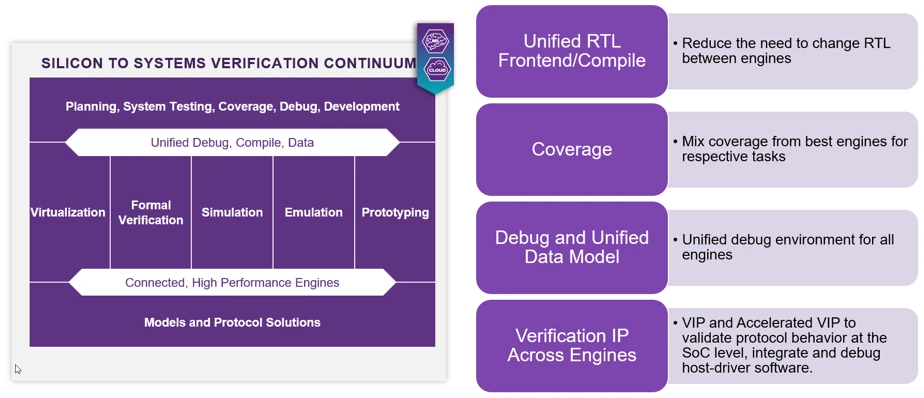
After last year's focus on future verification trends, DAC 2026 shifts to the hardware solutions enabling them.

AI-driven tools can now handle the tedious aspects of behavioral model creation, allowing engineers to focus on higher-level design and verification.

A developer has successfully enabled the Fairphone 6's wide camera sensor on Linux, opening new possibilities for modularity and custom OS development.

Framework's CEO cites significant LPCAMM2 cost increases, forcing price adjustments on existing 32GB and 64GB memory modules.

Nvidia's DGX Spark aims to bring enterprise-grade AI performance to individual developers, blurring the lines between workstation and server.
Mingxin FX100's 11.25 GB/s bandwidth on a single 100GbE port removes network bottlenecks for LLM KV Cache loading.
%22%20%2F%3E%0A%20%20%3C%2Fsvg%3E)
As AI booms, the secondary market for high-end graphics processing units is opaque, leaving buyers and sellers guessing.

Intel secures its first foundry customer for the Intel 4 process, fabricating Fortinet's next-gen security processor.
%22%20%2F%3E%0A%20%20%3C%2Fsvg%3E)
The environmental activist highlights the unchecked impact of AI data centers on local resources and communities.