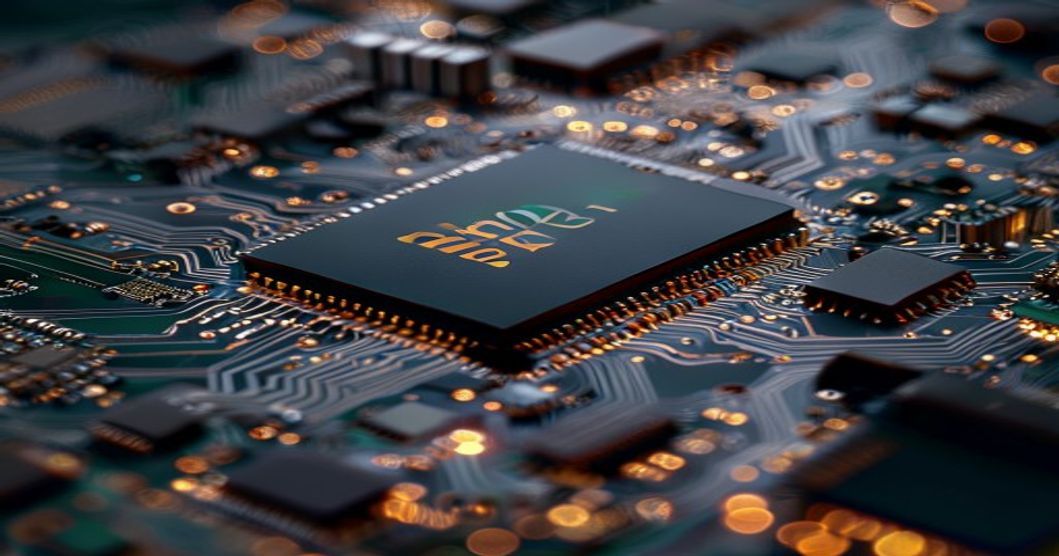
The Rise of the AI Workstation
For years, serious AI development and training meant access to powerful, often shared, server clusters. Developers wrestled with queue times, resource contention, and the overhead of managing remote infrastructure. Nvidia's DGX Spark, however, signals a shift. It's not just another GPU, but a fully integrated, purpose-built AI workstation designed to put unprecedented compute power directly into the hands of individual developers. This move aims to accelerate the AI development lifecycle by removing the traditional bottlenecks associated with shared resources.
The DGX Spark is designed as a desktop unit, a stark contrast to the rack-mounted servers typically associated with high-performance AI. This physical form factor implies a focus on single-user productivity, bringing the power of Nvidia's enterprise-grade AI hardware and software stack to a developer's desk. The implications are significant: faster iteration cycles, more complex model experimentation, and the potential for developers to tackle larger problems without waiting for cluster availability.
At its core, the DGX Spark leverages Nvidia's Hopper architecture, featuring multiple H100 GPUs. This hardware foundation is crucial. The H100 GPUs are not consumer-grade cards; they are designed for massive parallel processing, essential for training large neural networks and running complex inference tasks. The inclusion of multiple H100s in a single workstation means that a developer can potentially train models that previously would have required significant time on a distributed system.
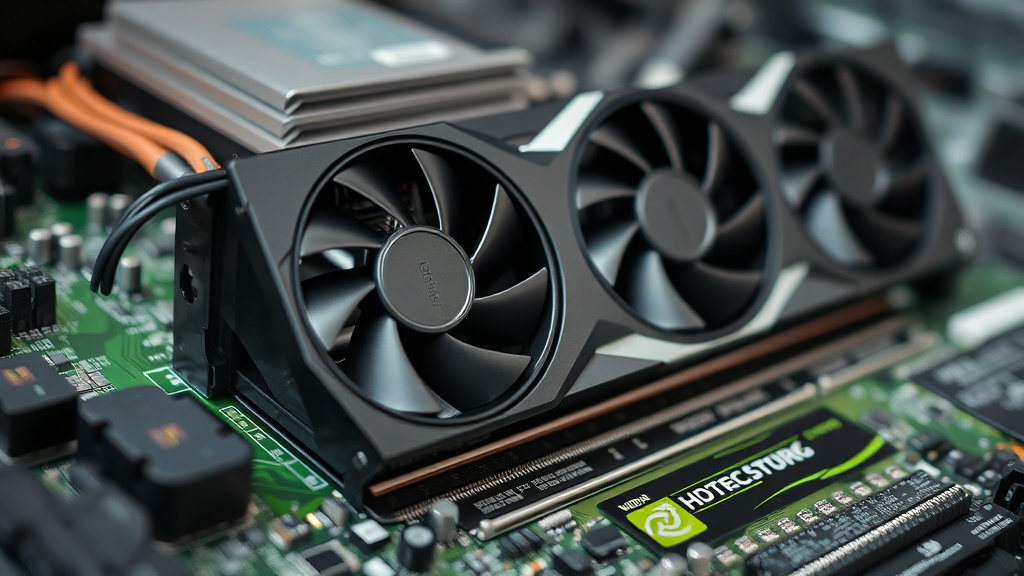
Integrated Software and Hardware Ecosystem
Nvidia's strategy with DGX Spark goes beyond just hardware. The system comes pre-loaded with the Nvidia AI Enterprise software suite. This is not an afterthought; it's a critical component that ensures the hardware and software work in concert. This suite includes optimized AI frameworks, libraries, and tools, such as CUDA, cuDNN, TensorRT, and various data science libraries. For developers, this means a significantly reduced setup and configuration burden. Instead of spending days or weeks installing and optimizing dependencies, they can theoretically boot up the DGX Spark and start developing immediately.
The integration of these software components is key to unlocking the full potential of the H100 GPUs. Frameworks are fine-tuned to leverage the specific tensor cores and memory bandwidth of the Hopper architecture. Tools like TensorRT are designed to optimize trained models for inference, making them faster and more efficient. This holistic approach is what differentiates a DGX system from simply buying individual GPUs and attempting to build a similar environment from scratch. It’s akin to buying a high-performance race car that’s already tuned and ready for the track, rather than buying the engine, chassis, and wheels separately and hoping they work well together.
The DGX Spark also implies a commitment to support. Enterprise-grade hardware typically comes with enterprise-level support, which can be invaluable for professional developers facing critical deadlines. This support structure, often including access to Nvidia engineers, can help resolve complex issues quickly, minimizing downtime.
Performance Benchmarks and Use Cases
While specific benchmarks for the DGX Spark as a daily driver are still emerging, the underlying H100 GPUs offer a glimpse into its capabilities. H100s have demonstrated significant speedups in training large language models (LLMs) and other deep learning tasks compared to previous generations. For a developer working on LLMs, having multiple H100s locally means being able to fine-tune models, experiment with different architectures, and test inference performance without relying on cloud providers or internal clusters. This immediacy is a game-changer for rapid prototyping and research.
Consider the typical workflow for developing a new AI model. It often involves cycles of data preparation, model training, evaluation, and refinement. Each step can be computationally intensive. If training a single epoch takes hours on a less powerful machine, or requires queuing on a shared cluster, the overall development time can stretch into weeks or months. With the DGX Spark, these same training runs could potentially be completed in minutes or hours, dramatically accelerating the feedback loop. This allows developers to test more ideas, explore more hyperparameters, and ultimately build better models faster.
Beyond training, the DGX Spark is also well-suited for demanding inference workloads. As AI models become more complex, deploying them efficiently for real-time applications requires significant computational power. Running inference locally on a DGX Spark allows developers to test and optimize their models under realistic load conditions, ensuring they meet performance targets before deployment.
The Future of AI Development Workstations
Nvidia's DGX Spark represents a significant step in democratizing high-performance AI computing. By bringing server-class power to the workstation form factor, Nvidia is empowering individual developers and small teams to operate with the kind of resources previously only available to large organizations with dedicated infrastructure. This shift could lead to a more distributed and innovative AI research landscape, where brilliant ideas are no longer bottlenecked by access to compute.
However, the question remains: will this model become the standard? The upfront cost of such a workstation is likely substantial, placing it out of reach for many individual hobbyists or developers at early-stage startups. Yet, for established companies and professional AI teams, the benefits of speed, control, and dedicated resources may well outweigh the investment. The true impact will be seen in how quickly developers can adapt their workflows and leverage this unprecedented local power to push the boundaries of what's possible in AI.
The DGX Spark blurs the lines between a developer workstation and a dedicated AI training server. It signifies a move towards making cutting-edge AI development tools more accessible, potentially fostering a new wave of AI innovation driven by individuals and smaller, agile teams.