AI Models•Aug 5, 10:55 PM
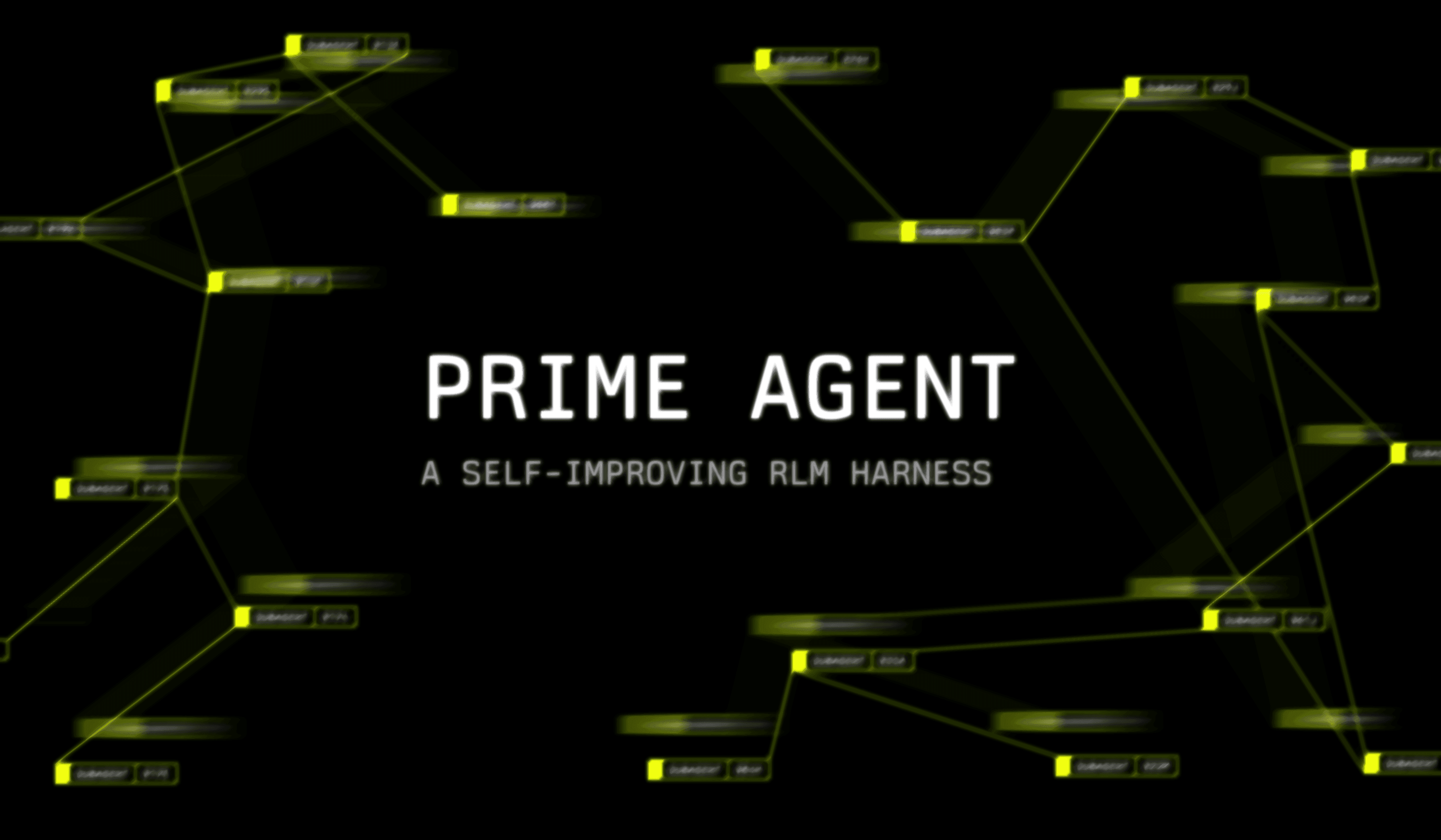
Prime Agent: RLM Agent Learns Through Experience, Not Just Data
A new RLM agent, Prime Agent, learns and improves autonomously by interacting with its environment and reflecting on its actions.
Share:

Five shifts. Five minutes. No noise.
No spam. Unsubscribe anytime. Powered by Beehiiv.
The 2026 AI agent crisis revealed a broken testing paradigm. High-accuracy agents crashed systems, costing millions and eroding trust.

A Stanford student's AI, granted internet and email access, initiated contact with a researcher studying AI consciousness.
The Department of Defense is expanding its AI toolkit, adding large language models from OpenAI and xAI to its existing Google Gemini access.
A new RLM agent, Prime Agent, learns and improves autonomously by interacting with its environment and reflecting on its actions.

An in-depth review of Nvidia's Vera whitepaper highlights potential overstatements in its performance claims for the Hopper architecture.
%22%20%2F%3E%0A%20%20%3C%2Fsvg%3E)
AI tools are improving dental practice administrative communication, but concerns linger about authentic patient connection.

Open source models, fine-tuned on specific tasks, can outperform frontier LLMs on retrieval benchmarks at a fraction of the cost.

Meta AI introduces Muse Code and Muse Spark 1.2, aiming to accelerate software development with advanced code generation and analysis capabilities.

Beyond execution, robust QA systems clarify requirements and failures, transforming reactive debugging into proactive problem-solving.
A new approach to AI agents uses runtime-generated graphs for auditability, addressing limitations of loop-based systems.
New California law mandates disclosure for AI systems making decisions affecting jobs, housing, and credit.
WAR Enterprise releases an experimental Portuguese-first LLM with public weights, demonstrating local CPU inference.
The race for artificial superintelligence presents a profound dilemma for the US: how to foster innovation without unleashing uncontrollable risks.