
Meta AI Unveils Muse Code and Muse Spark 1.2
Meta AI has announced the release of two significant advancements in their AI-powered development tools: Muse Code and Muse Spark 1.2. These releases aim to bolster software development workflows by providing developers with more intelligent and efficient tools for code generation, analysis, and optimization. The company positions these updates as crucial steps towards making AI a more integrated and powerful partner in the software engineering lifecycle.
Muse Code is a new offering designed to assist developers in writing code more effectively. It functions as an AI pair programmer, capable of generating code snippets, suggesting completions, and even drafting entire functions based on natural language prompts or existing code context. The underlying models are trained on a vast corpus of code, enabling them to understand various programming languages and common development patterns. The goal is to reduce the boilerplate code developers write, allowing them to focus on higher-level architectural and problem-solving tasks. This is akin to having an experienced, always-available junior developer who can churn out routine code, freeing up senior engineers for more complex challenges.
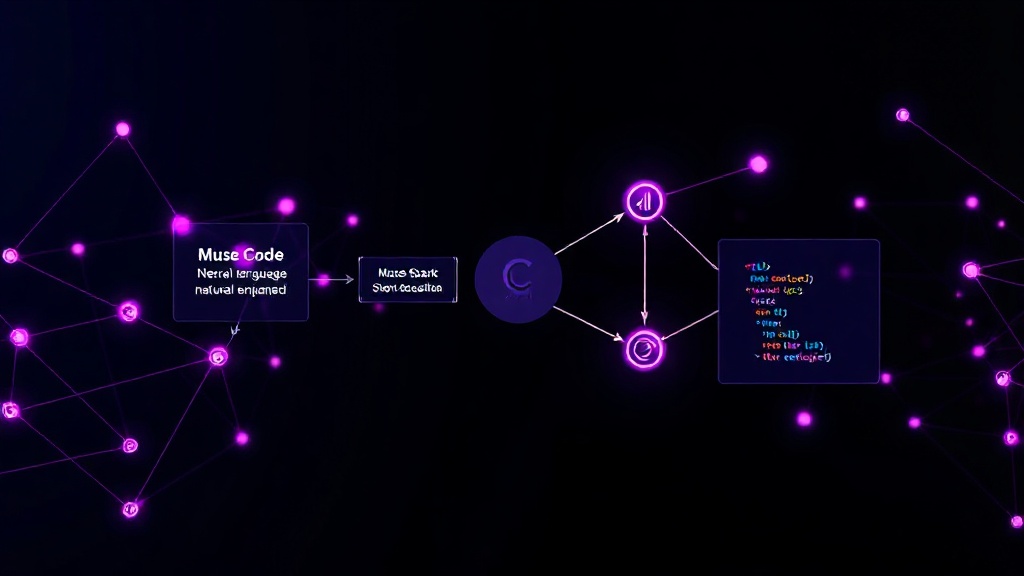
The capabilities of Muse Code extend beyond simple code generation. It is designed to understand the intent behind a developer's request, leading to more contextually relevant and accurate code suggestions. This includes identifying potential bugs or inefficiencies in the generated code and offering improvements. Developers can use Muse Code to accelerate the process of building new features, refactoring existing codebases, and writing unit tests. The integration into popular IDEs is a key focus, ensuring a seamless developer experience without requiring significant context switching.
Muse Spark 1.2 Enhances Existing Capabilities
Alongside the introduction of Muse Code, Meta AI is also releasing Muse Spark 1.2, an update to their existing AI model for code understanding and analysis. This version brings significant improvements in accuracy, speed, and the breadth of programming languages supported. Muse Spark is crucial for tasks such as code summarization, vulnerability detection, and understanding complex code logic. With version 1.2, Meta AI claims substantial performance gains, making it more practical for real-time analysis within development environments.
Key enhancements in Muse Spark 1.2 include:
- Improved Code Comprehension: The model demonstrates a deeper understanding of intricate code structures, dependencies, and semantic meaning across a wider range of languages, including newer or more niche ones.
- Faster Analysis: Latency has been reduced, allowing for near real-time feedback on code quality, potential issues, and security vulnerabilities. This is critical for integrating AI analysis directly into the coding loop, rather than as a separate, time-consuming step.
- Enhanced Security Analysis: Muse Spark 1.2 is better equipped to identify subtle security flaws, common vulnerabilities (like injection attacks or buffer overflows), and deviations from secure coding best practices.
- Broader Language Support: The model's training data has been expanded to include a more diverse set of programming languages and frameworks, increasing its utility for teams working with polyglot codebases.
This iterative improvement cycle, seen with Muse Spark 1.2, highlights Meta AI's commitment to refining their AI models based on real-world usage and feedback. The focus on speed and accuracy is paramount for tools that are intended to augment, not disrupt, existing development workflows. For developers, this means more reliable and quicker insights into their code, helping to catch errors earlier and maintain higher code quality standards.
The Broader Impact on Software Development
The release of Muse Code and Muse Spark 1.2 signals a continued trend towards AI becoming an indispensable part of the software development toolkit. The ability to generate boilerplate code, understand existing codebases, and identify potential issues automatically can significantly accelerate development cycles. This could lead to faster product releases, more agile iteration, and potentially lower development costs.
For companies, the adoption of such AI tools could mean a competitive edge through faster time-to-market. Developers can spend less time on repetitive tasks and more time on innovation, strategic thinking, and complex problem-solving. The potential for AI to democratize certain aspects of coding, by making complex tasks more accessible through natural language interfaces, is also noteworthy. However, it also raises questions about the evolving role of developers and the skills that will be most in demand in an AI-augmented future. What nobody has addressed yet is how these tools will impact the learning curve for junior developers and whether they might inadvertently stifle the deep, foundational understanding that comes from wrestling with complex code manually.
Meta AI's investment in these areas reflects a broader industry push to leverage AI for productivity gains. As these models become more sophisticated, they will likely become standard features in development environments, transforming how software is conceived, written, and maintained. The challenge ahead will be to ensure these tools are not only powerful but also trustworthy, secure, and ethically deployed, maintaining human oversight and control over critical development decisions.