%22%20%2F%3E%0A%20%20%3C%2Fsvg%3E)
AI Models•Aug 20, 08:55 PM
AI Proficiency Ladder: From Basic Chat to Autonomous Workflows
A new framework outlines six levels of AI skill, distinguishing users from true AI orchestrators and automators.
Share:

Five shifts. Five minutes. No noise.
No spam. Unsubscribe anytime. Powered by Beehiiv.
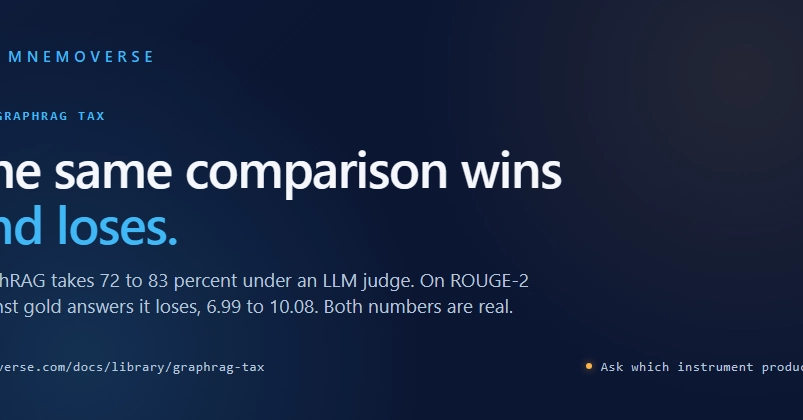
New research reveals GraphRAG's effectiveness depends entirely on whether it's judged by an LLM or against ground truth.
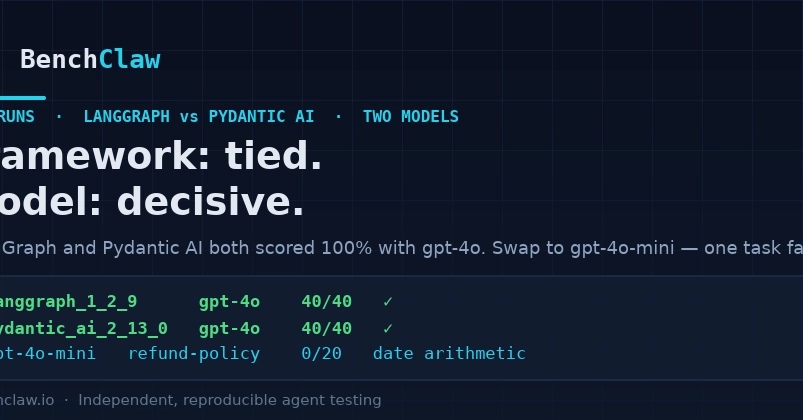
A controlled benchmark reveals LangGraph and Pydantic AI perform identically, but changing the underlying LLM exposes critical task failures.

The influential Linux distribution has formally adopted a policy allowing the responsible integration of generative AI tools.
A new framework outlines six levels of AI skill, distinguishing users from true AI orchestrators and automators.

New experiments show LLM résumé scoring is highly unstable, not inherently biased, challenging prior findings.
Google's latest initiative aims to bolster AI education across Africa by providing students with complimentary access to its advanced AI tools.

Choosing the right RAG corpus architecture is crucial; building for the wrong type leads to significant wasted resources and suboptimal performance.

A production incident reveals how language models used as judges can become stuck in a loop, failing to provide objective evaluations.

Unlock Claude Code's potential by precisely articulating your coding intentions for better results.
When AI models rely on each other's outputs, understanding and controlling complex decision chains becomes exponentially harder.
Key AI engineering updates focus on runtime robustness, inference efficiency, and the current limitations of agent research.

A developer demonstrates a compact AI model capable of real-time MIDI music generation directly on a user's device.

Google announces DiffusionGemma, a suite of open-source diffusion models for image generation, built on Gemma.