
Data Science•Aug 13, 04:55 AM
New Method Improves Radioactive Source Localization in Cities
Researchers developed a probabilistic approach to pinpoint radioactive sources in complex urban environments, outperforming traditional methods.
Share:
Five shifts. Five minutes. No noise.
No spam. Unsubscribe anytime. Powered by Beehiiv.

Deciphering Flashscore's proprietary data format unlocks granular football analytics beyond simple scores.
A new algorithm uses an obscure calculus theorem to compute the volume of complex 3D shapes orders of magnitude faster than existing methods.
New AI tool Almanac aims to centralize and organize personal knowledge, acting as a smart assistant for developers, writers, and researchers.
Researchers developed a probabilistic approach to pinpoint radioactive sources in complex urban environments, outperforming traditional methods.

LLMs struggle with reference list segmentation. A two-stage approach separates the hard part first.

Transforming tabular data into graph structures requires precise decisions about nodes, edges, and identifiers.

New research on ChatGPT's SaaS citations reveals a pattern: sources are chosen based on platform, prompt, and buyer stage.

Understand Term Frequency-Inverse Document Frequency and why implementing it yourself matters.

Researchers develop a novel algorithm that solves the shortest vector problem in $2^{0.6039n}$ time, a significant improvement over previous methods.
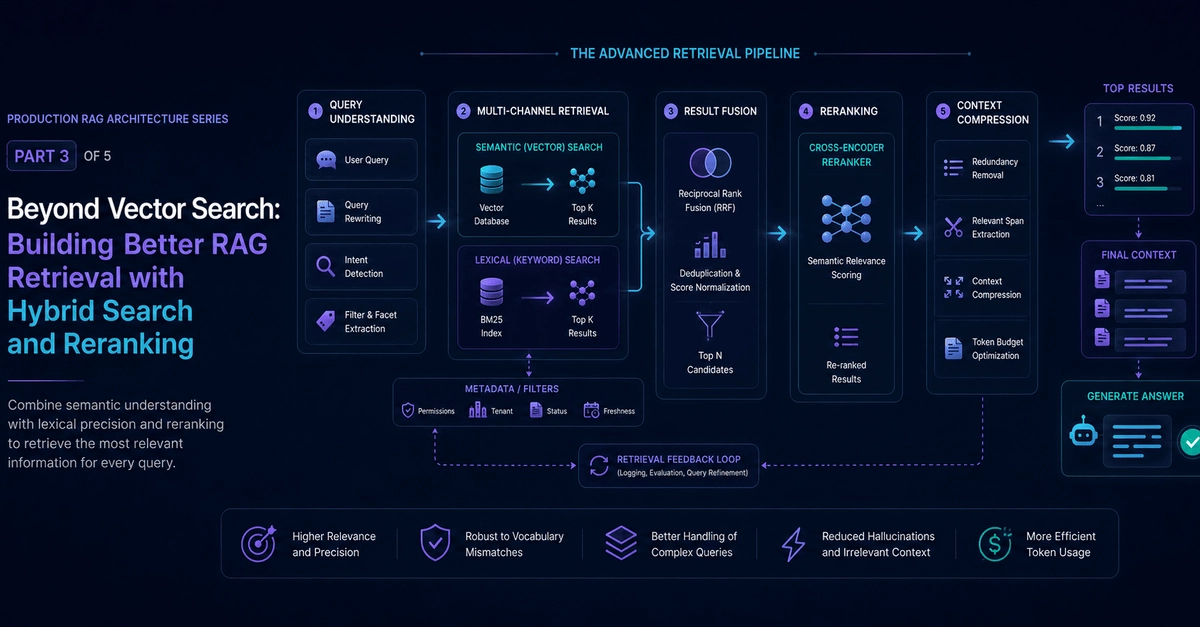
Vector search alone often falls short for RAG. Combining semantic and lexical search with reranking boosts accuracy.

CrateDB integrates vector, full-text, and geospatial search within a single database, simplifying complex query architectures.

Understanding Stripe's authorization and capture mechanics is crucial for avoiding production bugs, especially with split payments and expiring holds.
%22%20%2F%3E%0A%20%20%3C%2Fsvg%3E)
The latest release of the PostgreSQL extension for ClickHouse introduces critical optimizations, slashing query times and expanding analytical capabilities.