AI Models•Jul 14, 10:55 PM
Coding Agent Leaderboard Scores Mislead: Real-World Performance Varies
Public benchmarks for AI coding agents fail to predict real-world efficacy on proprietary codebases.
Share:

Five shifts. Five minutes. No noise.
No spam. Unsubscribe anytime. Powered by Beehiiv.

Two new Apache 2.0 licensed models target consumer GPUs, offering a critical choice for local AI inference.

Phoenix Grove API opens up access to advanced open-source models, providing a month of free usage to attract new users.

A tight usage cap on OpenAI's code generation tool prevents developers from completing meaningful tasks, turning it into a novelty rather than a productivity booster.
Public benchmarks for AI coding agents fail to predict real-world efficacy on proprietary codebases.

New research explores how personalized LLMs can act as 'guardian angels,' enhancing user productivity and securing sensitive data.

Two seismic shifts rocked the tech industry this week, impacting IP and the core of internet navigation.

A new transformer architecture, t0-alpha, uses distinct attention mechanisms to model temporal evolution and inter-variable relationships for multivariate time series forecasting.

PrismML's new model achieves remarkable on-device performance, challenging the cloud-first LLM paradigm.

New frameworks demonstrate how AI can chain reasoning and actions, moving beyond single prompts to solve multi-step problems.
New research reveals AI models like ChatGPT and Gemini ignore emerging brands, favoring established entities with Wikipedia presence.
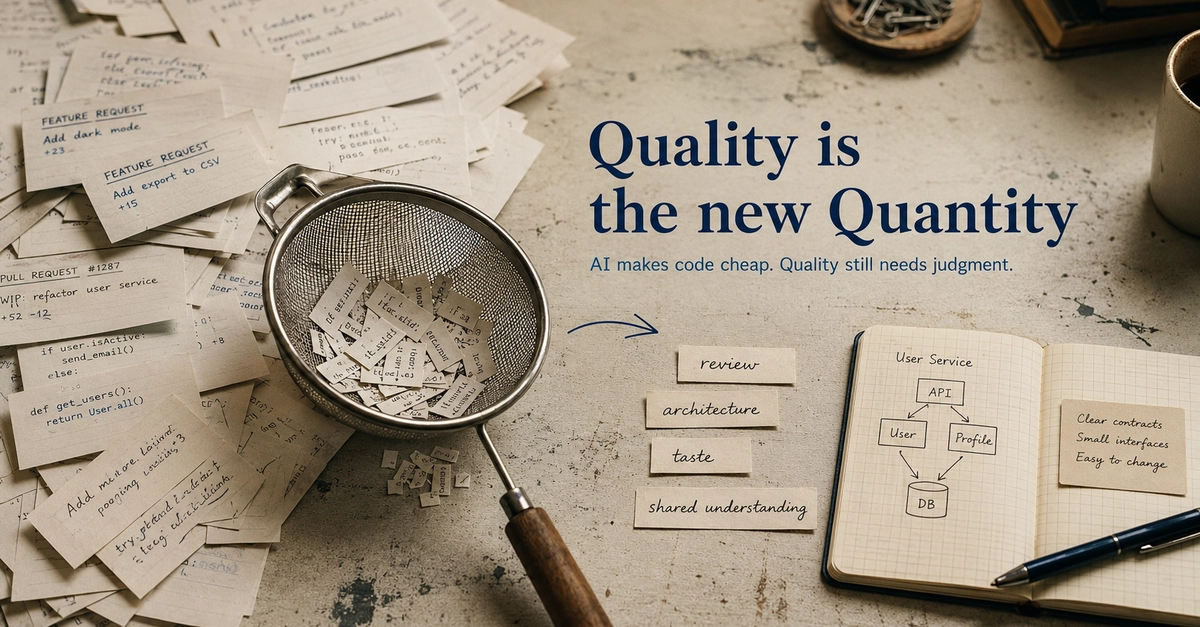
Cheap AI-generated code has flooded the market, making true quality and developer confidence the new, scarce resources.

A developer showcases training a vision-language model to play Snake, demonstrating the FeynRL framework's end-to-end pipeline.

Most LLMs struggle with open-ended multi-agent coordination, averaging only 6% return, but Gemini 3.1 Pro shows surprising zero-shot capability.