
Zettascale's Bold Ambition: Building for ASI
Zettascale, a notable participant in the Y Combinator S24 batch, is making a significant strategic move by actively seeking ASIC and FPGA engineers. This hiring push signals a deep-seated ambition: to develop custom silicon chips specifically engineered to power Artificial Superintelligence (ASI). While many AI companies focus on software optimization and large language models, Zettascale is taking a hardware-centric approach, aiming to build the foundational computing infrastructure necessary for future, vastly more powerful AI systems.
The company's focus on ASI is particularly noteworthy. ASI represents a hypothetical level of intelligence far surpassing that of the brightest human minds, capable of solving problems currently intractable for humans. Achieving ASI is often considered the ultimate goal of AI research, requiring computational capabilities orders of magnitude beyond what is available today. Zettascale's decision to invest in custom hardware development suggests they believe bespoke silicon is the key differentiator and enabler for reaching this ambitious milestone.
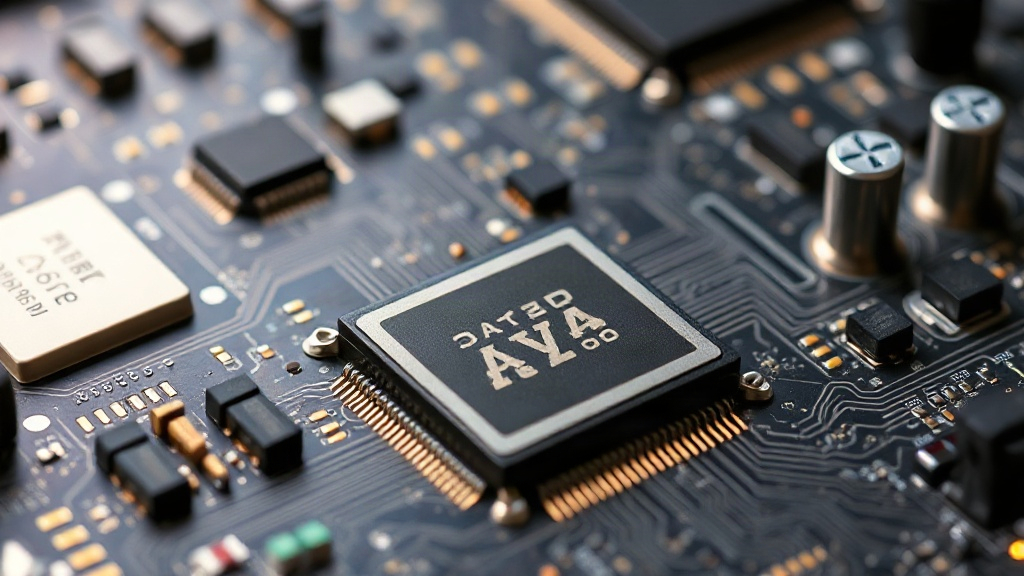
The recruitment effort targets engineers with expertise in Application-Specific Integrated Circuits (ASICs) and Field-Programmable Gate Arrays (FPGAs). ASICs are custom-designed chips optimized for a specific task, offering peak performance and efficiency for that particular function. FPGAs, on the other hand, are more flexible, allowing their hardware configuration to be reprogrammed after manufacturing, making them ideal for rapid prototyping, research, and applications where adaptability is crucial. Zettascale's need for both indicates a strategy that likely involves iterative development, starting with FPGAs for faster exploration and moving towards ASICs for optimized, scalable production.
The Hardware Imperative for Advanced AI
The demand for specialized AI hardware has been escalating. Current AI workloads, particularly those involving large-scale neural networks and complex inference, are already pushing the boundaries of general-purpose processors like CPUs and even GPUs. While GPUs have become the de facto standard for deep learning training due to their parallel processing capabilities, they are not always the most efficient or cost-effective solution for every AI task, especially at the scale anticipated for ASI.
Zettascale's pursuit of custom silicon is akin to a company building its own specialized engine rather than relying on off-the-shelf components. For ASI, where computational demands could be astronomical, general-purpose hardware might prove to be a bottleneck. Custom ASICs can be designed from the ground up to accelerate specific AI operations, such as matrix multiplication, tensor processing, and novel neural network architectures, potentially offering significant gains in speed, power efficiency, and cost. FPGAs provide a crucial stepping stone, allowing Zettascale to test and refine hardware designs and algorithms without the lengthy and expensive fabrication cycles associated with ASICs.
The implications of Zettascale's strategy extend beyond their immediate product development. The pursuit of ASI hardware necessitates a deep understanding of future AI algorithms and architectures. By building the hardware, Zettascale is implicitly positioning itself at the forefront of defining what those future architectures will look like. This vertical integration – controlling both the hardware and the AI models designed to run on it – could provide a significant competitive advantage.
The Talent Landscape and Zettascale's Position
Attracting top-tier ASIC and FPGA engineers is a competitive endeavor. These professionals are in high demand across various industries, including consumer electronics, automotive, telecommunications, and, increasingly, AI. Zettascale, being a Y Combinator S24 company, likely benefits from the program's network and prestige, which can help attract talent. However, their explicit focus on ASI hardware places them in a niche that requires engineers with a vision for the future of computing at its most extreme.
The challenge for Zettascale will be to not only recruit these highly specialized engineers but also to foster an environment where they can innovate rapidly. Designing silicon is a multi-year process, and the pace of AI development is relentless. Zettascale's approach of hiring for both ASIC and FPGA expertise suggests a pragmatic strategy: use FPGAs for agile development and proof-of-concept, while concurrently working on the more permanent ASIC designs. This dual-track approach allows for flexibility in algorithm development while ensuring that a path to efficient, scalable hardware is being forged.
What remains to be seen is how Zettascale plans to integrate its hardware efforts with its AI software development. The most successful custom silicon companies often work hand-in-hand with their software and AI teams to ensure the hardware is perfectly aligned with the computational needs of their algorithms. Without this synergy, even the most advanced custom chip could fall short of its potential. Zettascale's recruitment of hardware engineers is a critical first step, but the subsequent integration with AI research and development will be key to their ultimate success in building the hardware for ASI.