
Fujitsu Announces FUJITSU-MONAKA CPU
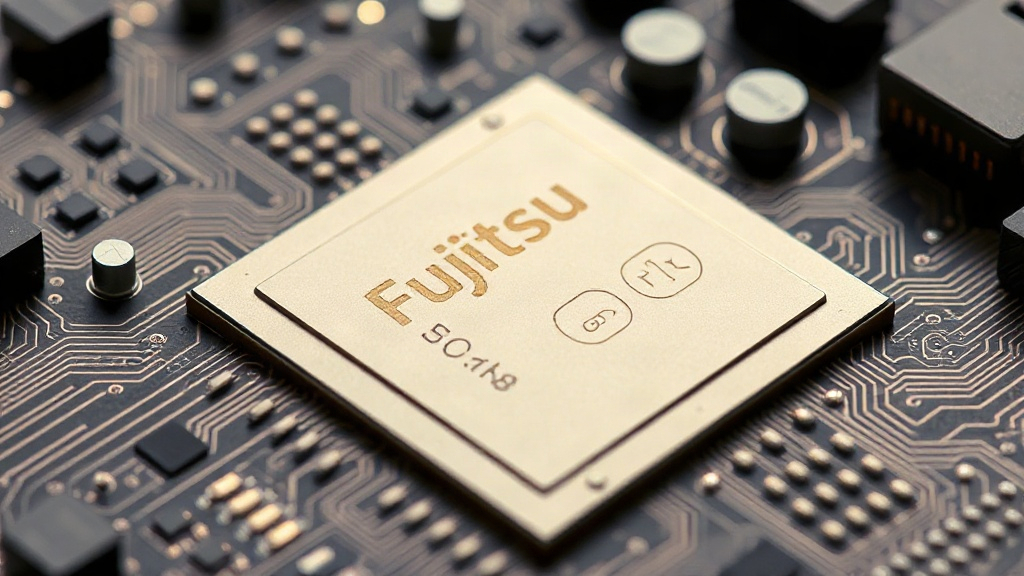
Fujitsu has officially launched FUJITSU-MONAKA, its next-generation central processing unit (CPU) developed and manufactured in Japan. This move signifies Fujitsu's commitment to advancing domestic semiconductor technology and addressing the growing demands of high-performance computing (HPC), artificial intelligence (AI), and data-intensive workloads. The MONAKA CPU is designed to offer a significant leap in processing power and efficiency compared to its predecessors, aiming to bolster Japan's capabilities in critical technology sectors.
The development of MONAKA represents a strategic initiative by Fujitsu to reclaim a leading position in the global semiconductor landscape. With increasing geopolitical tensions and supply chain vulnerabilities highlighted in recent years, the drive for sovereign semiconductor capabilities has intensified. Fujitsu's investment in MONAKA is not merely a product launch but a statement of intent to build a robust, indigenous HPC ecosystem. This CPU is engineered to power the supercomputers of the future and support the burgeoning AI industry, which relies heavily on massive computational resources.
A key differentiator for the MONAKA CPU is its novel architecture, which Fujitsu claims provides superior performance and energy efficiency. While specific technical details remain under wraps pending broader release, early indications suggest a focus on advanced core designs and optimized interconnectivity. This is crucial for HPC environments where massive parallelism and low latency communication between cores are paramount. The CPU is expected to feature a significant number of cores, coupled with high memory bandwidth and advanced cache hierarchies, all tailored for the demanding computational tasks encountered in scientific research, climate modeling, drug discovery, and complex AI training scenarios.
Architectural Innovations and Performance Targets
Fujitsu has emphasized that MONAKA is not an incremental upgrade but a fundamental re-imagining of CPU design for the next era of computing. The company is leveraging decades of experience in HPC, including its work on the Fugaku supercomputer, to inform the MONAKA architecture. This includes exploring new approaches to power management and thermal efficiency, critical factors for large-scale deployments where operational costs and environmental impact are significant considerations.
The design philosophy behind MONAKA appears to be centered on flexibility and scalability. This means the CPU should be adaptable to a wide range of HPC applications, from traditional scientific simulations to the rapidly evolving field of machine learning. The precise specifications, such as clock speeds, core counts, and cache sizes, are expected to be revealed in more detail as Fujitsu moves towards broader availability and integration into its own computing systems and solutions. However, the underlying goal is clear: to provide a platform that can handle the exponential growth in data and computational complexity anticipated in the coming years.
One of the most significant aspects of MONAKA is its intended role in supporting Japan's national strategic goals for digital transformation and technological sovereignty. By developing a high-performance CPU domestically, Japan aims to reduce its reliance on foreign chip manufacturers and foster a self-sufficient ecosystem for advanced computing. This includes not only the CPU itself but also the associated software stacks, development tools, and system integration expertise. Fujitsu's leadership in this endeavor is expected to catalyze further innovation within the Japanese technology sector.
Market Positioning and Future Implications
The launch of FUJITSU-MONAKA positions Fujitsu as a significant player in the high-end CPU market, directly competing with established giants like Intel, AMD, and potentially ARM-based solutions in the HPC space. While the initial focus may be on Fujitsu's own supercomputing and enterprise solutions, the company has historically partnered with other organizations, suggesting potential for broader adoption in the future. The success of MONAKA will hinge on its ability to deliver on its performance promises, its power efficiency, and its compatibility with existing software ecosystems.
The broader implications for the HPC and AI industries are substantial. A new, high-performance CPU developed with a focus on domestic production could lead to more resilient supply chains and potentially more tailored solutions for specific national or regional needs. For researchers and developers, MONAKA represents a new frontier for computational exploration. The availability of a powerful, Japan-made CPU could stimulate new research projects and accelerate discoveries that were previously limited by computational constraints.
What remains to be seen is the extent to which MONAKA will be accessible to the broader global market beyond Fujitsu's direct offerings. Will it be available as a standalone component for other system integrators, or will it remain primarily an internal component for Fujitsu's supercomputing and enterprise solutions? The answer to this will significantly shape its impact on the wider semiconductor industry and the global HPC landscape. Fujitsu's strategic partnerships and licensing strategies will be key factors in determining MONAKA's ultimate reach and influence.
Fujitsu's commitment to manufacturing in Japan also brings a renewed focus on quality control and advanced manufacturing processes. This could set new benchmarks for reliability and performance in high-end semiconductor production. As AI and HPC continue to drive technological progress, the availability of advanced domestic computing hardware like MONAKA will be increasingly critical for national competitiveness and scientific advancement.