
The Problem of AI Content Gaps
As artificial intelligence rapidly integrates into professional workflows, a critical challenge has emerged: verifying the completeness and accuracy of AI-generated output. While AI tools excel at generating text, code, and other content at speed, they can also introduce subtle errors, omit crucial details, or hallucinate information. This creates a significant risk for businesses and individuals relying on AI for critical tasks, as undetected gaps can lead to flawed decisions, technical debt, or reputational damage.
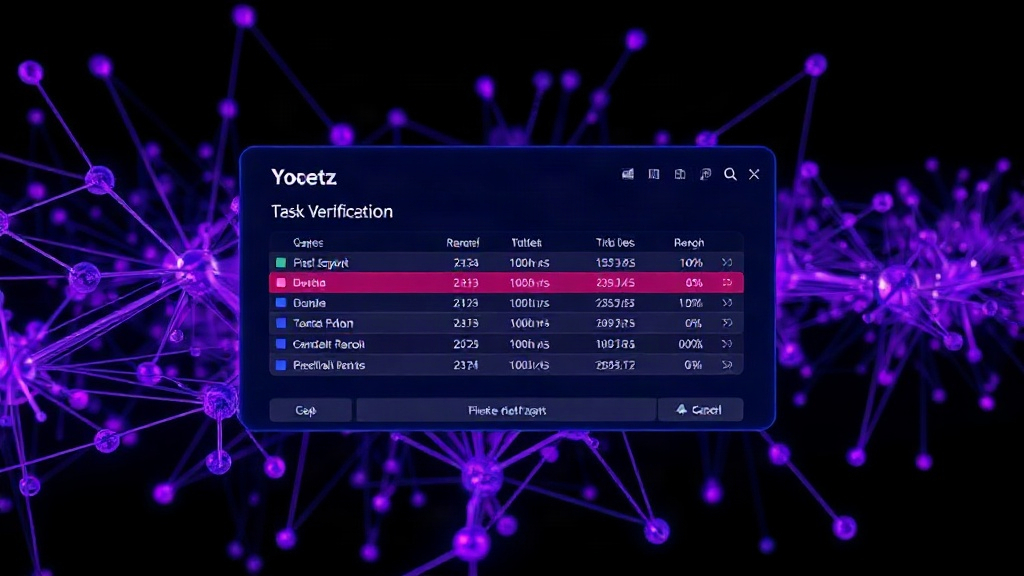
Yoetz, a newly launched product, seeks to address this burgeoning problem. The platform's core proposition is to provide a mechanism for users to check if an AI truly completed a task as intended, or if it left critical gaps in its execution. This is particularly relevant in fields like software development, content creation, and data analysis, where AI assistance is becoming commonplace but human oversight remains essential.
The current landscape of AI tools, from large language models like GPT-4 to specialized code generators, offers immense productivity gains. However, these tools are not infallible. They operate based on patterns learned from vast datasets, and their outputs are probabilistic. This means they can sometimes produce plausible-sounding but incorrect information, or fail to account for edge cases that a human expert would instinctively consider. The need for a dedicated verification layer is therefore becoming increasingly apparent.
How Yoetz Aims to Verify AI Tasks
While the specifics of Yoetz's underlying technology remain proprietary, its stated goal is to act as an intelligent auditor for AI-driven tasks. The platform likely employs a combination of analytical techniques to scrutinize the AI's output against the original prompt or task definition. This could involve comparing the generated content against a set of predefined quality metrics, checking for logical consistency, identifying missing elements, or even running secondary AI models to cross-reference results.
Consider the analogy of a meticulous editor reviewing a draft written by a talented but sometimes careless junior writer. The editor doesn't just read for flow; they check facts, ensure all plot points are addressed, and verify that the writer hasn't accidentally contradicted themselves. Yoetz aims to perform a similar function, but for AI-generated work. It’s designed to catch the AI's oversights before they become problems for the end-user.
For developers, this could mean ensuring that generated code includes necessary error handling or that API integrations are complete. For content creators, it might involve verifying that all key aspects of a brief have been covered or that factual claims are substantiated. For data scientists, it could translate to confirming that a data processing script handles all anticipated data formats or that a model's feature engineering is comprehensive.
The Broader Implications for AI Adoption
The emergence of tools like Yoetz signals a maturing phase in AI adoption. As businesses move beyond experimental use cases to integrating AI into core operations, the focus shifts from pure generation to reliable deployment. This requires building trust in AI systems, and trust is built on verification and predictability. Tools that can provide an objective assessment of AI output are therefore crucial for fostering this trust.
The competitive landscape for AI development is fierce, with major players and numerous startups vying for market share. However, the value proposition of AI is increasingly being scrutinized not just for speed and cost savings, but for reliability and safety. Companies that can offer solutions that enhance the dependability of AI are likely to find a receptive market. Yoetz appears to be positioning itself precisely in this critical niche.
What remains to be seen is how effectively Yoetz can generalize its verification capabilities across the diverse range of AI tasks and domains. The complexity of natural language understanding, code generation, and creative output varies enormously. Developing a system that can reliably detect subtle errors across such a broad spectrum is a significant technical undertaking. Furthermore, the platform's ability to adapt to new AI models and evolving AI capabilities will be key to its long-term relevance.
For users of AI tools, Yoetz represents a potential safeguard. It offers a way to mitigate the risks associated with AI's inherent limitations, allowing for more confident adoption of AI-powered workflows. As AI continues to permeate every aspect of technology and business, the demand for such verification tools is only set to grow.