
Navigating the Job Market with AI Assistance
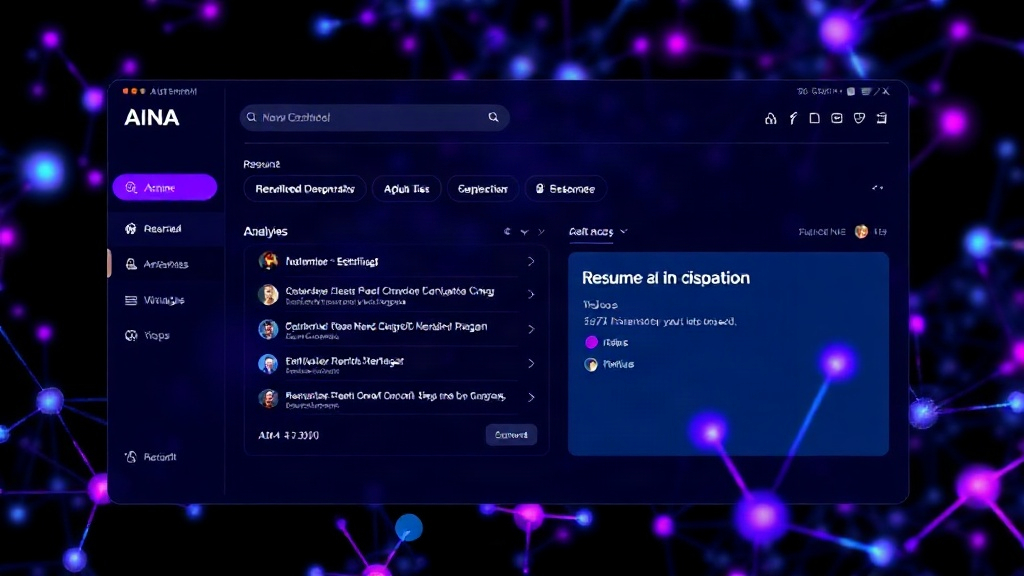
The modern job market is increasingly complex, with candidates often struggling to pinpoint exactly why their applications aren't landing interviews or why they falter in crucial conversations. Traditional career coaching can be expensive and time-consuming. Enter AINA, a new AI-powered platform designed to act as a personal job search coach, specifically targeting the often-invisible blind spots that hinder career progression. AINA leverages artificial intelligence to analyze job applications, resumes, and even interview performance, offering actionable feedback to help users improve their chances of success.
The core premise of AINA is to democratize access to effective job search strategies. Many job seekers, particularly those early in their careers or transitioning to new fields, lack the experience to self-diagnose their weaknesses. They might repeat the same mistakes across multiple applications or interviews without understanding the root cause. AINA aims to bridge this gap by providing objective, data-driven insights. The platform promises to identify areas where a resume might be too generic, where keywords are missing, or where interview answers lack clarity or confidence. This is less about simply proofreading and more about strategic career guidance.
Think of AINA not just as a spellchecker for your resume, but as a seasoned hiring manager who has seen thousands of applications and knows precisely what makes a candidate stand out. It can flag if your resume is too long, too short, or if it fails to highlight the most relevant skills for a specific role. In the context of interviews, it can analyze recorded practice sessions to identify filler words, rambling responses, or missed opportunities to elaborate on key achievements. The goal is to equip job seekers with the knowledge to present their best selves, tailored to each opportunity.
How AINA Identifies Blind Spots
AINA's functionality is built around analyzing various components of the job search process. Users can upload their resumes and cover letters, which the AI then scrutinizes for clarity, conciseness, keyword optimization, and alignment with the requirements of specific job descriptions. The platform can identify if a resume is too focused on past responsibilities rather than future potential, or if it fails to quantify achievements effectively. For instance, instead of stating "Managed social media accounts," AINA might prompt a user to refine it to "Increased social media engagement by 30% across three platforms in six months by implementing targeted content strategies." This level of detail is crucial in a competitive landscape.
Beyond written applications, AINA offers tools for interview preparation. Users can engage in simulated interviews, either through text-based prompts or by recording their verbal responses. The AI then processes this information to provide feedback on communication style, confidence levels, and the substance of the answers. It can detect hesitations, the overuse of jargon, or a tendency to avoid direct questions. This simulated environment allows job seekers to practice and refine their delivery without the high stakes of a real interview. The feedback loop is designed to be iterative, enabling users to track their improvement over time.
The platform's AI is trained on vast datasets of successful job applications, interview transcripts, and industry best practices. This allows it to recognize patterns that human recruiters often look for, even if implicitly. For example, AINA might notice that candidates who consistently get callbacks for technical roles tend to structure their answers using a STAR (Situation, Task, Action, Result) method, and it will encourage users to adopt this framework.
The AI Coaching Landscape
AINA enters a growing market of AI-powered tools aimed at professional development and career advancement. While many platforms offer resume builders or automated application trackers, AINA's focus on identifying qualitative