The Appeal of Terminal Aesthetics
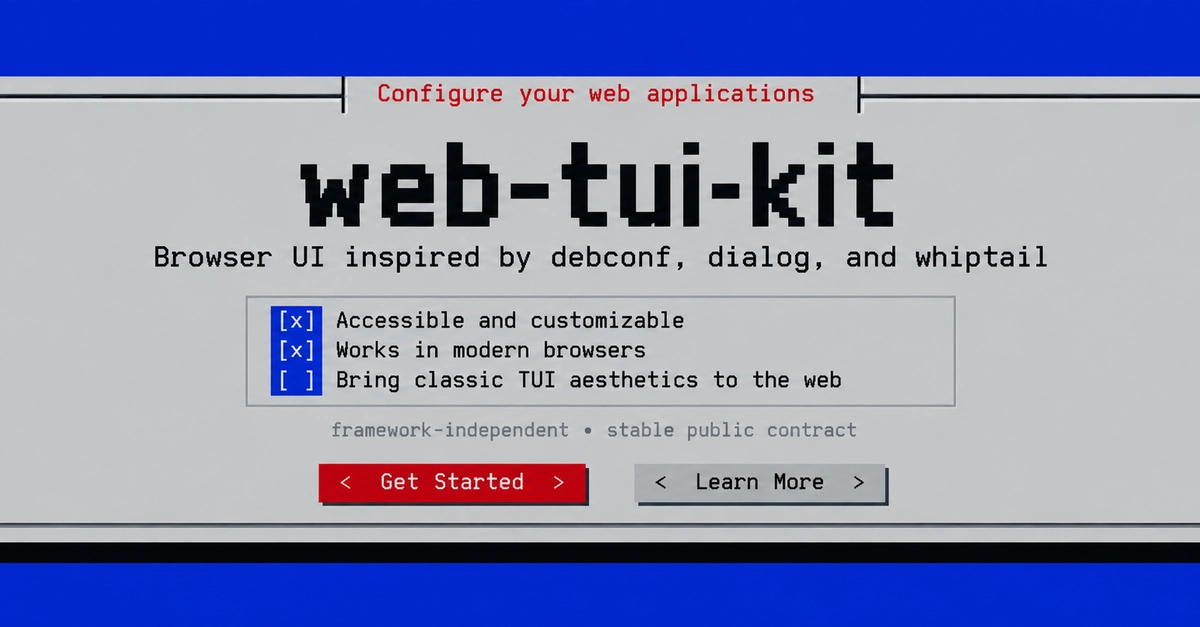
The open-source project web-tui-kit aims to bring the distinctive visual language of terminal-based interfaces to modern web applications. Inspired by tools like Debian's debconf, dialog, and whiptail, the project's creator, who goes by the handle 1990jk1990, sought to capture the restrained colors, sharp boundaries, and text-oriented layouts that define these older interfaces. The goal is not to replicate the limitations of past software but to leverage its unique aesthetic while embracing contemporary browser capabilities, semantic HTML, and familiar interaction patterns.
This approach offers a compelling contrast to the often overly slick or visually complex interfaces common today. By evoking a sense of software from a different era, web-tui-kit provides a unique character that can make modern applications feel both nostalgic and refreshingly distinct. The project emphasizes that while the visual style is rooted in terminal UIs, the implementation is thoroughly modern, utilizing web standards for accessibility and performance.
A Stable Contract for UI Components
A core tenet of web-tui-kit is its commitment to a stable contract for its UI components. This means that developers integrating the kit can expect a consistent API and behavior over time, reducing the friction often associated with adopting new UI libraries or design systems. This stability is crucial for building robust applications where UI elements are foundational. It allows teams to focus on application logic rather than constantly refactoring UI code due to breaking changes in the underlying toolkit.
The framework-independent nature of web-tui-kit is a significant advantage. Unlike many UI libraries that are tightly coupled to specific JavaScript frameworks like React, Vue, or Angular, web-tui-kit is designed to be integrated into any web project. This is achieved through its reliance on vanilla JavaScript and Web Components. This approach ensures maximum compatibility and flexibility, allowing developers to use it in greenfield projects or to progressively enhance existing applications regardless of their technology stack. The project essentially provides a set of well-defined, reusable UI primitives that can be composed to build complex interfaces.
Core Components and Customization
web-tui-kit offers a range of essential UI components designed to be both functional and aesthetically consistent with its terminal-inspired theme. These include elements for input, selection, display of information, and basic layout. The project prioritizes semantic HTML, ensuring that components are accessible and understandable to assistive technologies. For instance, input fields are correctly marked up, and selection components utilize appropriate ARIA attributes.
Customization is handled through CSS variables, a modern and efficient method for theming. This allows developers to easily override default styles to match their application's specific branding or design requirements without needing to fork the library or resort to complex style overrides. The use of CSS variables means that theming can be dynamic and applied at runtime, offering a high degree of control over the UI's appearance. This flexibility ensures that while the core aesthetic is preserved, each application can still possess a unique visual identity.
The Technical Underpinnings
At its heart, web-tui-kit is built using standard web technologies. It leverages Web Components, specifically Custom Elements and Shadow DOM, to encapsulate component logic and styling. This encapsulation prevents style conflicts with the rest of the application and ensures that components behave predictably. The use of vanilla JavaScript means there are no framework dependencies, making it lightweight and performant.
The project's inspiration from `debconf`, `dialog`, and `whiptail` translates into a focus on clear, actionable user interfaces. These terminal tools are designed for clarity and efficiency in configuration tasks. web-tui-kit aims to bring that same clarity to browser-based applications, particularly for tasks that might traditionally be complex or overwhelming. By abstracting common UI patterns into reusable components, developers can reduce boilerplate code and accelerate development cycles. The stable contract ensures that the underlying implementation details can evolve without impacting the developer's integration points.
Implications for Web Development
The release of web-tui-kit presents an interesting option for developers seeking an alternative to the ubiquitous, often flashy, UI frameworks. Its framework-agnostic nature and stable contract make it a pragmatic choice for long-term projects or for teams that value maintainability and flexibility. The unique aesthetic can also be a strong differentiator for applications aiming for a specific brand identity or user experience.
What remains to be seen is how widely this retro-inspired aesthetic will be adopted. While it offers a distinct look, the familiarity and widespread adoption of more conventional UI styles might present a challenge. However, for niche applications, internal tools, or projects that intentionally aim to stand out, web-tui-kit offers a compelling, technically sound solution. Its emphasis on stability and independence from JavaScript frameworks positions it as a potentially durable addition to the web development toolkit.