
The Core of AI Governance: Files, Not Prompts
Ask a seasoned engineer where a system truly resides, and they might point to the codebase or the organizational chart. After extensive experience steering AI projects, Derek Wang, an AI Harness Engineering lead, offers a different perspective: the real control mechanism for AI systems lies within the files that define the boundaries of what a language model can generate. This shift in understanding is critical for teams building reliable AI applications.
The distinction is subtle but profound. While prompt engineering focuses on crafting the right input to elicit a desired output, it’s a reactive approach. The files Wang refers to are proactive. They act as the guardrails, the fences that dictate the acceptable output space for a model. This approach offers a more robust and scalable method for governing AI behavior, especially as projects grow in complexity and risk.
Consider the difference between telling a child exactly what to draw versus providing them with a coloring book. Prompt engineering is like giving detailed instructions for each drawing. File-based governance, however, is akin to providing a coloring book where the lines themselves define the boundaries of the artwork. The child can still be creative within those lines, but they won't go outside the pre-defined space. This analogy highlights how the 'system' – the set of rules and constraints governing AI output – is embedded directly into the structure of the content it interacts with.
Moving Beyond Prompt Engineering
Prompt engineering has been the dominant paradigm for interacting with large language models (LLMs). It involves carefully crafting text prompts to guide the model toward generating specific, accurate, and safe responses. This method is effective for many use cases, especially in early-stage development or for simpler tasks. However, as AI applications become more integrated into critical systems, relying solely on prompts presents significant challenges.
Prompts are inherently fragile. Small changes in wording, the order of information, or even the presence of a single keyword can lead to drastically different outputs. This variability makes it difficult to ensure consistent performance, safety, and adherence to brand guidelines or regulatory requirements. Furthermore, managing complex AI behaviors through prompts alone can become unwieldy. Imagine trying to define nuanced ethical guidelines or domain-specific knowledge solely through text inputs; the prompt would become prohibitively long and difficult to maintain.
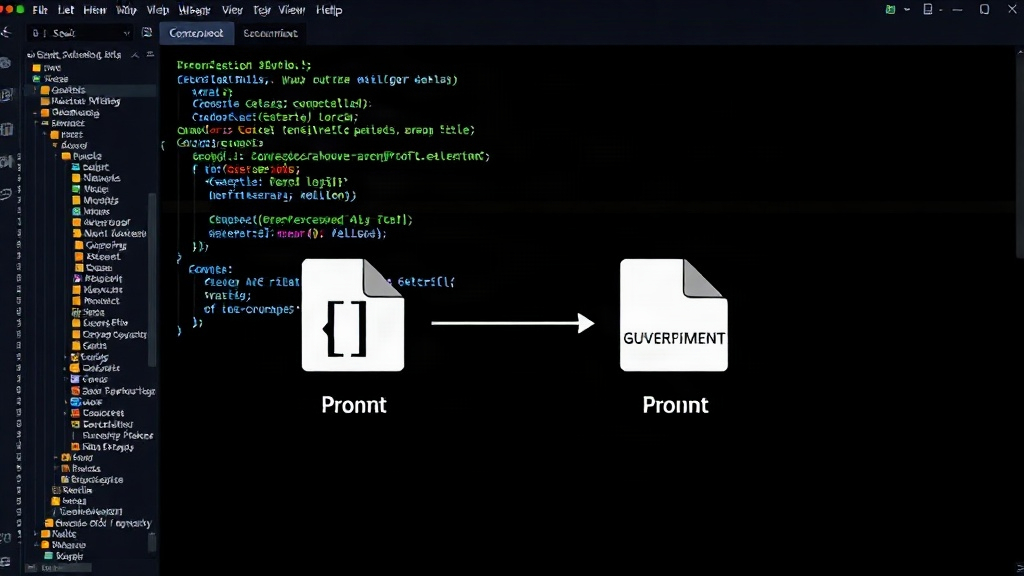
The files Wang describes serve as a more structured and persistent form of control. These could include configuration files, data schemas, knowledge bases, or even structured datasets that the AI references. Instead of instructing the model in every interaction, these files pre-define its operational parameters. This approach treats the AI model less like a magic box that needs constant coaxing and more like a sophisticated tool whose operational environment is meticulously managed.
The Power of Structured Data and Configuration
The files that fence in model generation can take many forms. For instance, a knowledge base file could contain curated, fact-checked information that the model is trained to draw from exclusively. This prevents hallucination and ensures that responses are grounded in verifiable data. Similarly, a configuration file might specify the tone, style, and vocabulary the model should use, ensuring brand consistency across all generated content.
Another example is using structured data formats like JSON or YAML to define allowed actions or response templates. The AI might be programmed to select from a predefined set of responses or to fill in specific slots within a template, rather than generating free-form text. This is particularly useful in applications requiring predictable outputs, such as customer service chatbots or automated report generation.
This method is not about limiting creativity but about channeling it effectively. By providing a well-defined operational context, developers can empower AI models to perform complex tasks with greater reliability and safety. It’s about building systems where the AI understands its role and boundaries implicitly, rather than needing explicit instructions for every nuance.
Implications for AI Development and Deployment
The shift towards file-based governance has significant implications for how AI systems are built, tested, and deployed. It suggests a greater emphasis on data engineering, knowledge management, and system architecture. Instead of solely hiring prompt engineers, teams will need individuals skilled in structuring data, designing effective knowledge bases, and implementing robust configuration management for AI models.
This approach also offers advantages in terms of auditability and debugging. When an AI produces an undesirable output, tracing the issue becomes simpler if the constraints are clearly defined in configuration files or knowledge bases. It’s easier to inspect a file than to unravel a complex, multi-turn prompt history. This makes the system more transparent and easier to maintain over time.
What remains to be seen is how this paradigm will evolve with the increasing complexity of multimodal AI systems. As models begin to process and generate not just text but also images, audio, and video, the nature of these controlling files will undoubtedly become more sophisticated. The fundamental principle, however, is likely to persist: that robust AI governance is achieved by embedding constraints and knowledge directly into the system's operational environment, rather than relying on the ephemeral nature of user prompts.