
Generating Novel Wine Recipes with Variational Autoencoders
A novel approach to wine synthesis has emerged from the machine learning community, leveraging PyTorch and Variational Autoencoders (VAEs) to discover entirely new white wine recipes. This project, detailed on Reddit's r/MachineLearning, aims to move beyond existing datasets by generating recipes with optimized characteristics. The core of the methodology involves mapping existing white wine data into a compressed latent space, a technique that allows for the identification of desirable wine attributes and the subsequent generation of new combinations.
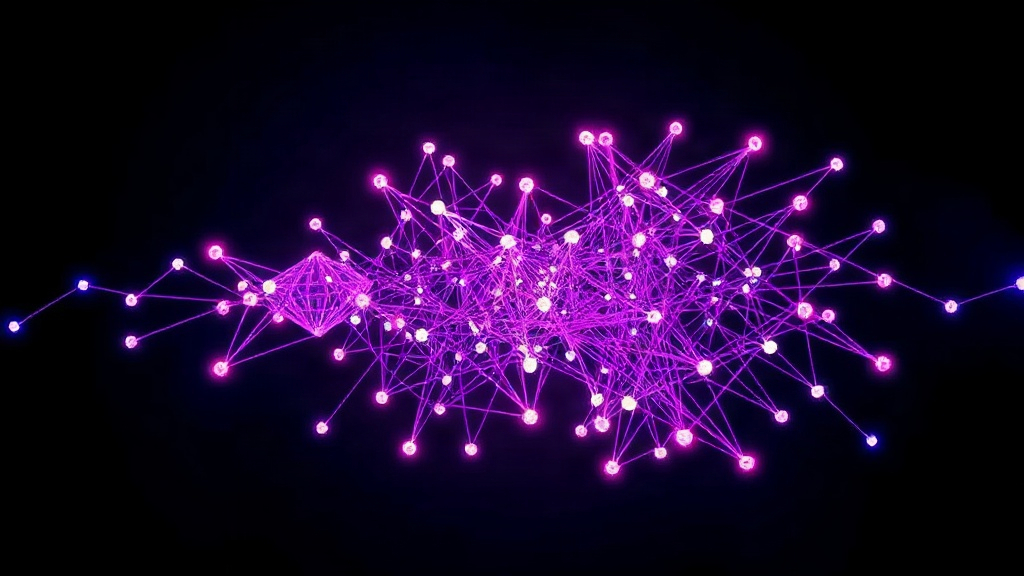
The process begins with a VAE trained on a white wine dataset. This model learns to represent each wine's properties—such as acidity, sugar content, and volatile compounds—as a point in a lower-dimensional latent space. Think of this latent space not as a spreadsheet of ingredients, but as a sophisticated map where similar wines are clustered together. The VAE's encoder compresses the wine data into this space, and its decoder reconstructs it, learning the underlying distribution of wine characteristics.
Optimizing for Quality Scores
Once the VAE has established this latent representation, the focus shifts to optimization. The project identifies regions within the latent space that correspond to wines with higher quality scores. The methodology then performs a series of iterative steps within this latent space. Starting from a point representing a wine, the model navigates through 100 steps, each with a decreasing step size (multiplied by 0.96 at each iteration), moving towards areas associated with better scores. This systematic exploration is akin to a chef meticulously adjusting ingredients, tasting, and recalibrating to achieve the perfect flavor profile.
After traversing these latent coordinates, the generated points are passed through the VAE's decoder. This reconstructs the latent representations back into a wine recipe, described by a set of chemical and sensory properties. Crucially, these newly generated recipes are then normalized. A separate regression model evaluates these synthesized recipes, assigning a quality score. The project reports achieving scores in the range of 7.30 to 7.58 for the generated white wine recipes, indicating a successful synthesis of novel and potentially high-quality formulations.
Implications for Wine and AI
This work demonstrates the potential of generative AI models like VAEs to not only understand complex data distributions but also to actively create novel outputs with desired characteristics. While the current dataset is specific to white wine, the underlying principles could be applied to other complex domains where subtle combinations of attributes lead to a desired outcome. This could range from material science, where specific molecular structures yield novel properties, to culinary arts, where ingredient combinations result in unique flavors.
The success in achieving quantifiable quality scores highlights the model's ability to learn and optimize for complex, non-linear relationships between recipe parameters and perceived quality. This goes beyond simple interpolation; it's about discovering uncharted territory in the 'wine space.' The iterative optimization strategy, guided by a regression model, provides a structured way to explore this space and converge on promising new candidates. The use of a PyTorch implementation makes the methodology accessible for further research and development within the machine learning community.
What remains to be seen is the practical scalability and sensory validation of these AI-generated recipes. While a score of 7.58 is promising, the true test will be in the palate of expert tasters and the commercial viability of such synthesized wines. The journey from a latent space coordinate to a bottle on the shelf involves significant hurdles, including ingredient sourcing, production feasibility, and regulatory approvals. However, this project lays a compelling foundation for AI-driven innovation in food and beverage industries, promising a future where algorithms contribute directly to product creation.