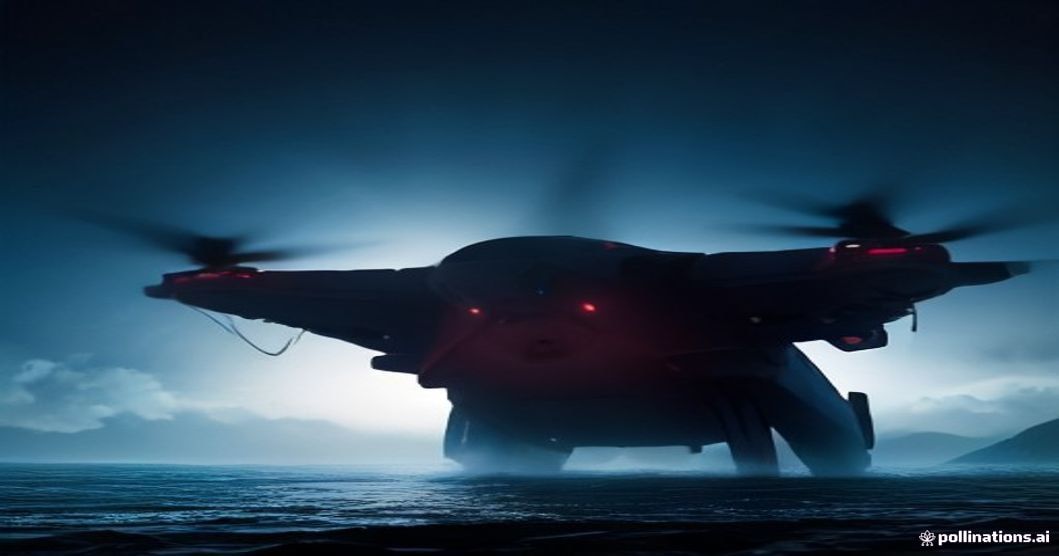
A New Era of Naval Warfare Dawns in the Black Sea
In a significant development for naval combat, Ukraine has reportedly used a naval drone to sink a Russian kamikaze drone boat. This engagement, occurring in the Black Sea, represents a potential turning point in how naval engagements are conducted, demonstrating the growing effectiveness of autonomous systems in asymmetric warfare. The incident underscores the ongoing strategic importance of the Black Sea and the innovative tactics being employed by Ukraine to counter Russia's naval superiority.
The Black Sea has been a critical theater of operations since the full-scale invasion of Ukraine began. Both nations have leveraged the maritime domain for various purposes, including supply lines, troop movements, and direct attacks. Russia has historically maintained a dominant naval presence, utilizing its Black Sea Fleet to project power and enforce blockades. Ukraine, possessing a significantly smaller conventional navy, has increasingly turned to asymmetric warfare, employing tactics and technologies that negate some of Russia's advantages. The use of naval drones by Ukraine is a prime example of this strategy.
The Ukrainian Naval Drone: A Glimpse into Autonomous Naval Combat
While specific details about the Ukrainian naval drone involved in this incident remain scarce, its successful deployment signals a maturation of Ukraine's drone warfare capabilities. These unmanned surface vessels (USVs) are designed to operate autonomously or be remotely controlled, allowing them to conduct reconnaissance, surveillance, and strike missions without risking human lives. They can be equipped with various payloads, including explosives, making them effective anti-ship weapons. The development and deployment of such systems by Ukraine have been a crucial element in its defense strategy, enabling it to challenge Russian naval dominance in areas where it would otherwise be outmatched.
The effectiveness of these drones lies in their stealth, maneuverability, and cost-efficiency compared to traditional naval vessels. They can be launched in swarms, overwhelming enemy defenses, or used for precision strikes against high-value targets. This particular engagement, where one naval drone destroyed another, highlights a novel form of drone-versus-drone combat at sea, a scenario previously confined to theoretical discussions and science fiction.
The Russian Kamikaze Drone Boat: A Persistent Threat
The target, a Russian kamikaze drone boat, is a type of unmanned vessel typically armed with explosives. These boats are designed to be remotely piloted or operate on a pre-programmed course, detonating upon impact with a target. Russia has deployed similar craft, often referred to as Unmanned Maritime Systems (UMS) or naval drones, in its efforts to disrupt Ukrainian shipping, attack naval infrastructure, and project force. They represent a low-cost, expendable weapon system that can pose a significant threat to larger, more expensive warships.
The proliferation of such drone boats by both sides transforms the maritime battlefield into a dynamic and unpredictable environment. The engagement described is not merely an attack on a vessel but an interaction between two autonomous or semi-autonomous weapon systems, each designed for offensive maritime operations. The successful neutralization of a Russian kamikaze drone boat by a Ukrainian counterpart suggests a counter-capability has been effectively deployed.
Strategic Implications for the Black Sea and Beyond
This incident carries substantial strategic weight. For Ukraine, it signifies a successful application of its indigenous drone technology, enhancing its ability to defend its coastline and disrupt Russian naval operations. It also serves as a powerful psychological victory, demonstrating resilience and innovation in the face of a larger adversary. The ability to neutralize Russian naval assets, even those as seemingly small as drone boats, contributes to Ukraine's broader objective of degrading Russia's military capacity in the Black Sea, thereby potentially easing pressure on its crucial export routes.
For Russia, this event highlights a vulnerability in its naval operations. The reliance on drone boats, while cost-effective, exposes its forces to similar threats. The Black Sea, once a secure domain for the Russian fleet, has become increasingly contested. This incident, alongside previous attacks on Russian naval vessels and port infrastructure, indicates that Ukraine's asymmetric strategies are forcing Russia to adapt and potentially re-evaluate its operational posture. The broader implication is that naval warfare is rapidly evolving, with unmanned systems playing an increasingly central role. Future naval conflicts may see extensive use of autonomous systems, challenging established doctrines and necessitating new defensive and offensive strategies.
The Future of Naval Warfare: Drones Taking the Helm
The Black Sea has become an unintended proving ground for the next generation of naval warfare. The successful engagement of a Russian drone boat by a Ukrainian naval drone is more than just a single military success; it's a powerful indicator of trends that will shape naval conflicts globally. We are witnessing the early stages of a shift where traditional naval power may be challenged by swarms of intelligent, autonomous vessels. The sheer number of these drones, their adaptability, and their reduced cost make them a formidable force multiplier. What remains to be seen is how quickly other navies will integrate similar capabilities and how international law and norms will adapt to this new form of warfare.