The Auditability Gap in Autonomous AI Agents
The rapid advancement of AI agents, capable of orchestrating complex tasks by delegating to other agents or tools, presents a significant governance challenge. While current AI governance tools focus on logging every action, this approach falls short when true accountability is required. When an AI agent performs a sensitive action—like spending money, deleting data, or calling a critical API—a simple log entry is insufficient proof of authorization. A log controlled by the system that generated it can be manipulated. This leaves a critical gap: monitoring shows what a system *claims* happened, but it doesn't allow for independent, verifiable proof of authorization for each delegation step.
As AI agents become more autonomous and regulatory bodies like the EU begin mandating verifiable accountability, this gap will become a significant problem. The current paradigm treats logs as immutable truth, but in a distributed or adversarial system, this assumption is fragile. The server writing the log can always write anything. This means that in a chain of delegation—where an orchestrator agent calls a research agent, which then calls a writer agent, which finally uses a tool—each step's authority is based on trust in the system's logging mechanism, not on independent verification.
Consider a scenario where an AI agent is tasked with managing a company's cloud infrastructure. It might delegate a task to another agent to provision a new server. This second agent, in turn, might delegate the actual API call to a specialized tool. If a mistake leads to misconfiguration or unauthorized resource allocation, an auditor will ask: who authorized the initial delegation, and who authorized each subsequent step? A server-side log, even if extensive, can be questioned. If the logs are altered, or if the agent itself is compromised, the log becomes useless as proof. This is where the need for a more robust solution becomes apparent, one that moves beyond simple event recording to cryptographic assurance.
Introducing Cryptographically Verifiable Delegation
To address this, a new approach is needed: cryptographically verifiable delegation. Instead of relying on mutable logs, each delegation event should be signed. This means that when Agent A delegates authority to Agent B to perform a specific task, Agent A doesn't just log the event; it cryptographically signs a statement attesting to the delegation. This signature, generated using Agent A's private key, serves as irrefutable proof that Agent A authorized Agent B to act within specified parameters.
This signature can then be passed along the chain of delegation. If Agent B further delegates to Agent C, Agent B signs its own delegation statement, potentially including the original signed statement from Agent A as part of its context. This creates an auditable chain of trust, where each link is secured by a cryptographic signature. An auditor can then verify the entire chain by checking the signatures, ensuring that each agent acted only with explicit, cryptographically proven authorization from its predecessor.
The core components of such a system would include:
- Digital Identities for Agents: Each AI agent needs a unique, verifiable digital identity, typically managed through public/private key pairs.
- Signed Delegation Statements: When an agent delegates, it constructs a statement detailing the task, the recipient agent, and any constraints. This statement is then signed with the delegating agent's private key.
- Verifiable Signature Chains: A mechanism to collect and verify the chain of signatures, ensuring the integrity and authenticity of each delegation step.
- Policy Enforcement: While signatures verify authorization, policies are still needed to define what authorizations are permissible. This could involve smart contracts or other policy engines that check the validity of signed delegations against predefined rules.
This cryptographic approach transforms delegation from a mere logged event into a provable transaction. It's akin to replacing a notarized document with a blockchain transaction; while both record an event, one provides a level of tamper-proof verification that the other cannot match.
Practical Implementation and Challenges
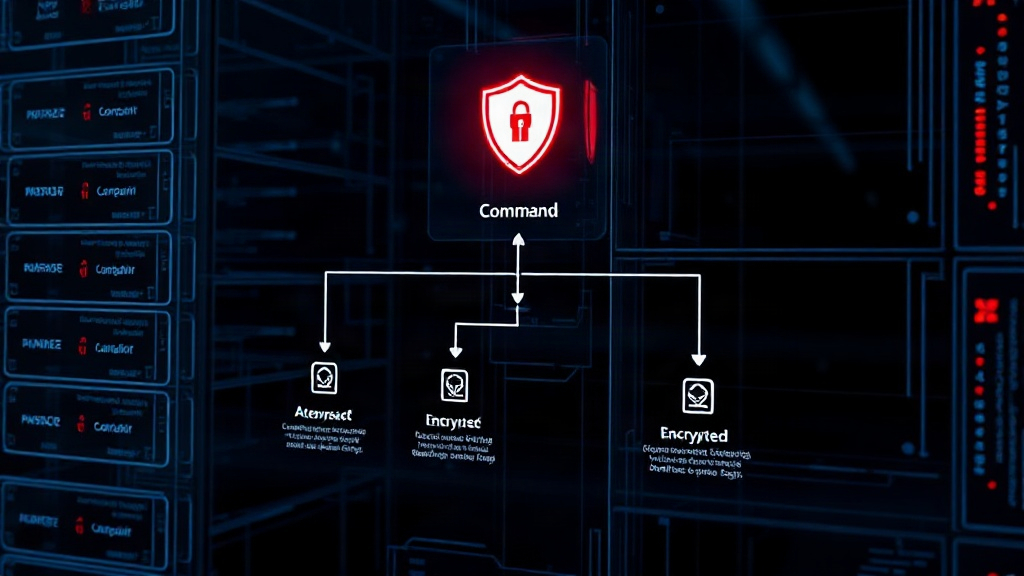
Implementing cryptographically verifiable delegation for AI agents involves several practical considerations. The signing and verification process must be efficient enough not to introduce significant latency, especially in time-sensitive operations. Managing the cryptographic keys for potentially millions of agents presents a substantial infrastructure challenge. Key rotation, revocation, and secure storage are paramount to maintaining the integrity of the system.
One potential implementation path involves using existing public key infrastructure (PKI) or exploring decentralized identity solutions. For inter-agent communication, protocols can be extended to include signature verification. For tool use, the tool itself, or an intermediary, could verify the signature before executing the requested action.
The concept of verifiable delegation is not entirely new. It shares similarities with concepts in secure multi-party computation and blockchain-based access control. However, applying it directly to the dynamic, often emergent, behavior of AI agents requires tailored solutions. For instance, how do you define the scope of delegation for an agent that is continuously learning and adapting? The signature must be specific enough to convey clear authorization but flexible enough to accommodate the agent's operational needs.
Furthermore, the legal and regulatory landscape is still catching up. While the EU AI Act pushes for accountability, the exact technical mechanisms for achieving