The Dual Nature of the Support Inbox
An online shop's support inbox is a deceptive facade. Beneath the single chat bubble, two fundamentally different conversations unfold. One originates from a shopper on the fence, weighing a purchase. The other comes from a customer whose transaction is complete and now requires a smooth post-purchase experience. Mistaking these two, and treating them with identical agent behavior, is the costliest error a business can make.
The author, who builds AI support agents for e-commerce, found that explicitly separating these two query types yielded more significant improvements than any algorithmic model upgrade. This distinction is not merely semantic; it dictates distinct goals, different risk tolerances for error, and ultimately, different operational strategies.
Think of it less like a single customer service line and more like a retail store with two distinct zones: a bustling showroom floor for browsers and a quiet, efficient service desk for those who've already bought. The staff, the tools, and the objectives in each zone are entirely different, even though they occupy the same physical space.
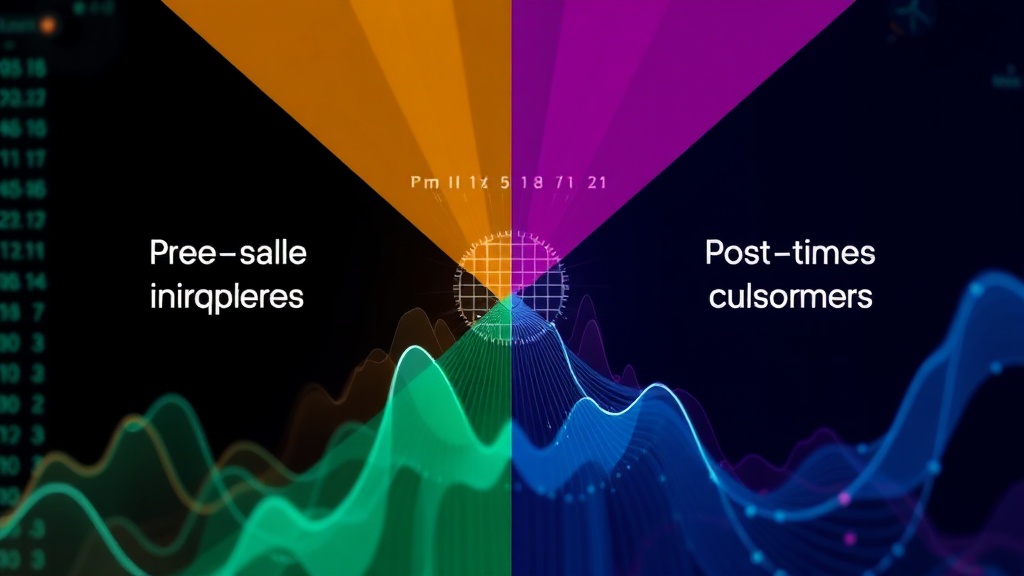
Pre-Sale: The Conversion Catalyst
Questions from pre-sale shoppers are, in essence, conversion events waiting to happen. Queries like "Does this fit a 12-month-old?", "Will it ship before Friday?", or "Can I return it if the color is off?" signal a user holding their credit card, actively seeking final validation. A swift, accurate, and confident answer dissolves the final barrier to purchase. Conversely, a slow response, indecisiveness, or a need to escalate the query introduces friction, increasing the likelihood of cart abandonment.
The cost of being wrong here is direct revenue loss. A missed sale is a tangible hit. Therefore, the priority for pre-sale support agents, whether human or AI, is speed and certainty. The goal is to remove doubt and facilitate the transaction as efficiently as possible. This often means having readily accessible product information, clear shipping and return policies, and the authority to provide definitive answers without delay.
For an AI, this translates to robust knowledge bases, rapid natural language understanding to parse intent, and predefined conversational flows that guide users to purchase-ready information. The agent must project confidence and competence, mirroring the decisive action of a seasoned salesperson.
Post-Sale: The Retention Engine
In contrast, post-sale inquiries are not about initiating a transaction but about fulfilling its promise. These questions typically involve order status, shipping updates, product issues, returns, or exchanges. "Where is my order?", "The item arrived damaged," or "How do I initiate a return?" are hallmarks of this category.
The cost of being wrong in a post-sale scenario is different but equally significant. It impacts customer loyalty, brand reputation, and the potential for repeat business. A mishandled return can turn a one-time buyer into a vocal detractor. A delayed resolution on a damaged item can erode trust. While speed is still important, accuracy, empathy, and a clear path to resolution become paramount.
The agent's objective shifts from closing a sale to reinforcing the customer's decision and ensuring satisfaction. This requires a different set of skills and access to information. Post-sale agents need access to order management systems, shipping carrier integrations, inventory data, and established procedures for handling exceptions like damaged goods or incorrect shipments. Empathy and problem-solving capabilities are crucial.
Strategic Routing and Operational Impact
Recognizing these distinct needs is the first step. The next is implementing a system that routes queries appropriately. This can be achieved through several mechanisms:
- Initial Triage Questions: The simplest method is to ask a clarifying question at the outset. "Are you looking to make a purchase, or is this about an existing order?" can immediately split the traffic.
- Keyword and Intent Analysis: AI can analyze the initial user input for keywords and sentiment to infer whether the query is pre-sale or post-sale. Phrases like "buy," "purchase," "interested in," versus "order number," "received," "return," are strong indicators.
- Separate Channels (where feasible): While often unified in a single widget, some platforms might allow for slightly different entry points or initial prompts that subtly guide users to the correct flow.
Once routed, the interaction diverges. Pre-sale interactions should be optimized for conciseness and conversion. Post-sale interactions require a more detailed, empathetic, and resolution-oriented approach. This might mean different AI models, different agent training, or even different escalation paths to specialized human teams.
The operational impact is profound. By segmenting support, businesses can:
- Improve Conversion Rates: Faster, more confident answers to pre-sale questions directly increase sales.
- Boost Customer Retention: Efficient and empathetic handling of post-sale issues builds loyalty and reduces churn.
- Enhance Agent Efficiency: Agents (human or AI) can specialize, becoming more proficient and faster in their respective domains, reducing handling times and operational costs.
- Gather Better Data: Separating the data streams allows for more granular analysis of conversion blockers versus customer satisfaction drivers.
This strategic segmentation transforms the support inbox from a monolithic cost center into a dynamic engine for both customer acquisition and retention. It acknowledges that the journey of a potential buyer and that of an existing customer are distinct, each requiring tailored support to achieve its desired outcome.