Toyota's Electrification Pivot: The Corolla Goes Electric
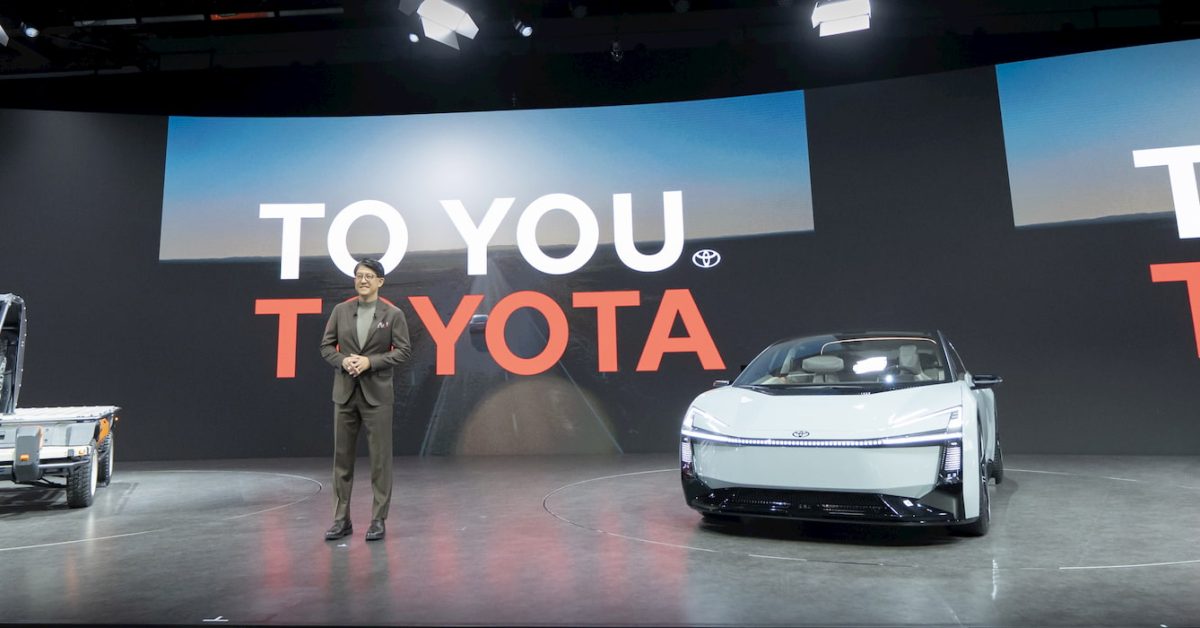
Toyota, a company long associated with hybrid technology and a cautious approach to full electrification, has confirmed it will launch an all-electric version of its best-selling Corolla model in 2026. This move represents a significant strategic pivot for the Japanese automaker, acknowledging the accelerating global demand for battery-electric vehicles (BEVs) and the increasing regulatory pressure to phase out internal combustion engines.
The decision to electrify the Corolla is particularly noteworthy. For decades, the Corolla has been Toyota's global workhorse, renowned for its reliability, affordability, and widespread appeal. It’s not merely a car; it’s a cultural icon and a benchmark for compact sedans and hatchbacks worldwide. Electrifying such a foundational model signals Toyota's intent to compete head-on in the EV market, rather than relying solely on its established hybrid dominance. This transition will likely involve substantial retooling of manufacturing plants and a deep dive into battery technology, supply chains, and charging infrastructure partnerships.
While specific technical details remain under wraps, sources close to the project suggest the new electric Corolla will leverage Toyota's latest battery advancements and electric powertrain architectures. The company has been investing heavily in solid-state battery research, though it's unclear if the initial 2026 models will feature this next-generation technology or rely on more conventional lithium-ion chemistries. The focus will undoubtedly be on delivering a compelling package that balances range, performance, and cost, mirroring the Corolla's traditional strengths.
Market Context and Strategic Implications
The automotive landscape is transforming at an unprecedented pace. Competitors have already introduced electric variants of popular compact models, and many legacy automakers have committed to significant EV production targets. Toyota's late entry into the dedicated BEV segment, beyond its existing bZ series, has drawn criticism and raised questions about its long-term EV strategy. The electric Corolla directly addresses these concerns, injecting a vital product into a segment where Toyota has historically excelled. This move is not just about capturing EV market share; it’s about safeguarding the future of its most iconic nameplate and maintaining its status as a global automotive leader.
This strategic shift also has profound implications for Toyota's supply chain and manufacturing operations. The company will need to secure stable, large-scale supplies of battery cells, electric motors, and other EV-specific components. This could involve new partnerships, joint ventures, or even vertical integration. Furthermore, the manufacturing processes for electric vehicles differ significantly from those for internal combustion engine cars. Toyota will need to adapt its global production network, potentially reconfiguring assembly lines and retraining its workforce to accommodate the new technologies and demands of EV production. The scale of this undertaking is immense, requiring billions in investment and a meticulous, multi-year rollout plan.
What This Means for Consumers and the Industry
For consumers, the arrival of an electric Corolla promises to bring the benefits of electric driving to a more accessible price point. The Corolla has always been positioned as an attainable vehicle for a broad demographic, and an electric version is expected to follow suit. This could democratize EV ownership further, making it a realistic option for first-time EV buyers or families looking for an economical and practical electric car. Key considerations for consumers will include real-world range, charging speed, battery longevity, and, crucially, the overall cost of ownership compared to its gasoline-powered predecessor and its EV rivals.
The industry watches with keen interest. Toyota's decision to go all-in on an electric Corolla could significantly influence the trajectory of other automakers. If successful, it could validate the strategy of electrifying established, high-volume nameplates rather than solely relying on new, purpose-built EV platforms. It also puts pressure on competitors to accelerate their own EV development and pricing strategies. The success of the electric Corolla will be a litmus test for Toyota's ability to adapt to the new era of mobility, and its performance in the market will be closely scrutinized by investors, regulators, and consumers alike. The question is no longer *if* Toyota would embrace EVs, but *how* it would do so, and the electric Corolla is its most definitive answer yet.
The Unanswered Question: Global Rollout and Charging Infrastructure
While the 2026 launch date and the electrification of the Corolla are confirmed, a significant unanswered question looms large: how will Toyota address the global charging infrastructure challenge? The Corolla is sold in nearly every market, each with varying levels of EV charging availability and government support. Will Toyota offer integrated charging solutions, forge widespread partnerships with charging networks, or rely on existing infrastructure to suffice? The success of this ambitious global rollout hinges not just on the car itself, but on ensuring owners can reliably and conveniently charge their vehicles, no matter where they live. This aspect of the strategy, which impacts millions of potential buyers, remains largely in the dark.