Meta's Muse Charm: AI on Your Person

Meta is shrinking its AI assistant, Muse, into a pocket-sized device called the Muse Charm. This move signals a significant push to integrate artificial intelligence into everyday physical objects, moving beyond the confines of smartphones and smart speakers. The Muse Charm, slated for a December release, is designed to offer a more immediate and accessible AI experience. Unlike current AI interactions that often require pulling out a phone or speaking to a stationary device, the Charm aims for ambient, on-demand assistance. Meta envisions the Charm as a companion device that can be carried on a keychain, clipped to a bag, or worn as a pendant. Its core functionality revolves around providing quick AI-powered responses and actions without the friction of traditional interfaces. The company's strategy appears to be about making AI a more constant, less intrusive presence in users' lives, akin to a personal assistant that's always within reach. This approach contrasts with the more focused, task-specific nature of many current AI integrations and suggests a future where AI is woven into the fabric of our physical environment.
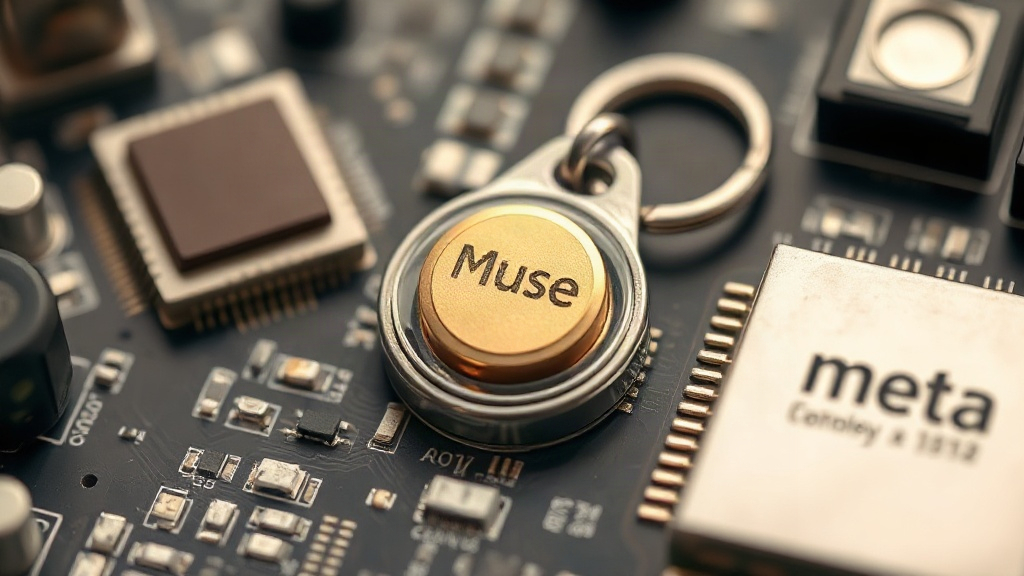
A close-up of Meta's Muse Charm, showcasing its compact design suitable for a keychain

Functionality and User Experience

The Muse Charm's capabilities are centered on quick information retrieval and task execution. Users can reportedly ask the AI questions, get summaries, or even have it perform simple actions. The key differentiator is the form factor and the implied speed and convenience. Meta is betting that a dedicated, always-accessible AI device will foster more frequent and natural interactions than pulling out a smartphone. This could be particularly useful for on-the-go scenarios where immediate access to information or a quick command is needed. For instance, a user might ask the Charm for directions, a quick fact check, or to set a reminder without interrupting their current activity. The device is expected to leverage Meta's existing AI models, likely optimized for on-device processing or rapid cloud connectivity to ensure low latency. The success of this product will hinge on its ability to deliver genuinely useful, context-aware assistance that feels seamless and unobtrusive. The challenge for Meta is to make the Charm more than just a novelty; it needs to solve real user pain points that current devices don't address effectively.

Beyond the Smartphone: The Ambient AI Trend

The Muse Charm is part of a broader industry trend towards ambient computing and AI integration into physical objects. For years, tech giants have explored how to make AI less about a specific application and more about an ever-present utility. Smartwatches, smart glasses, and even smart clothing are all part of this larger ecosystem. Meta's entry with a dedicated keychain device is a bold statement, suggesting that even simpler, more accessible form factors can be powerful vectors for AI. This approach aims to bypass the often bulky and complex interfaces of other wearable AI devices. It’s an attempt to democratize AI access by embedding it into an object that is already a common part of people's daily carry. The implications for how we interact with technology are significant. If successful, the Muse Charm could pave the way for AI to be integrated into an even wider array of personal items, from wallets to jewelry, creating a truly pervasive AI environment. This isn't just about a new gadget; it's about redefining the user's relationship with artificial intelligence, making it a constant, subtle, yet powerful companion.

The Competitive Landscape and Future Implications

Meta's move into the dedicated AI hardware space, even with a small device, places it in direct competition with companies exploring similar avenues. While specific competitors for a keychain-sized AI assistant are nascent, the broader field includes players like Humane with its AI Pin and potentially future offerings from Apple, Google, and others exploring wearable AI. The Charm's success could influence how these companies approach hardware strategy for AI. If Meta can demonstrate a compelling use case and a smooth user experience, it might spur further innovation in minimalist AI hardware. For developers, this opens up new avenues for creating AI-powered applications and integrations that are optimized for quick, on-the-go interactions. The underlying challenge remains the same: creating AI that is genuinely helpful without being intrusive, and doing so in a form factor that is both practical and desirable. The December shipping date will be a critical point to observe how the market reacts and how effectively Meta can execute its vision for ambient AI.