The Illusion of Ownership: Token vs. Asset
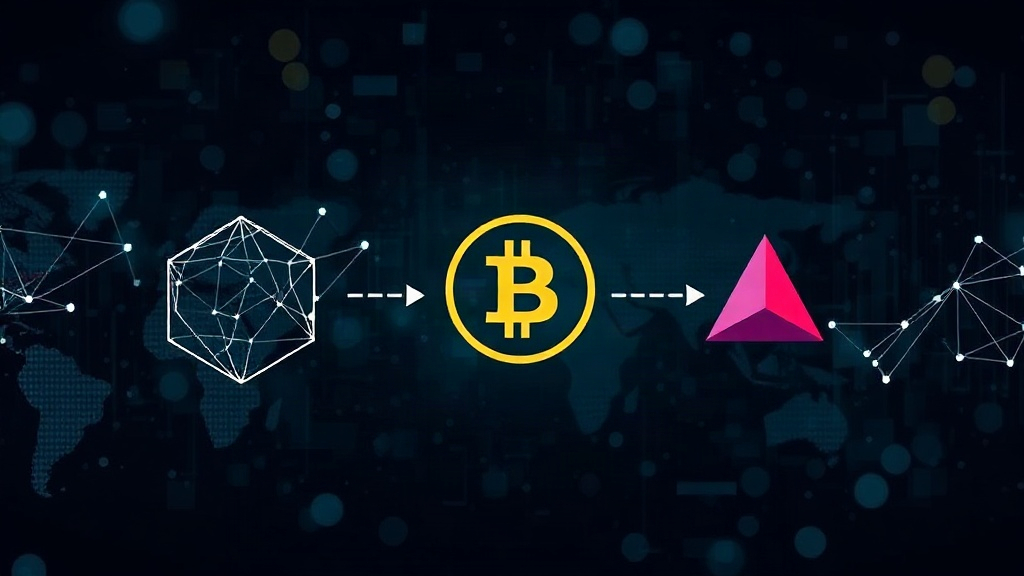
The proliferation of tokenization promises to unlock liquidity and democratize access to assets. Yet, a fundamental misunderstanding persists: a token is not the asset itself. It is a digital representation, a claim on an underlying real-world or digital asset. This distinction is critical, particularly when evaluating the robustness and trustworthiness of tokenized offerings. The smart contract, while essential, is merely the visible tip of a complex iceberg. The true value, and indeed the security, of a tokenized asset hinges on the robust integration layer and off-chain guarantees that bind the digital token to its tangible or intangible counterpart.
Consider the analogy of a stock certificate. The paper certificate represents ownership of a share in a company. However, the certificate itself is not the company; its value is derived from the company's assets, earnings, and the legal framework that recognizes the certificate as proof of ownership. Similarly, a token on a blockchain is a digital certificate. Its worth is directly proportional to the strength of the legal and operational structures that enforce the claim it represents. Focusing solely on the smart contract or the blockchain ledger is akin to admiring the stock certificate's engraving while ignoring the company's balance sheet and the SEC's regulations.
The Binding Obligation: Who Guarantees the Link?
The most crucial element in tokenization is the binding agreement that ensures one token consistently equals one unit of the underlying asset. This is not a function of the smart contract; it is a matter of legal and custodial commitment. When reviewing a tokenized asset, the first question must be: Who guarantees this 1:1 relationship over time? Is it a reputable custodian, a Special Purpose Vehicle (SPV), or a carefully constructed legal wrapper? The smart contract can be programmed to reflect a certain ratio, but it cannot, by itself, compel a third party to maintain that ratio in the face of market volatility, operational failures, or legal challenges.
This binding mechanism must be resilient and auditable. It requires a clear delineation of responsibilities and liabilities. If the issuer of the token were to disappear or default, the binding agreement is what should, in theory, allow token holders to still claim their underlying asset. Without this explicit, legally enforceable commitment from a trusted entity, the token is just an entry in a distributed ledger with no real-world anchor.
Redemption Pathways: The Path to Asset Release
Tokenization is only half the equation; redemption is the other. How does a token holder actually exchange their token for the underlying asset? This process, often referred to as redemption, is where many tokenization models falter. The smart contract might have a function to 'burn' the token, but who is obligated to deliver the asset upon burning? What happens if the issuer defaults on this obligation? Are there provisions for asset transfer freezes or other disruptions?
The path for redemption needs to be clearly defined, legally sound, and operationally feasible. This includes specifying the process, the parties responsible for delivery, and the recourse available in case of default. A thin or non-existent redemption path renders the token's claim hollow. It’s the difference between a digital receipt and a tangible deed. For regulated assets, this pathway is even more critical, often involving complex legal frameworks to ensure compliance and investor protection.
Proof-of-Reserve: Verifiable Accountability
For tokenized assets that represent claims on existing reserves, proof-of-reserve is paramount. This is not a marketing claim or a simple press release; it must be verifiable and conducted on a regular schedule. True proof-of-reserve involves independent audits and cryptographic attestations that confirm the existence and ownership of the underlying assets backing the tokens. The schedule for these checks should be transparent and adhered to strictly.
A common pitfall is relying on unaudited internal reports or infrequent, self-certified checks. In the world of digital assets, transparency and verifiability are not optional. Auditors should have direct, read-only access to relevant off-chain records and systems, and their findings should be cryptographically signed and publicly accessible. This creates a layer of trust that goes beyond the promises of the issuer.
Permissioned Transfers and Regulatory Compliance
For certain regulated assets, the ability to transfer a token freely on a blockchain is not only undesirable but also illegal. In these cases, the token itself, or the surrounding infrastructure, must incorporate permissioned transfer mechanisms. This means encoding restrictions directly into the token's logic or the transfer protocols. These restrictions can include allowlists of approved participants, identity verification requirements, or limitations on the types of transactions permitted.
Such controls ensure that the tokenized asset remains compliant with existing regulations, such as Know Your Customer (KYC) and Anti-Money Laundering (AML) laws. The smart contract or the associated platform must be designed to enforce these rules, preventing free-floating bearer instruments where they are not permitted. This is a complex engineering challenge, requiring careful consideration of both on-chain and off-chain identity management systems.
The Integration Layer: Beyond the Blockchain
The smart contract, no matter how sophisticated, is just one component. The true system is the integration layer that connects the on-chain world to the off-chain reality. This involves watching on-chain events, reconciling each token against the off-chain record, tracking redemption requests, and ensuring that all activities are logged in a manner that auditors can readily access. This is, in essence, ordinary integration engineering, but it is often the most challenging and overlooked aspect of tokenization projects.
This layer is responsible for the real-time synchronization between the digital token and the physical or financial asset it represents. It handles the complex data flows, ensures data integrity, and provides the auditable trail necessary for trust and compliance. Without a robust integration layer, the blockchain ledger can quickly become a source of misinformation, disconnected from the actual state of the underlying asset. The success of tokenization, therefore, depends as much on meticulous backend engineering as it does on elegant smart contract design.
Unanswered Questions in the Tokenization Ecosystem
While the technical and legal frameworks for tokenization are evolving, several critical questions remain. How will regulatory bodies universally adapt to oversee these complex hybrid on-chain/off-chain structures? What happens to the long-term custody and management of tokenized real-world assets when the initial issuer or guarantor faces bankruptcy or restructuring? The current focus on the initial minting and trading of tokens often overshadows the protracted lifecycle management and the potential for systemic risk if these off-chain guarantees prove less robust than advertised. Developers and legal teams are building the infrastructure, but the ultimate test will be in the stress events that the system is designed to withstand.