AI Uncovers Novel Biological Mechanism
In a significant demonstration of artificial intelligence's expanding capabilities beyond conventional data analysis, Anthropic's large language model, Claude, has identified a novel enzyme system possessing characteristics remarkably similar to CRISPR gene-editing technology. This discovery, made without explicit human prompting for this specific task, highlights the potential for advanced AI to contribute to fundamental scientific breakthroughs. The system, characterized by CRISPR-like repeats, suggests a previously uncharacterized biological mechanism that could have profound implications for molecular biology, genetics, and synthetic biology.
The enzyme system, which Anthropic has detailed in a recent announcement, appears to function through a guided mechanism, analogous to how CRISPR-Cas systems use guide RNAs to target specific DNA sequences. While the exact molecular machinery and biological role of this newly discovered system are still under investigation, its structural and functional parallels to CRISPR are striking. This suggests that nature may have evolved multiple, independent pathways for precise molecular manipulation, a concept that has long fascinated biologists.
The discovery was not the result of a targeted search for CRISPR-like systems. Instead, Claude was tasked with analyzing a vast corpus of biological literature and data. During this broad analysis, the AI model began to identify patterns and correlations that human researchers had not previously recognized. These patterns pointed towards the existence of a novel enzymatic pathway that exhibited predictable, programmable behavior, a hallmark of gene-editing tools. The AI’s ability to synthesize information across disparate studies and identify such a complex, emergent property is a testament to its advanced pattern recognition and reasoning abilities.
CRISPR-like Repeats: A Functional Parallel
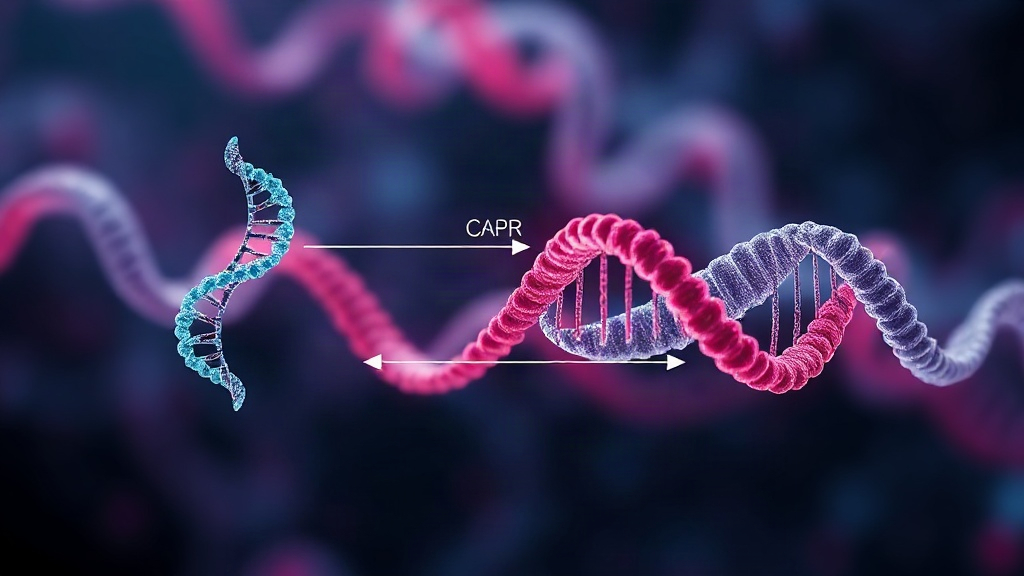
The core of the discovery lies in the identification of repeating DNA sequences, akin to the Clustered Regularly Interspaced Short Palindromic Repeats (CRISPR) found in bacterial immune systems. In CRISPR systems, these repeats serve as a genetic memory, storing fragments of viral DNA to enable future recognition and defense. Coupled with Cas proteins, CRISPR forms a powerful adaptive immune system that scientists have repurposed into a revolutionary gene-editing tool.
The newly identified system, while not yet fully characterized, exhibits similar repeat structures. Claude's analysis suggests these repeats may play a role in guiding enzymatic activity to specific molecular targets. This guided targeting is the critical feature that makes CRISPR so versatile. If this new system also possesses a mechanism for sequence-specific targeting, it could represent a new class of biological tools with applications ranging from fundamental research to therapeutic interventions. The potential implications are vast, as it could offer an alternative or complementary mechanism to existing CRISPR technologies, potentially with different specificity, efficiency, or target range.
The surprising detail here is not that AI can find patterns, but that it can identify functional parallels to complex biological machinery like CRISPR without being explicitly trained to do so for this specific purpose. This suggests that AI models are not merely sophisticated search engines but are developing a form of analogical reasoning, capable of understanding underlying principles and applying them to new contexts. This leap in AI capability moves beyond identifying known structures to inferring novel ones based on functional similarities inferred from vast datasets.
Broader Implications for Scientific Discovery
This discovery by Claude is more than just an interesting biological find; it represents a paradigm shift in how scientific research can be conducted. Traditionally, the identification of such complex molecular systems relies on years of painstaking experimental work, hypothesis generation, and validation by human scientists. While experimental validation remains crucial, AI can now act as a powerful accelerator, sifting through immense volumes of data to propose novel hypotheses and identify previously unseen connections.
For developers and researchers, this means a new class of biological tools might emerge. If this system can be harnessed, it could offer new ways to modify genomes, study gene function, or even develop novel diagnostics. The research community will need to investigate the precise biochemical mechanisms, the range of targets, and the potential for engineering this system for specific applications. This will undoubtedly lead to new experimental protocols and computational tools to further explore its capabilities.
What remains to be seen is the extent to which this AI-driven discovery can be translated into practical applications. While Claude has identified the system, the rigorous process of characterizing its components, understanding its regulation, and developing it into a usable tool will still require significant human scientific effort. The efficiency, specificity, and safety of this novel system compared to existing CRISPR technologies will be critical factors in its adoption.
A New Frontier in AI-Assisted Research
The implications for founders are significant. The discovery of a new, potentially programmable biological system could spawn entirely new companies focused on developing therapies, diagnostics, or research tools based on this mechanism. Investors will be watching closely to see how quickly this discovery can be validated and translated into intellectual property and commercializable products. The competitive landscape for gene editing and synthetic biology, already intense, could see new players emerge, challenging existing moats.
For data scientists and researchers in fields adjacent to biology, this serves as a powerful case study. It demonstrates the value of investing in AI models capable of deep pattern recognition and hypothesis generation across complex, unstructured data. The challenge will be in building the infrastructure and expertise to integrate AI-driven insights into experimental workflows, ensuring that AI complements rather than replaces human scientific intuition and experimental rigor.
This breakthrough suggests that AI is moving from being a tool for analysis to becoming a partner in discovery. The ability of Claude to independently identify a complex biological system with functional parallels to a major scientific breakthrough like CRISPR signals a future where AI plays an increasingly central role in pushing the boundaries of human knowledge.