The Problem: Bloated LLM Prompts
Large Language Models (LLMs) are powerful, but their operational cost is directly tied to the amount of data processed per query. This data, measured in tokens, accumulates rapidly from sources like noisy logs, redundant code comments, or overly verbose data structures. Developers often find themselves sending far more information to the model than is strictly necessary for it to perform its task, leading to inflated costs and slower response times. This inefficiency is a persistent challenge for teams relying on LLM-powered applications.
The core issue is that standard LLM interaction patterns often involve sending entire context windows, regardless of whether every piece of information is relevant. This includes historical data, system configurations, or even repeated pieces of code that do not change between queries. The result is a significant waste of tokens, directly translating to higher expenses and potentially impacting the scalability of LLM-based solutions.
Introducing Token Firewall: A Novel Approach
To combat this, a new technique called "Token Firewall" has emerged. This method focuses on intelligently filtering the input data *before* it reaches the LLM, drastically reducing the token count without compromising the essential context required for the task. The goal is to act as a gatekeeper, allowing only necessary information to pass through, thereby optimizing LLM usage.
The effectiveness of this approach was demonstrated through a benchmark test using a project named ejemplo-token-firewall. This project contained a code file and a log file. The log file, in particular, was characterized by significant redundancy, with 48 out of its 53 lines being nearly identical. This setup provided a clear scenario for evaluating the impact of token reduction.
Quantifiable Savings: The Benchmark Results
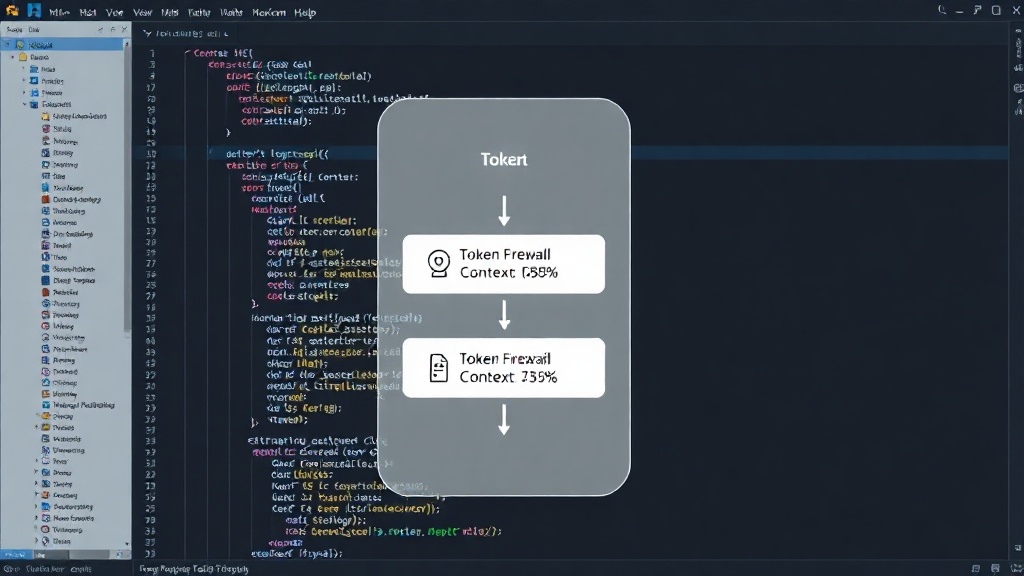
The benchmark results clearly illustrate the power of the Token Firewall. In the test scenario, the system was run in two configurations:
- Without Token Firewall: The original configuration sent 2,737 tokens per run. This represents the baseline cost and volume of data typically sent to an LLM without any optimization.
- With Token Firewall: After implementing the Token Firewall, the system sent only 1,764 tokens per run.
This represents a direct reduction of 35.6% in token usage. Crucially, this saving was achieved without any modifications to the underlying codebase or any alteration to the semantic meaning of the context provided to the LLM. The intelligence lies in how the data is pre-processed and filtered, not in changing the application's core logic.
The Cache Layout Guard: Enhancing Stability
Beyond the core token filtering, the Token Firewall implementation includes a feature called the Cache Layout Guard. This component is designed to reorganize the prompt structure in a way that maintains a stable prefix. In the example provided, this stable prefix, consisting of agents, skills, and the core prompt, amounted to 1,167 tokens.
Maintaining a stable prefix is particularly important for LLM providers like Anthropic, OpenAI, and Gemini. Many of these platforms offer features that can leverage consistent prompt structures, potentially for caching, faster processing, or triggering specific model behaviors. By ensuring the initial part of the prompt remains consistent, the Token Firewall makes the input more amenable to these specialized provider optimizations, further enhancing efficiency and potentially reducing latency.
Implications for Developers and Businesses
The implications of the Token Firewall are significant for anyone working with LLMs. For developers, it offers a clear path to reducing operational expenses without the complex and time-consuming task of refactoring existing code. This means cost savings can be realized rapidly, allowing teams to allocate resources more effectively towards developing new features or improving core functionalities.
For businesses, the financial benefits are substantial. A 35% reduction in token costs directly translates to a lower total cost of ownership for LLM-powered applications. This is particularly critical for startups and smaller companies where cost efficiency is paramount. Furthermore, by reducing the amount of data processed, the system can potentially achieve faster response times, leading to a better user experience. This technique democratizes the use of powerful LLMs by making them more economically viable for a wider range of applications and budgets.
Future Directions and Considerations
While the Token Firewall demonstrates impressive results, several questions remain regarding its broader applicability and long-term impact. The effectiveness of the filtering mechanism will undoubtedly depend on the specific nature of the data being processed and the task the LLM is intended to perform. For instance, tasks requiring a deep analysis of unstructured, highly variable data might see diminishing returns compared to scenarios involving repetitive logs or code.
What remains to be explored is how this technique can be integrated into existing LLM orchestration frameworks and MLOps pipelines. Standardizing the implementation of such firewalls could lead to industry-wide cost reductions. Additionally, understanding the trade-offs between filtering aggressively and potentially losing subtle but important contextual nuances is an ongoing area of research and development. The balance between cost savings and maintaining optimal model performance will be key.