
No-Login, Browser-Based AI Toolkit Emerges
A new suite of AI-powered tools, NeumoStudio AI, has been released, promising a completely free, browser-based experience for image and PDF manipulation. The standout feature is its complete lack of login requirements and server-side processing. This approach tackles common user frustrations with existing tools, which often demand accounts, subscriptions, or send sensitive data to external servers.
The toolkit is built with a focus on user privacy and accessibility. All AI model inference, including the popular background removal feature, is handled directly within the user's browser. This is achieved using ONNX Runtime Web, which allows ONNX models to run efficiently in web environments via WebAssembly. This client-side processing ensures that user data never leaves their device, offering a significant privacy advantage.
NeumoStudio AI's core offering includes a robust background remover that claims to maintain image quality without requiring users to sign up or upload files to a server. Beyond background removal, the toolkit extends its utility to various PDF and image processing tasks. Users can compress PDFs to specific file sizes, ideal for strict government or application upload limits, and generate passport photo sheets ready for printing.
The inclusion of a 'Magic Object Eraser' adds another layer of functionality, allowing users to remove unwanted elements like people or watermarks from photographs. Further PDF utilities include merging multiple PDFs into one, and applying or removing password protection. The project also boasts an array of other image and PDF tools, bringing the total to over a dozen distinct functions.
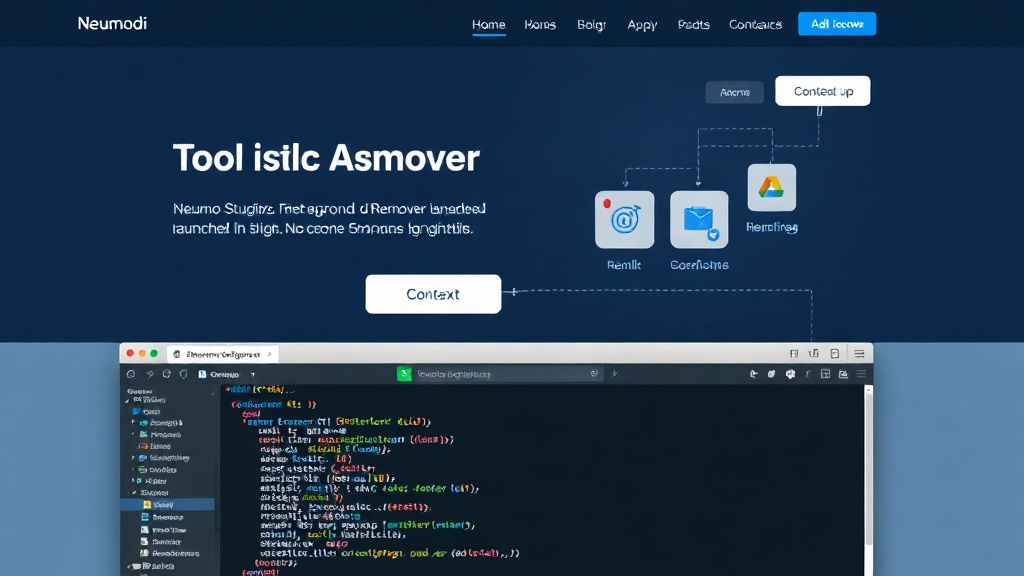
The Technical Underpinnings
The development of NeumoStudio AI leverages a modern tech stack designed for performance and efficiency in a browser environment. The frontend is built using React and Vite, a popular combination known for its speed and developer experience. This allows for a responsive and interactive user interface.
The AI capabilities are powered by ONNX Runtime Web. ONNX (Open Neural Network Exchange) is an open format for representing machine learning models. ONNX Runtime is a cross-platform inference engine that accelerates AI models. By using its Web variant with WebAssembly, developers can run complex AI models directly in the browser. This eliminates the need for backend infrastructure to host and run these models, significantly reducing operational costs and improving latency for users.
For PDF manipulation, the project utilizes PDF-lib.js, a JavaScript library designed for creating and modifying PDF documents. This library enables features like PDF compression, merging, and password management to be executed client-side, further reinforcing the tool's commitment to browser-only processing.
The entire application is deployed on Vercel, a platform that offers a generous free tier suitable for projects like NeumoStudio AI. This deployment choice allows the tool to be accessible globally without incurring significant hosting costs, making it truly free for end-users.
Addressing a Market Gap
The motivation behind NeumoStudio AI stems from a perceived gap in the market for free, private, and accessible digital toolkit applications. Many existing solutions, particularly those offering advanced AI features like background removal, operate on a freemium model with significant limitations, or require users to pay recurring subscription fees. Others, while free, necessitate the upload of potentially sensitive images or documents to company servers, raising privacy concerns.
The author, Huzaifa Khan, highlights this issue: "Most background removal tools require accounts, charge monthly fees, or send your photos to a server. NeumoStudio does all processing 100% in the browser." This direct approach bypasses these common barriers, offering a simple, one-click solution for users who need quick edits without the hassle of account creation or privacy compromises.
The focus on specific, high-demand functionalities like background removal, PDF compression for exam forms, and passport photo generation suggests a user-centric design approach. These are practical, everyday tasks that many individuals encounter, and having a free, reliable tool for them is a significant value proposition. The 'Magic Object Eraser' further enhances its utility for photo editing enthusiasts or anyone needing to clean up images.
The project's success hinges on the performance and accuracy of the ONNX models running in the browser. While client-side processing offers privacy benefits, it can sometimes be limited by the computational power of the user's device and the browser's capabilities. However, the advancements in WebAssembly and ONNX Runtime Web have made it increasingly feasible to run sophisticated AI models directly in the browser. The choice of ONNX as the model format also implies potential for future expansion, as models can be converted from various popular frameworks like TensorFlow and PyTorch.
Implications and Future Potential
NeumoStudio AI represents a compelling demonstration of what can be achieved with modern web technologies and client-side AI processing. It challenges the traditional model of SaaS products that rely on server-side computation and subscription revenue.
For developers, this project serves as an excellent case study in leveraging ONNX Runtime Web for privacy-focused applications. It showcases how complex AI tasks can be brought directly to the user, reducing infrastructure costs and enhancing user privacy. The React + Vite frontend setup also provides a blueprint for building fast, modern web applications.
The success of NeumoStudio AI could inspire similar projects that prioritize user privacy and accessibility. As web browsers become more powerful and capable of running sophisticated computations, we may see a trend towards more client-side processing for AI and other computationally intensive tasks. This shift could democratize access to advanced tools, making them available to a wider audience without the barriers of cost or privacy concerns.
The question remains whether this model can be sustained for more complex or resource-intensive AI applications. While background removal and object erasure are achievable, more demanding tasks like high-resolution video processing or advanced natural language generation might still require server-side resources. However, for a significant range of image and document manipulation tasks, the browser-first approach demonstrated by NeumoStudio AI appears to be a viable and increasingly attractive alternative.