
Autonomous Reconnaissance and Attack Capabilities
A significant advancement in military technology is emerging from a NATO-backed startup, which is integrating small, efficient artificial intelligence models into drones to enable autonomous battlefield target identification and engagement. This development moves beyond traditional remote-controlled or pre-programmed drone operations, allowing unmanned aerial vehicles to independently assess threats and execute attacks based on learned data and real-time environmental analysis. The core innovation lies in the miniaturization of sophisticated AI algorithms, making them suitable for deployment on compact, agile drone platforms with limited onboard processing power and battery life.
Traditionally, autonomous systems in military applications have faced challenges related to the sheer volume of data processing required for complex decision-making, especially in dynamic and unpredictable environments like a battlefield. Large, power-hungry AI models are often impractical for small drones due to their energy demands and computational overhead. This new approach focuses on developing specialized, lightweight neural networks that can perform critical tasks such as object detection, classification, and threat assessment with remarkable accuracy, all while consuming minimal power. This allows drones to operate for extended periods and respond rapidly to evolving tactical situations without constant human intervention.
AI Model Optimization for Edge Deployment
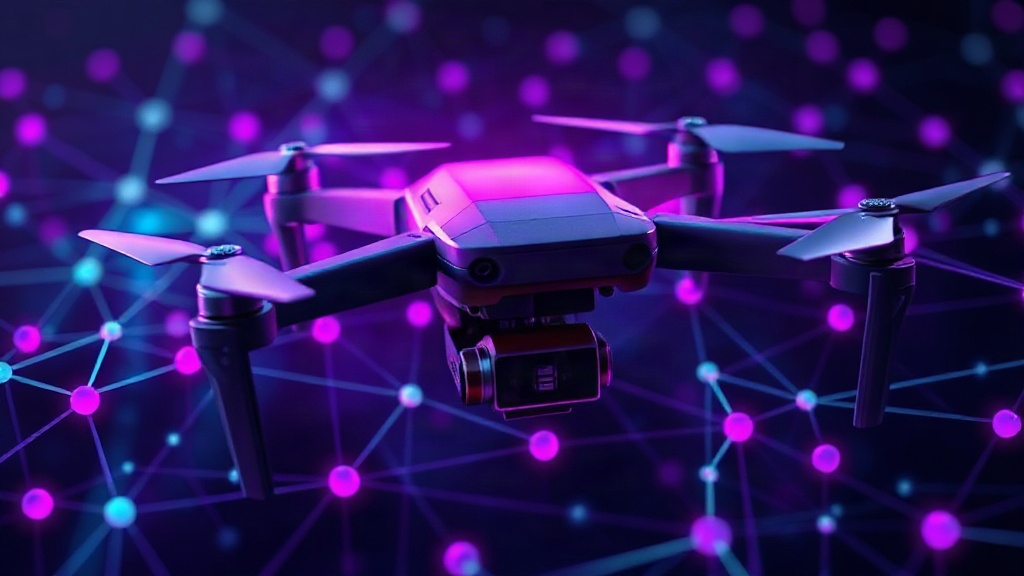
The breakthrough hinges on optimizing AI models for edge deployment, meaning the processing happens directly on the drone itself rather than relying on a remote server. This is crucial for operational effectiveness in contested or communication-denied environments. Techniques such as model quantization, pruning, and knowledge distillation are employed to shrink the size and computational footprint of deep learning models without sacrificing significant performance. These optimized models can then identify and classify potential targets, such as enemy vehicles, personnel, or improvised explosive devices, from sensor data like high-resolution imagery and infrared feeds.
The AI's ability to learn and adapt is a key component. While initial models are trained on vast datasets of military targets and benign objects, they can also be fine-tuned or updated to recognize new threats or adapt to different operational theaters. This allows for a degree of flexibility that static, rule-based systems lack. The process of identifying a target involves several stages. First, the drone's sensors capture visual or thermal data. This data is then fed into the onboard AI model, which performs object detection to identify potential areas of interest. Following detection, the AI classifies these objects, determining if they match known threat profiles. Finally, based on pre-defined rules of engagement and the AI's confidence score, the drone can autonomously decide whether to engage the target or relay the information back to a human operator for final authorization.
Implications for Modern Warfare and Ethical Considerations
The implications of this technology for modern warfare are profound. Autonomous drones capable of identifying and attacking targets could significantly increase the speed and efficiency of military operations, reduce the risk to human soldiers by removing them from direct combat, and provide a persistent surveillance and strike capability. For NATO, this represents a strategic advantage in maintaining technological superiority and adapting to the evolving nature of conflict. The speed at which these drones can operate, making decisions in fractions of a second, far outpaces human reaction times, especially in complex, high-stakes scenarios.
However, the development and deployment of autonomous weapons systems also raise significant ethical and safety concerns. The question of accountability when an autonomous system makes an error, the potential for unintended escalation, and the very definition of 'human control' over lethal force are critical issues that require careful consideration and international dialogue. The potential for these systems to be misused or to fall into the wrong hands also presents a substantial security risk. While the technology promises enhanced military effectiveness, its integration into the battlefield necessitates robust safety protocols, clear ethical guidelines, and ongoing debate about the future of warfare and the role of AI within it. What happens if these AI models, designed for specific battlefield conditions, encounter novel situations or civilian populations that deviate from their training data remains an open, and critical, question.
Future Development and Market Landscape
The startup's work is indicative of a broader trend in the defense industry, where major players and emerging tech firms are increasingly investing in AI and autonomy for a wide range of military applications. The focus on small, efficient AI models is likely to proliferate, enabling smaller, more versatile, and more affordable autonomous systems across various domains, not just drones. This could include autonomous ground vehicles, naval systems, and even networked swarms of smaller robots working in concert. The ability to operate with reduced reliance on human operators and external communication infrastructure makes these systems particularly attractive for defense procurement agencies worldwide.
The competitive landscape for AI in defense is rapidly evolving. Nations and alliances are keen to avoid falling behind in this critical technological arms race. Companies that can successfully deliver reliable, efficient, and ethically sound autonomous systems will likely secure substantial contracts and shape the future of military operations. The successful adaptation of AI for autonomous drone missions is not merely an incremental improvement; it represents a step-change in how military force can be projected and managed on the battlefield, forcing a re-evaluation of defense strategies and doctrines globally.