Sierra Unveils Multimodal AI Agents
Sierra has launched a new suite of AI agents designed to break down the barriers between different input modalities. These agents can process and respond to information delivered through voice, text, and visual cues, promising a more integrated and intuitive human-AI interaction experience. The move addresses a growing demand for AI systems that can understand context across various forms of communication, moving beyond single-channel interactions.
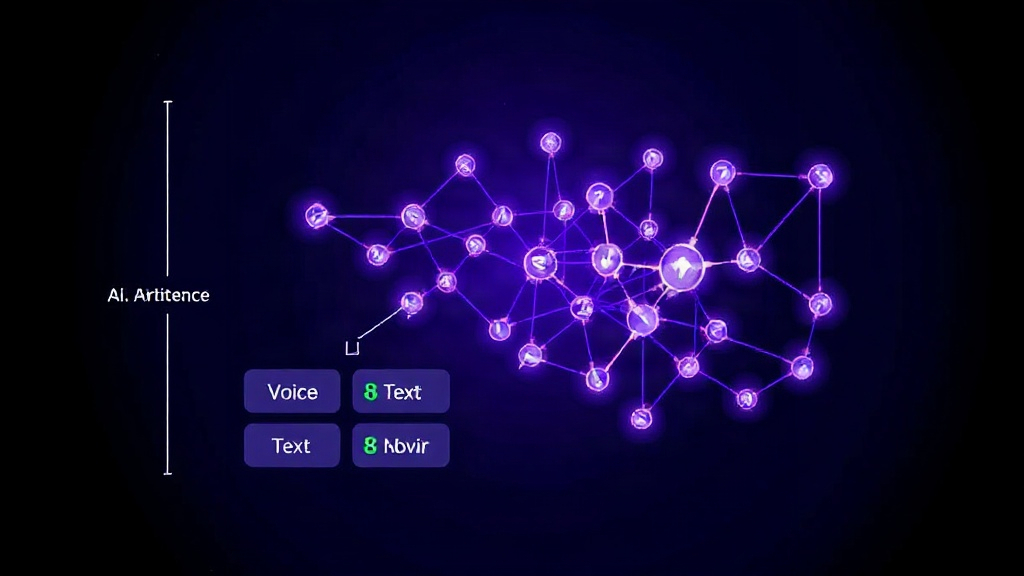
Traditionally, AI agents have been siloed. You might have a voice assistant for hands-free commands, a chatbot for text-based queries, and separate image recognition tools for visual analysis. Sierra's approach seeks to consolidate these capabilities into a single agent, allowing for a more fluid and context-aware exchange. Imagine an agent that can listen to your spoken request, analyze a diagram you send via text or image, and then provide a synthesized answer that incorporates all these data points. This is the core promise of Sierra's multimodal agents.
The development signifies a significant step towards more general-purpose AI assistants that can operate in real-world scenarios, which are inherently multimodal. Unlike a purely text-based LLM, Sierra's agents can interpret the nuances of spoken language, the specificity of visual data, and the directness of typed commands. This allows them to handle more complex tasks that require understanding information from multiple sources simultaneously. For instance, a user could describe a problem verbally, point to a specific component in a shared image, and then ask for a text-based solution, all within a single interaction.
The underlying technology likely involves advanced neural network architectures capable of fusing information from different sensory inputs. This fusion is critical. Simply processing each modality separately and then combining the outputs is less effective than models that learn to represent and reason about information in a shared latent space. This shared representation allows the agent to draw deeper connections between, say, a spoken word and a corresponding visual element, enhancing comprehension and response accuracy. This is akin to how humans naturally integrate what they see, hear, and read to form a complete understanding of a situation.
Bridging the Gap in AI Interaction
The significance of multimodal AI lies in its ability to mirror human cognition more closely. Humans don't typically interact with the world using only one sense. We see, hear, touch, and process information holistically. AI agents that can do the same are better equipped to understand context, intent, and subtle cues that are often lost in single-modality systems. For developers and businesses, this translates to more robust and user-friendly applications.
Consider customer support scenarios. A user could describe a technical issue verbally, send a screenshot of an error message, and then type a follow-up question. A multimodal agent could analyze the voice tone for frustration, identify the specific error code in the screenshot, and understand the typed query to provide a more accurate and empathetic solution. This is a far cry from current systems that often require users to repeat information or navigate through separate support channels for different types of problems.
For creative professionals, these agents could assist in tasks like generating visual content based on spoken descriptions, or editing existing images based on verbal commands that refer to specific visual elements. For example, a designer could say, "Make this background greener, but not too bright, and ensure the text on the left remains sharp." The agent would need to parse the spoken request, identify the relevant visual elements (background, text, left side), and apply the described modifications, understanding the comparative nature of "greener" and "not too bright."
The Road Ahead for Multimodal AI
While Sierra's announcement is a notable advancement, the field of multimodal AI is still rapidly evolving. Key challenges remain in achieving true contextual understanding across modalities, handling ambiguity, and ensuring efficient processing without significant latency. The ability to maintain context over extended interactions involving multiple modalities is also a frontier that requires further innovation.
What remains to be seen is how Sierra's agents will perform under real-world, noisy conditions. Voice recognition can falter in loud environments, and image analysis can be hindered by poor lighting or low resolution. The true test will be the robustness and accuracy of these agents when faced with the imperfections of everyday data. Furthermore, the ethical implications of AI agents that can process and interpret such a wide range of human input, including potentially sensitive visual or auditory data, will require careful consideration and robust privacy safeguards.
Sierra's entry into this space signals a broader industry trend towards more integrated AI experiences. As these technologies mature, we can expect to see a wave of new applications that leverage multimodal understanding to create more natural, efficient, and powerful human-computer interfaces. The ability to seamlessly blend voice, text, and visual communication is no longer a futuristic concept but an emerging reality, and Sierra is positioning itself at the forefront of this shift.