The Challenge of Timely Key Revocation
In systems where access is controlled by unique, scoped keys—such as customer support platforms issuing keys per tenant—minimizing the time it takes to revoke access is paramount. The critical metric isn't just the average speed of revocation, but the certainty that access has ceased and the auditable record of when that change was confirmed. This is particularly true for support desks where a single key's revocation on a specific afternoon must be indisputably logged.
The responsibility for ensuring a revocation event is reliably received and acted upon rests solely with the system that needs to revoke the key. Webhook senders operate on their own retry budgets. Once that budget is exhausted, the event is dropped, and the receiving system is the only entity that can detect and compensate for the missed communication.
This means the architecture must prioritize provable revocation over merely fast delivery. While webhooks offer near real-time notifications, they do not inherently guarantee delivery or provide a persistent record of success for the recipient. The system must be designed to handle potential failures in the push channel.
Leveraging Webhooks for Speed
Webhooks provide the fastest path for communicating a revocation event. When an issuer needs to revoke a key, it can send a webhook to the gateway system. This push mechanism can deliver the revocation instruction from the issuer to the gateway in a matter of seconds. This speed is crucial for immediately cutting off access when a security incident occurs or a subscription is terminated.
The webhook payload typically contains all necessary information: the identifier of the key to be revoked, the reason for revocation, and potentially a timestamp from the issuer. The gateway receives this payload and initiates the revocation process for the specified key.
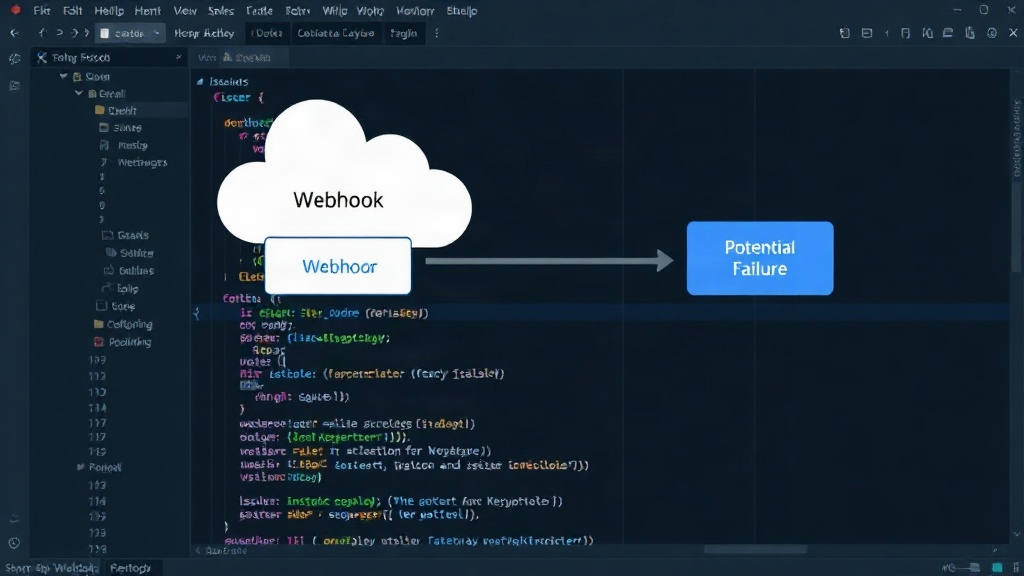
However, relying solely on webhooks presents a significant risk. Network interruptions, temporary outages on the receiver's end, or sender-side rate limiting can all cause webhook deliveries to fail. The sender's retry mechanism might eventually give up, leaving the receiver unaware that a revocation instruction was never processed.
The Scheduled Polling Backstop for Reliability
To address the inherent unreliability of the push channel, a scheduled polling backstop is essential. This secondary mechanism ensures that even if webhooks fail, the revocation is eventually confirmed and recorded. The polling process acts as a verification step, confirming that the revocation instruction was indeed processed by the system.
The polling interval should be carefully considered. For systems requiring high assurance of revocation, polling might occur frequently, perhaps every few minutes. However, for scenarios where immediate, provable confirmation isn't critical every second, a longer interval, such as hourly, is sufficient. The key is that polling provides a definitive, albeit delayed, confirmation. It tells you whether the revocation actually landed in the system and was acted upon.
When a scheduled poll runs, the gateway system queries the issuer or a central revocation list to check the status of keys that were recently targeted for revocation via webhook. If a key that was supposed to be revoked is still active, the polling mechanism triggers an alert or a manual intervention process. This ensures that no revocation goes unnoticed or unconfirmed.
Integrating Push and Pull for Auditable Revocation
The optimal architecture combines the speed of webhooks with the reliability of scheduled polling. The webhook intake handles the immediate notification, aiming for sub-second or few-second latency. The scheduled poll, running at a predetermined interval (e.g., hourly), serves as the auditable proof. It confirms that the revocation instruction received via webhook was successfully executed.
This dual-channel approach addresses both the need for prompt access denial and the requirement for an irrefutable record. The webhook is the primary, fast path. The poll is the safety net and the audit trail. If a webhook fails, the scheduled poll will eventually detect the unrevoked key, prompting investigation. If the webhook succeeds, the poll will confirm the revocation, solidifying the audit log.
The architecture decision hinges on the ability to reconstruct the state of access for any given key at any point in time. This means knowing not just when access was requested to be revoked, but critically, when that revocation was confirmed. This level of detail is vital for security audits, compliance, and customer support investigations.
Ownership of Reliability
It is crucial to reiterate that reliability ownership never shifts from the receiver. While the issuer initiates the revocation and sends the webhook, the gateway receiving the notification is responsible for ensuring it is processed and for maintaining a verifiable record. This principle holds true even if the webhook delivery fails. The gateway must implement mechanisms—like the scheduled polling backstop—to mitigate the risks associated with external communication failures.
This might seem like an unfair burden, but it is a consequence of distributed system design and delivery semantics. The sender's obligation ends when their retry budget is depleted. The receiver, therefore, must be the ultimate guarantor of its own system's state and integrity. Designing for this self-sufficiency is key to building robust and trustworthy systems.
Conclusion: A Two-Pronged Approach
Shrinking key revocation latency while ensuring provable confirmation requires a carefully designed system. By using webhooks for their speed and a scheduled polling mechanism as a reliable backstop, organizations can achieve both rapid revocation and auditable certainty. This hybrid approach ensures that access is terminated swiftly and that the event is verifiably logged, providing the necessary assurance for security-sensitive applications.