The Limits of Static Mock APIs
Frontend developers frequently hit a wall when their backend services lag behind. To keep development velocity high, mock APIs are a common solution. They simulate backend responses, allowing teams to build and test interfaces without a live API. However, most free, popular mock API services operate on a static model. They return the same predefined data for every request, regardless of what has happened before.
Consider the typical CRUD (Create, Read, Update, Delete) workflow. A developer might build a form to create a new post. Upon submission, the mock API might return a 201 Created status and a JSON object with a new ID. This feels like a success. The frontend registers the creation and might optimistically display the new item. But when the developer navigates away and returns, or refreshes the page, the new item is gone. A subsequent GET request for the specific ID returns a 404 Not Found. This happens because the mock API never actually 'remembered' or persisted the data from the POST request. It simply sent back a pre-programmed response.
This limitation forces developers into awkward workarounds. They might manually edit mock data files to simulate new entries, or write custom scripts to inject data before testing specific scenarios. These methods are time-consuming and brittle, often introducing errors or failing to accurately reflect real-world API behavior. The core problem is that most mock APIs treat every request in isolation, akin to a vending machine that dispenses the same snack every time, never remembering that you just bought one.
This is not just an inconvenience; it's a significant impediment to robust testing. Testing CRUD operations, user-specific data, or dynamic lists becomes a manual, error-prone process. Developers spend valuable time fighting their testing tools instead of building features. The illusion of a working backend crumbles when the frontend expects stateful behavior, but receives stateless, unchanging responses.
Introducing Stateful Mock APIs
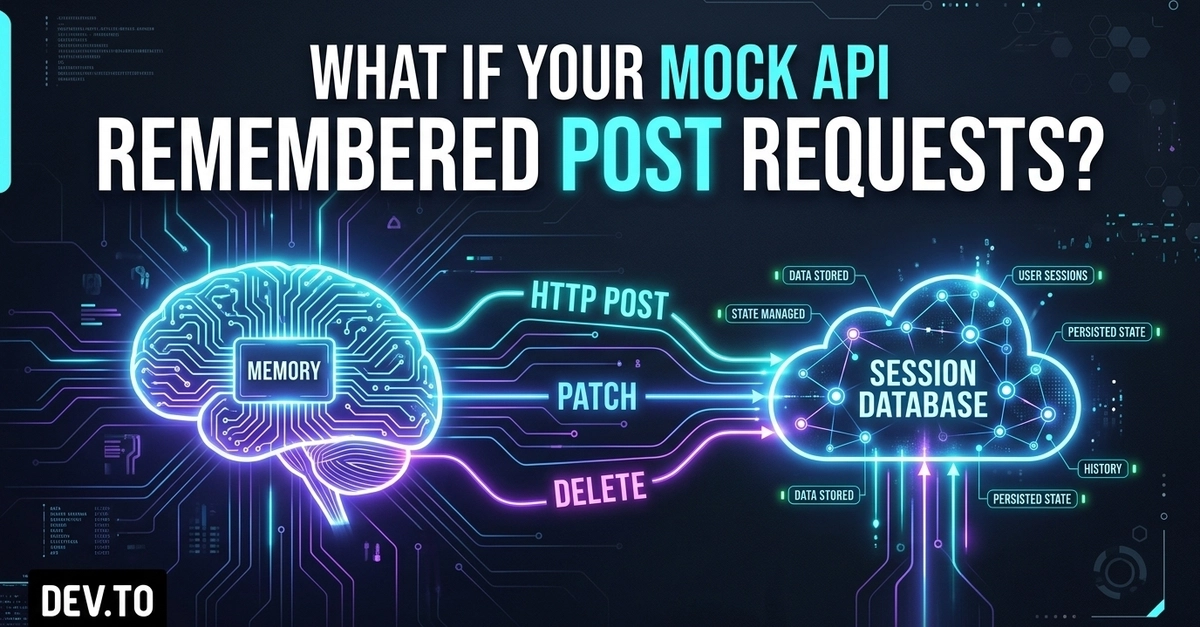
The solution lies in mock APIs that can actually remember the data sent to them. Imagine a mock API that, upon receiving a POST request, stores that data and then serves it back on subsequent GET requests. This is the core concept behind stateful mock APIs.
Such an API would function more like a lightweight, in-memory database for your frontend tests. When a POST request arrives with new data (like a user profile or a product entry), the mock API would persist this data. A subsequent GET request to retrieve that specific resource, or a list of all resources, would then return the data that was previously created. This fundamentally changes the testing paradigm for frontend applications.
This stateful behavior allows for more realistic testing scenarios. Developers can test the full lifecycle of data: creating it, viewing it, updating it, and deleting it, all within the context of their frontend application, using a mock API that accurately reflects these state changes. It moves beyond simply checking if a request *sends* correctly to verifying if the application can *handle* the data that the API would realistically provide after an action.
The Developer Experience Upgrade
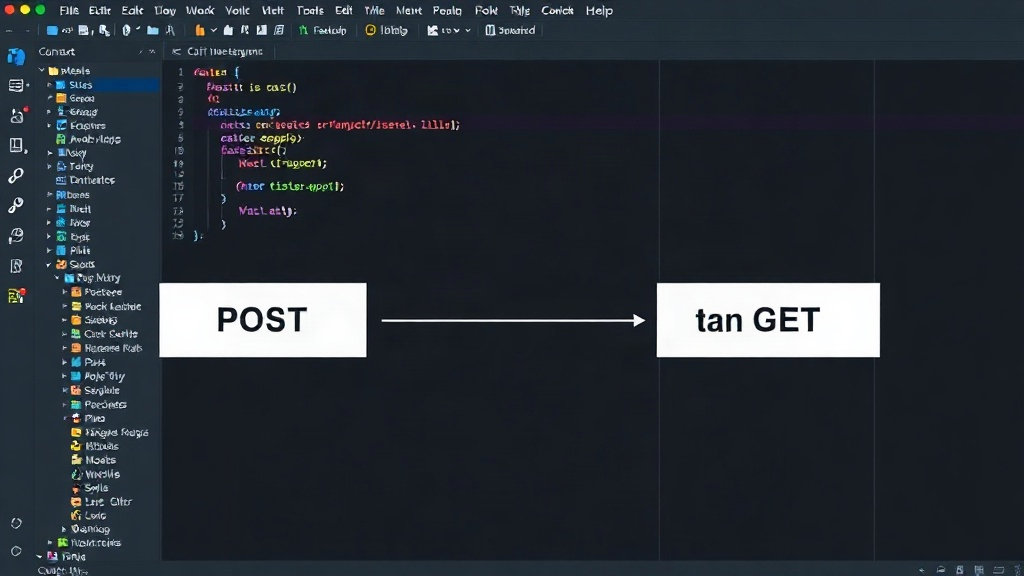
For developers, the benefits are immediate and substantial. The most apparent advantage is the ability to test full CRUD operations seamlessly. No more manual data injection or brittle scripts. A developer can focus on the frontend logic: how does the UI update when an item is created? How does it handle errors when an update fails? How does it display a list populated with data that the frontend itself contributed?
This stateful approach significantly reduces the friction in frontend development workflows. It allows developers to build and test complex features that rely on dynamic data, such as infinite scrolling lists, real-time updates, or personalized dashboards. The mock API becomes a faithful, albeit in-memory, representation of the backend, providing a more accurate testing environment.
Furthermore, stateful mock APIs can significantly speed up the feedback loop during development. Instead of waiting for backend teams to provide sample data or stable endpoints, frontend developers can immediately test their UI components and application logic against an API that behaves as expected. This agility is crucial for agile development methodologies.
The difference is akin to building with LEGOs. A static mock API gives you a fixed set of bricks. A stateful mock API lets you build something, then use those built components as the foundation for your next step, just like real-world development.
What’s Next for Mocking Tools?
The current landscape of free mock APIs, while convenient for simple endpoint simulation, clearly has limitations for modern frontend development that demands stateful interactions. The demand for more sophisticated testing tools is growing, driven by the increasing complexity of web applications and the need for faster development cycles.
We are likely to see a rise in mock API solutions that offer stateful capabilities. This could manifest as new dedicated services, or as advanced features within existing mocking frameworks. These tools will need to be easy to configure, integrate seamlessly into CI/CD pipelines, and offer robust debugging capabilities.
The challenge for developers will be to identify and adopt these tools that move beyond simple request-response mapping to truly simulate application data flows. The question remains: what happens to the thousands of developers who have built workflows around existing static mock APIs? Will there be easy migration paths, or will it require a fundamental shift in how frontend testing is approached?
For now, the promise of a mock API that remembers your POST requests offers a compelling vision for a more efficient and accurate frontend development experience. It’s a subtle shift in capability, but one that could profoundly impact the speed and quality of software delivery.