UK Backend Development Landscape in 2026
Backend development search interest has surged 80% to 110% across UK keyword data in the past three months. This growth spans both software development and web development categories, indicating a broadening demand. Businesses historically focused on frontend and design are now actively seeking backend expertise, mirroring the developer community’s own research focus. This marks a significant shift, highlighting the critical role backend systems play in modern digital strategy.
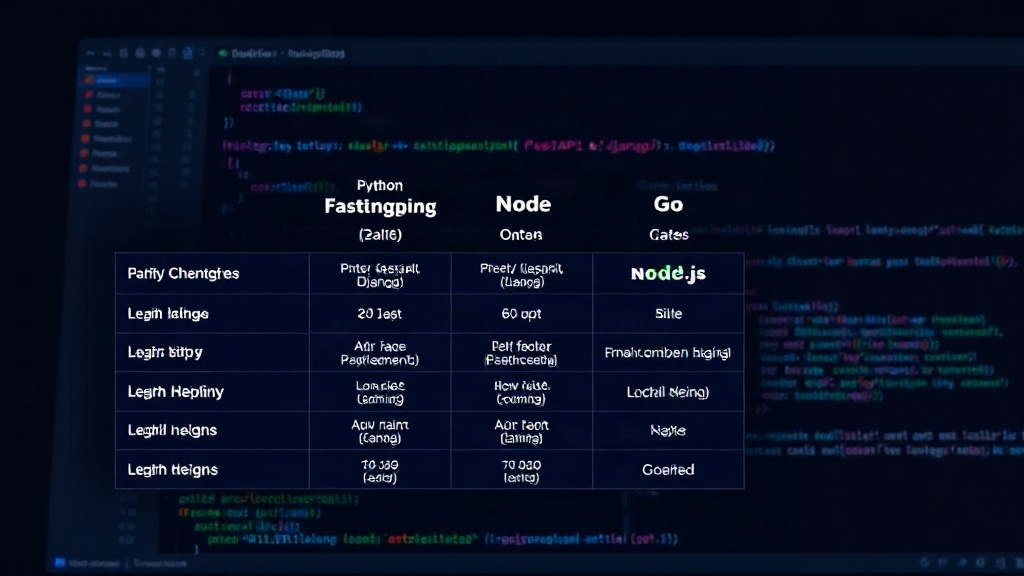
In 2026, the UK backend technology landscape is characterized by the dominance of three key players: Python, Node.js, and Go. These languages are not in a direct competition for all use cases; instead, each occupies distinct niches, offering tailored strengths for specific development needs. Python, particularly with frameworks like FastAPI and Django, remains a versatile choice for rapid development, data science integration, and general-purpose backend services. Node.js continues its reign for I/O-intensive applications, real-time services, and microservices architectures, leveraging its non-blocking, event-driven nature. Go, developed by Google, is increasingly favored for high-performance, concurrent systems, and cloud-native applications, prized for its efficiency and strong concurrency primitives.
Hiring Costs and Developer Rates
The demand for skilled backend developers in the UK translates directly into compensation. Mid-level backend developers, typically those with 3-7 years of experience and a solid understanding of core backend principles, command daily rates ranging from £350 to £500. This bracket reflects a developer capable of independently handling common development tasks, participating in code reviews, and contributing to system design discussions.
Senior backend developers, possessing extensive experience (often 7+ years) and a proven track record in system architecture, database design, and performance optimization, command higher rates. These professionals typically charge between £500 and £700 per day. Their expertise is crucial for leading complex projects, mentoring junior developers, and making strategic technical decisions that impact scalability, reliability, and maintainability. The upper end of this range often includes specialists in areas like distributed systems, cloud infrastructure, or specific high-demand languages and frameworks.
Key Skills and Hiring Considerations
When hiring backend developers in 2026, it is essential to look beyond mere proficiency in a specific language or framework. The most valuable candidates demonstrate strong system design thinking. This involves the ability to conceptualize, plan, and articulate how different components of a software system interact, scale, and remain resilient. Testing for this skill can involve scenario-based questions, whiteboarding exercises, or code reviews that focus on architectural choices rather than just syntax.
Beyond system design, employers should assess proficiency in core backend concepts. This includes a deep understanding of databases (both SQL and NoSQL), API design and implementation (RESTful, GraphQL), security best practices (authentication, authorization, data encryption), and asynchronous programming. Familiarity with cloud platforms (AWS, Azure, GCP) and containerization technologies (Docker, Kubernetes) is also increasingly becoming a standard expectation, rather than a niche skill.
For teams structured around backend requirements, a balanced approach is key. This might involve a mix of generalist developers capable of working across different technologies and specialists focusing on particular areas of expertise. For instance, a team might have a Python developer strong in Django for core business logic, a Node.js developer for real-time features, and a Go developer for performance-critical microservices. The structure should align with the product's specific needs and scaling strategy.
The dual demand for backend skills from both traditional software houses and frontend-focused entities suggests a maturing market. Businesses recognize that robust backend infrastructure is no longer an afterthought but a foundational element for innovation and competitive advantage. As such, investing in skilled backend talent and understanding the associated costs are paramount for success in 2026 and beyond.