The Stark Reality of Automated Security Testing
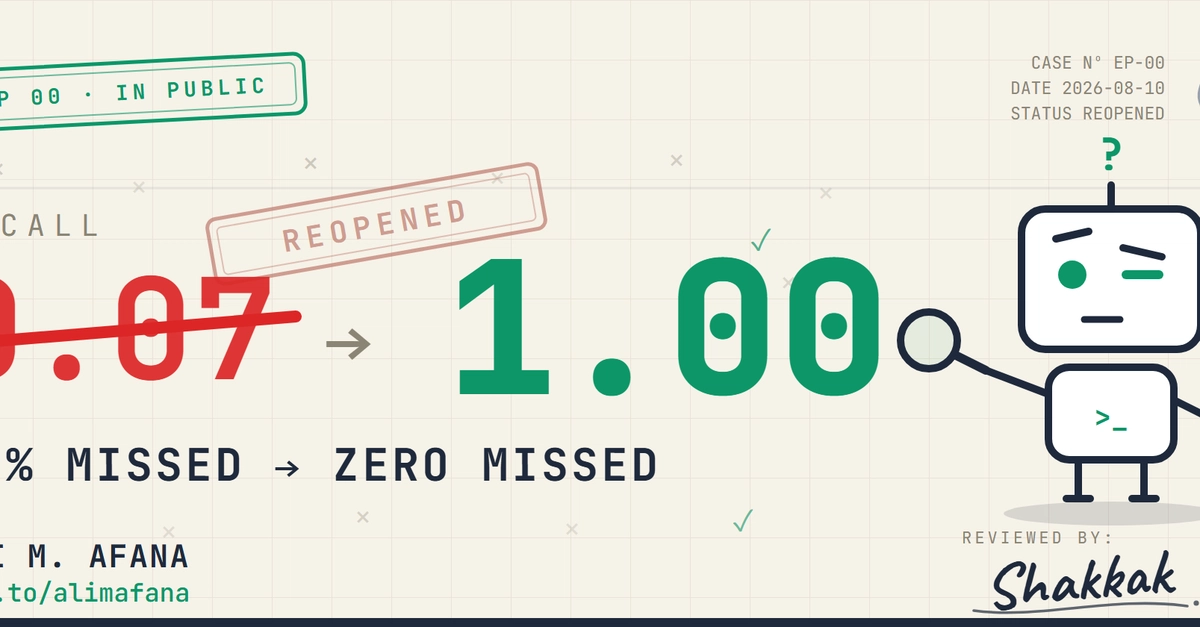
Running a vulnerability scanner against an industry-standard benchmark yielded a brutal result: only 7% of the actual bugs were detected. This finding, far from being a failure, represents a crucial first step in understanding the limitations of automated security tools and setting realistic expectations for their use. The analysis, detailed on Dev.to by developer Alim Afana, employed a benchmark containing 777 known vulnerabilities across four classes. The scanner's performance was measured by precision, recall, and F1 score.
Precision, which measures the accuracy of the alerts raised, stood at 0.60. This means that 60% of the vulnerabilities flagged by the scanner were legitimate. While this indicates the tool is more likely to identify real issues than false positives (when it speaks, it's right more often than not), the recall figure tells a much more concerning story.
Recall, the metric indicating the proportion of actual vulnerabilities found by the scanner, was a mere 0.07. This translates directly to the 93% of bugs that were missed. The F1 score, a harmonic mean of precision and recall, was consequently low at 0.13, underscoring the imbalance between identified and missed vulnerabilities.
Why a Low Recall Isn't Necessarily a Bad Start
Afana argues that this low recall, while seemingly disastrous, is the "right first result." The implication is that developers and security professionals often overestimate the capabilities of automated scanners. Expecting these tools to find the vast majority of vulnerabilities is unrealistic. Instead, they should be viewed as a first pass, a way to catch the low-hanging fruit or common patterns of misconfiguration and known exploits.
The benchmark used is critical here. It’s designed to represent real-world codebases with a comprehensive set of known flaws. A scanner that claims to find everything would likely suffer from an explosion of false positives, overwhelming security teams and making it impossible to prioritize genuine threats. A scanner that is highly precise, even with low recall, is at least providing actionable intelligence without drowning the user in noise.
Think of it like a metal detector at a beach. It will find some buried treasures (real bugs), but it will also miss many, and it might even flag bottle caps (false positives). You wouldn't rely on a metal detector alone to find all the gold on the beach; it's a tool to assist your search. Similarly, vulnerability scanners are best used as part of a broader security strategy that includes manual code review, penetration testing, and threat modeling.
The Limits of Static and Dynamic Analysis
Automated vulnerability scanners typically fall into two categories: static application security testing (SAST) and dynamic application security testing (DAST). SAST tools analyze source code, byte code, or binaries without executing the application. They are good at finding common coding errors, known insecure patterns, and syntax-related vulnerabilities. However, they often struggle with complex business logic flaws, environment-specific issues, and vulnerabilities that only manifest during runtime.
DAST tools, on the other hand, interact with a running application, simulating external attacks. They excel at identifying runtime vulnerabilities like cross-site scripting (XSS), SQL injection, and insecure configurations. Yet, DAST tools have limited visibility into the application's internal workings and source code, meaning they can miss vulnerabilities that are deeply embedded within the code or only triggered by specific internal states.
The benchmark in Afana's analysis likely encompasses a wide array of vulnerabilities that challenge both SAST and DAST approaches. The 93% miss rate suggests that many of these flaws require a deeper understanding of context, business logic, or specific execution pathways that current automated tools cannot reliably infer or trigger. This could include race conditions, complex authorization bypasses, or subtle data handling errors that only appear under specific, hard-to-replicate circumstances.
Moving Beyond the Scanner: A Holistic Security Approach
The takeaway for developers and security teams is clear: automated scanners are a necessary but insufficient component of a robust security program. The low recall rate should not be a signal to abandon scanners, but rather to temper expectations and integrate them intelligently. The 7% of bugs found are valuable, potentially saving significant effort and preventing common breaches.
However, the 93% missed highlight the indispensable role of human expertise. Manual code reviews, performed by experienced security engineers, can uncover complex logic flaws and context-dependent vulnerabilities that scanners overlook. Penetration testing, simulating real-world attacks, can discover exploitable paths that automated tools might not even attempt. Threat modeling helps teams proactively identify potential weaknesses based on the application's architecture and intended use, guiding both automated and manual testing efforts.
Afana's experiment serves as a vital reminder that security is not a checkbox to be ticked by a tool. It is an ongoing process that requires a multi-layered strategy. Developers should leverage scanners for their strengths – quick identification of common flaws – but must pair them with other techniques to achieve comprehensive security. The goal is not to find 100% of bugs with a scanner, but to use the scanner to find *some* bugs efficiently, and then employ other methods to find the rest.
The Unanswered Question: How to Improve Scanner Recall?
While Afana's analysis correctly frames the low recall as an expected outcome and a call for a broader security strategy, the question remains: how can scanner vendors and the security community collectively work to improve the recall of these tools without sacrificing precision? Are there emerging techniques in AI, symbolic execution, or fuzzing that could bridge this gap? And what are the benchmarks and metrics we should use to track progress in this area beyond simple recall and precision scores?