The Dawn of Autonomous Systems
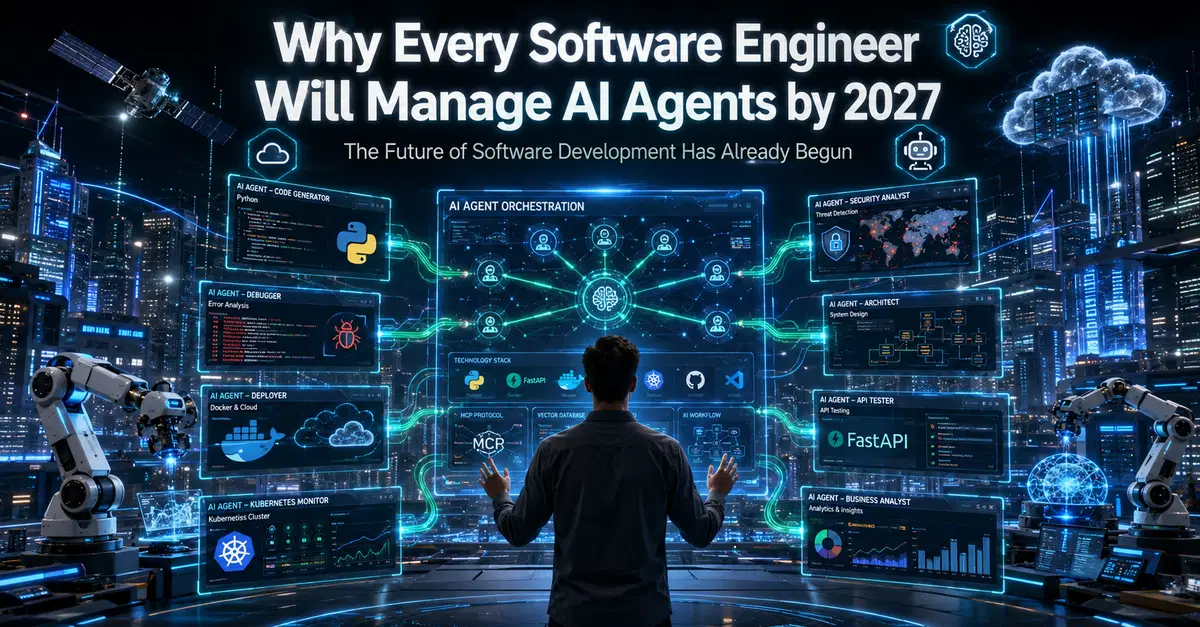
The landscape of software engineering is on the cusp of a transformation more profound than the advent of cloud computing. Artificial intelligence is no longer confined to answering queries or generating boilerplate code. It is rapidly evolving into autonomous AI agents – systems that can understand complex goals, make independent decisions, leverage software tools, and interact with APIs to execute tasks with minimal human oversight. This evolution signals a fundamental shift for every software engineer, moving their role from direct code creation to the management and orchestration of intelligent systems.
For decades, the software development lifecycle has been a human-centric process. Engineers meticulously wrote code, painstakingly tested it, deployed it, and maintained it. Every feature, every bug fix, every workflow was a direct result of human programming. This paradigm, where human input is the primary driver of every operational step, is now being challenged by the emergence of AI agents capable of handling significant portions of this workflow autonomously.
From Coder to Orchestrator
The core of this shift lies in the changing nature of the engineer's primary output. Instead of writing line-by-line code, engineers will increasingly architect, configure, and manage systems where AI agents perform the execution. This involves defining the high-level goals for the agents, selecting the appropriate tools and APIs they should utilize, and establishing the frameworks for their decision-making processes. The engineer's focus moves from the micro-level of syntax and logic to the macro-level of system design, agent coordination, and outcome validation.
Consider a traditional scenario: a team needs to build a new user authentication flow. An engineer would design the database schema, write the backend API endpoints, implement frontend UI components, and set up security protocols. With AI agents, the engineer might instead define the requirements for user authentication, specify the desired security standards (e.g., OAuth 2.0 compliance), and instruct an agent to select and integrate the necessary libraries and services, test the flow, and deploy it. The agent handles the coding, testing, and integration, while the engineer ensures the system meets the specified objectives and security posture.
This new role demands a different skill set. While coding proficiency will remain valuable, engineers will need to develop stronger capabilities in areas such as prompt engineering, system architecture for distributed intelligent agents, understanding AI model limitations, and robust monitoring and debugging of autonomous systems. The ability to translate business requirements into agent-executable instructions and to interpret the results and behaviors of these agents will become paramount.
The Detection Challenge: A False Sense of Security?
As AI agents become more sophisticated and integrated into workflows, a critical challenge emerges: distinguishing between human and AI activity. Many vendors claim to offer solutions for detecting AI agents, particularly in contexts like web scraping, botting, or fraudulent activity. However, a closer examination reveals significant limitations.
An AI agent operating through a real browser on a residential IP address is, by its very nature, indistinguishable from a human user. Technologies that rely on simple flags like `navigator.webdriver` are easily circumvented. These automation flags can be patched or overridden, rendering detection methods based on them obsolete within weeks. Similarly, browser fingerprints and IP address reputation can be masked or spoofed. This means that many detection solutions are only effective against unsophisticated agents or agents that deliberately announce themselves by not masking their identity.
The vendors selling certainty in AI agent detection are often selling a false sense of security. True detection, especially for advanced agents operating on residential networks, is exceptionally difficult, if not impossible, by construction. This reality has significant implications for security professionals, platform integrity, and the very concept of verifiable human interaction online. It suggests that the focus may need to shift from detection to robust access control, behavioral analysis, and AI-driven anomaly detection that doesn't rely on simple binary flags.
Preparing for the Agent-Managed Future
The transition to an agent-managed software development paradigm is not a distant theoretical concept; it is an unfolding reality. By 2027, it is highly probable that managing AI agents will be a core competency for most software engineers. This shift requires proactive adaptation:
- Upskill in AI Orchestration: Focus on learning how to define goals, configure agents, and integrate them into larger systems. Explore tools and platforms that facilitate agent development and management.
- Develop Systems Thinking: Understand how autonomous agents interact within complex ecosystems. Learn to design for emergent behaviors and potential failure modes.
- Embrace Security Realities: Recognize the limitations of current AI detection methods. Focus on multi-layered security strategies that go beyond simple bot detection.
- Stay Abreast of AI Advancements: The field of AI agents is evolving rapidly. Continuous learning and experimentation will be crucial to staying relevant.
The rise of AI agents represents not an elimination of software engineering roles, but a significant evolution. Engineers who embrace this change, adapting their skills to manage and orchestrate these powerful new systems, will be best positioned to thrive in the coming years. The challenge lies in understanding that the future of software development is less about writing code and more about directing intelligent entities to build it for us.