
Fru: A High-Performance Random Forest Implementation in Rust
A new library named Fru, developed in Rust and published in the Software X journal, promises significant performance gains for Random Forest implementations. Co-authored by colleagues, the project offers bindings for both Python and R, aiming to provide a faster and more scalable alternative to existing popular libraries like scikit-learn and ranger.
The core of Fru's advantage lies in its implementation language. Rust, known for its memory safety and performance without a garbage collector, allows for highly optimized code. This translates directly into faster execution times and improved scalability, especially critical for large datasets or complex models commonly encountered in machine learning workflows.
For Python users, Fru claims to outperform the widely-used scikit-learn implementation by several factors. In specific scenarios, this speedup can reach hundreds of times faster. This dramatic improvement could enable data scientists to iterate more quickly on model development, train larger models, or process datasets that were previously too computationally expensive.
Performance Gains and Scalability
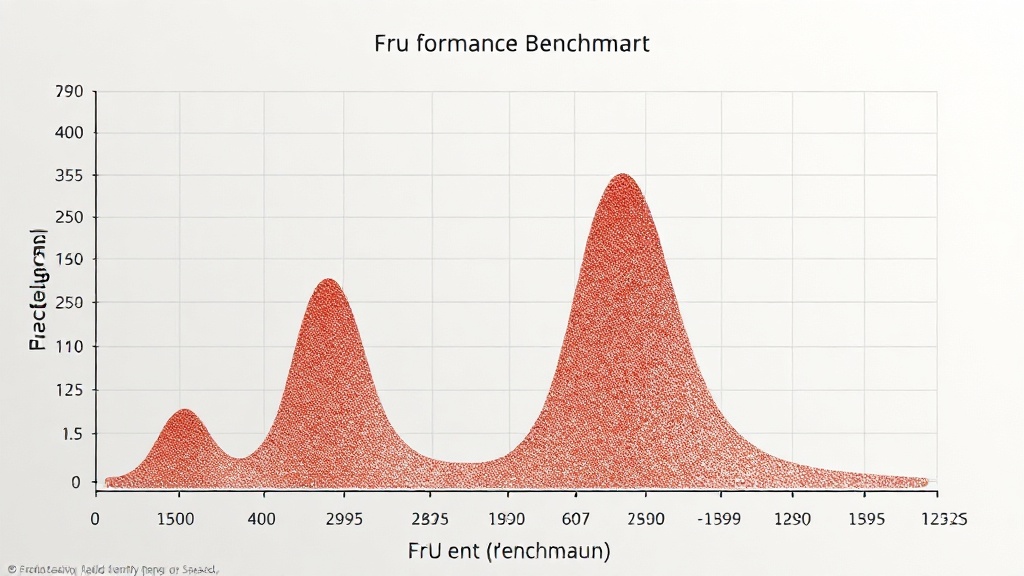
The performance benchmarks presented by the Fru team indicate a substantial leap forward. While scikit-learn has been a de facto standard for many Python-based machine learning tasks, its performance can become a bottleneck for demanding applications. Fru's Rust backend addresses this by leveraging low-level optimizations and efficient memory management. This allows Fru to process data and build trees more rapidly, leading to quicker model training and prediction times.
In the R ecosystem, Fru targets the popular ranger package. While the speedup here is generally more modest, typically a few dozen percent faster, it can still reach several times faster depending on the specific use case and data characteristics. Even incremental improvements in training time can be valuable in research settings or for production pipelines that require frequent model retraining.
Beyond raw speed, Fru also emphasizes scalability. This means that as datasets grow in size, Fru's performance degradation is less pronounced compared to less optimized implementations. This is crucial for modern machine learning, where datasets are often massive and require efficient handling of large amounts of information.
Novel Permutation Importance Implementation
A key feature highlighted by the Fru developers is its novel implementation of permutation importance. Permutation importance is a technique used to interpret machine learning models by measuring how much the model's performance decreases when the values of a specific feature are randomly shuffled. This process can be computationally intensive, especially with large datasets and complex models.
Fru's approach to permutation importance is designed to be more efficient, potentially offering an additional performance boost when feature importance analysis is required. This integrated, optimized approach means users can gain insights into their models' behavior without incurring the same computational overhead as traditional methods. This is particularly useful for understanding which features are most influential, aiding in feature selection and model explainability.
Cross-Platform Bindings
Recognizing the diverse environments in which data scientists and machine learning engineers operate, Fru provides bindings for both Python and R. The Python bindings are designed to integrate seamlessly with the existing Python data science stack, particularly leveraging libraries like Apache Arrow for efficient data transfer. This means Python users can adopt Fru without a steep learning curve or significant changes to their existing codebases.
Similarly, the R bindings allow R users to access Fru's capabilities directly within their familiar environment. This cross-language support broadens Fru's potential user base and allows teams working with multiple languages to standardize on a high-performance Random Forest solution. The availability of these bindings is crucial for adoption, making the underlying Rust performance accessible to a wider audience.
The development of Fru demonstrates a trend towards leveraging lower-level, high-performance languages like Rust for critical machine learning components. As models become larger and datasets grow, the demand for optimized libraries that can keep pace with computational requirements will only increase. Fru appears poised to meet this demand for Random Forest algorithms.