
Operation Vivaldi: A New Era of Robotic Warfare
Ukraine's recent military success, dubbed Operation Vivaldi, marks a significant inflection point in modern conflict. The operation, which successfully repelled a Russian pincer movement, relied heavily on an array of advanced robotic systems. These autonomous and semi-autonomous platforms were instrumental in executing critical combat functions, from resupplying front-line troops via airdrop to the dangerous task of minefield navigation and clearance. The effectiveness of these robots underscores a burgeoning trend: the integration of artificial intelligence and robotics into tactical battlefield operations, moving beyond reconnaissance and into direct combat support roles.
The strategic objective of the Russian force was to encircle Ukrainian positions, a classic pincer maneuver designed to cut off supply lines and force surrender. Ukraine's response, orchestrated through Operation Vivaldi, leveraged technological superiority to disrupt and dismantle this threat. The operational success is attributed not just to the robots themselves, but to the sophisticated command and control networks that enabled their coordinated deployment alongside human forces. This synergy between human soldiers and robotic assets allowed for a more agile and resilient defense, capable of adapting to the dynamic battlefield conditions.
Robotic Airdrops Overcome Supply Challenges
One of the most critical applications of robotics in Operation Vivaldi was the execution of combat airdrops. Under intense enemy fire and facing blocked ground routes due to the pincer movement, Ukrainian forces needed a reliable method to resupply forward units with ammunition, medical supplies, and essential equipment. Standard aerial resupply methods were deemed too risky given the proximity of Russian forces and the potential for ground-to-air threats.
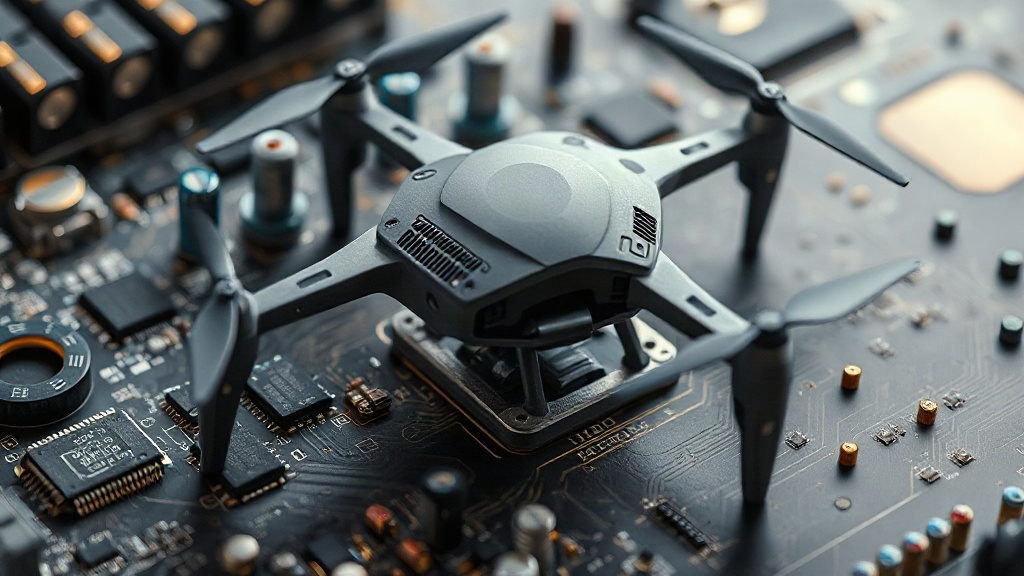
Instead, Ukraine deployed specialized unmanned aerial vehicles (UAVs) modified for cargo delivery. These drones, some capable of carrying payloads up to 50 kilograms, were programmed with pre-defined flight paths and precision landing coordinates. They navigated complex terrain, often at low altitudes to avoid radar detection, and autonomously delivered critical supplies directly to beleaguered units. This capability proved vital in sustaining Ukrainian resistance and preventing the encirclement from solidifying. The ability to conduct these airdrops under direct threat highlights the advancements in drone navigation, payload management, and autonomous operation, allowing them to function effectively in contested airspace.
Mine Clearance: Robots Take the Lead
The Russian forces had extensively utilized minefields to fortify their positions and impede Ukrainian counterattacks. Clearing these minefields is an exceptionally hazardous task, traditionally performed by specialized engineering units facing a high risk of casualties. Operation Vivaldi saw Ukrainian forces deploying ground-based robotic systems specifically designed for mine detection and neutralization.
These robots, equipped with ground-penetrating radar, metal detectors, and sometimes even precise manipulator arms, were able to systematically sweep through suspected mine areas. Upon detection of a mine, the robots could either mark its location for later disposal by a human team or, in some cases, initiate a controlled detonation remotely. This drastically reduced the exposure of Ukrainian soldiers to explosive hazards. The robots' ability to operate continuously, in conditions that would be untenable for human deminers, accelerated the pace of the counteroffensive, opening crucial corridors for troop movement and the advance of armored vehicles. The sophistication of these systems lies in their sensor fusion capabilities, allowing them to interpret complex ground conditions and differentiate between genuine threats and harmless debris.
Broader Implications for Future Conflicts
The success of Operation Vivaldi serves as a compelling case study for the future of warfare. It demonstrates that autonomous systems are no longer confined to reconnaissance or surveillance; they are now integral components of offensive and defensive operations. The integration of robots for direct combat support, such as resupply and mine clearance, fundamentally alters operational planning and execution.
For military strategists, this means a re-evaluation of force structures, training doctrines, and the logistical chains that support them. The ability to deploy robotic assets can extend the reach and resilience of human forces, enabling operations in environments previously deemed too dangerous or inaccessible. Furthermore, the development and deployment of such technologies by Ukraine suggest an accelerating arms race in military robotics, where AI-driven autonomous systems will play an increasingly decisive role. The counteroffensive's triumph, enabled by these machines, signals a paradigm shift, where technological innovation directly translates into strategic advantage on the battlefield.
The specific robots and their manufacturers remain largely undisclosed, a common practice in wartime to protect sensitive capabilities. However, the operational impact is undeniable. The defeat of the Russian pincer movement, a significant tactical objective, was achieved with a level of technological integration that will undoubtedly influence military procurement and deployment strategies globally. The lessons learned from Operation Vivaldi will shape how future conflicts are fought, emphasizing the critical role of robotics and AI in achieving victory.