
Beyond Chat: The Need for Verifiable Legal Documents
The popular image of AI often centers on conversational interfaces – typing a prompt and receiving text. While useful, this model falls short in domains requiring tangible, verifiable outcomes. For legal professionals, a contract displayed on a screen is merely an agreement in principle. A contract that is signed, sealed, and cryptographically verified, however, becomes a legally binding asset. This distinction is critical for Sunverse AI's Lawyie, an intelligent legal infrastructure for Africa. A core mandate for Lawyie was to engineer a system that moves beyond basic chat functionality to produce these robust, verifiable legal documents.
The challenge lies in standard file handling practices common in web applications. Typically, saving a file involves writing it to a local disk and then serving it. In cloud environments, such as Streamlit Cloud, this approach can quickly lead to scalability issues and concurrency problems. Relying on the local filesystem for critical document generation and storage is brittle and inefficient, especially when dealing with sensitive legal instruments that demand integrity and immutability.
Engineering a Cryptographically Sealed Document Pipeline
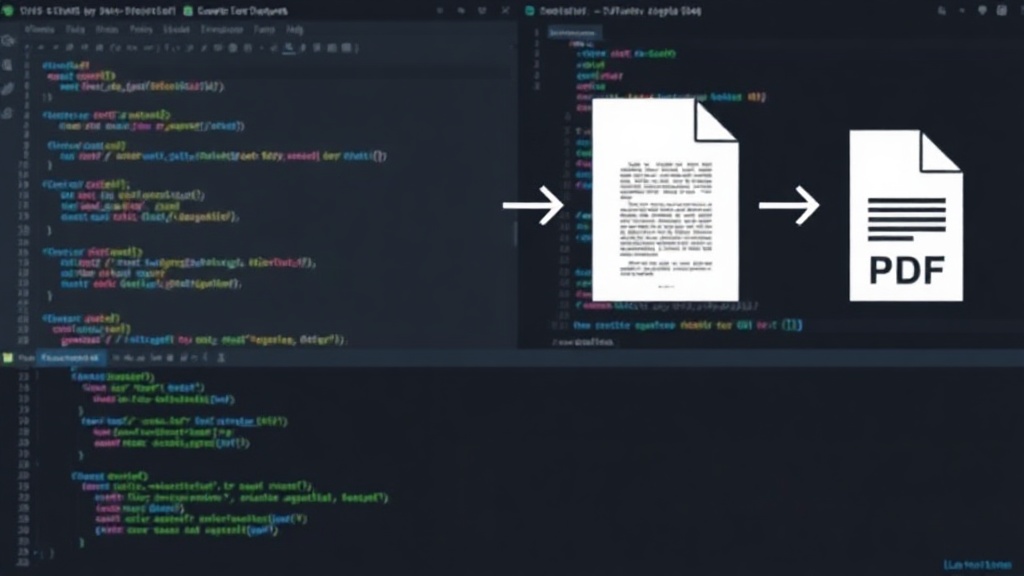
To address these limitations, Lawyie developed an in-memory PDF generation pipeline. This system bypasses the conventional disk-writing method, opting instead for a more secure and efficient process within the application's memory. The goal is to produce a final document that is not only visually complete but also cryptographically sound, ensuring its authenticity and integrity from creation to delivery.
1. In-Memory PDF Generation
The pipeline begins with raw text input, which is then transformed into a PDF document without ever touching the server's persistent storage during the generation phase. This is achieved using Python libraries capable of generating PDF content directly in memory. Libraries like ReportLab or FPDF can be leveraged to construct PDF pages, add text, formatting, and elements programmatically. By keeping the document in memory, the system reduces the attack surface associated with temporary file storage and avoids potential race conditions or data corruption that can occur with filesystem operations.
2. Templating for Legal Precision
Legal documents often follow strict structural and linguistic conventions. To ensure consistency and accuracy, a templating system is essential. This involves creating pre-defined document structures with placeholders for variable information, such as party names, dates, specific clauses, and unique identifiers. When a new document is requested, the system populates these templates with the relevant data. This approach not only speeds up document creation but also minimizes the risk of human error in transcribing standard legal language. Dynamic content injection into these templates is a critical step, ensuring that each document is tailored to the specific transaction or case while maintaining its overall structural integrity.
3. Cryptographic Sealing for Authenticity
The defining feature of this pipeline is the cryptographic sealing process. Once the PDF is generated in memory, it is subjected to a cryptographic operation that effectively seals it. This typically involves generating a cryptographic hash of the final document content. A hash is a unique, fixed-size fingerprint of the data. Even a minor change to the document will result in a completely different hash. This hash can then be embedded within the document itself, perhaps in a footer or a dedicated section, or stored separately and linked to the document. This process ensures that the document's content has not been tampered with since it was sealed. For enhanced security and verifiability, the hash could be signed using a private key, creating a digital signature that can be verified by anyone possessing the corresponding public key. This transforms the document from a mere text file into a verifiable asset with a clear chain of integrity.
4. Secure Delivery Mechanisms
After cryptographic sealing, the document needs to be delivered to the user securely. Instead of a direct file download that might expose temporary URLs or rely on insecure protocols, the pipeline can integrate with secure delivery mechanisms. This could involve generating signed URLs for temporary, secure downloads, or integrating with secure document management systems. The key is to ensure that the integrity of the document is maintained throughout the delivery process. The system might also generate a separate verifier file or provide a web interface where users can upload a document and have its cryptographic seal validated against a known, trusted hash or signature. This provides end-users with the confidence that the document they possess is the authentic, unaltered version generated by Lawyie.
Implications for LegalTech
This approach to building a document factory has significant implications for the LegalTech sector, particularly in regions like Africa where robust digital infrastructure and trust in digital assets are paramount. By prioritizing cryptographic verification, Lawyie is not just automating document creation but also building trust into the digital legal ecosystem. This method provides a scalable, secure, and auditable way to produce legal documents, which can be crucial for everything from land registries and corporate filings to wills and power of attorney. It moves LegalTech beyond mere digitization towards true digital transformation, where documents are not just digital copies but verifiable digital assets.
The engineering choices made here – in-memory processing, robust templating, and cryptographic sealing – represent a sophisticated approach to a common problem. They highlight how Python, combined with appropriate libraries and architectural patterns, can be used to build complex, high-integrity systems. For founders in the LegalTech space, this signifies a path toward creating solutions that offer not just convenience but also the essential assurance of authenticity and legal standing required by the industry.