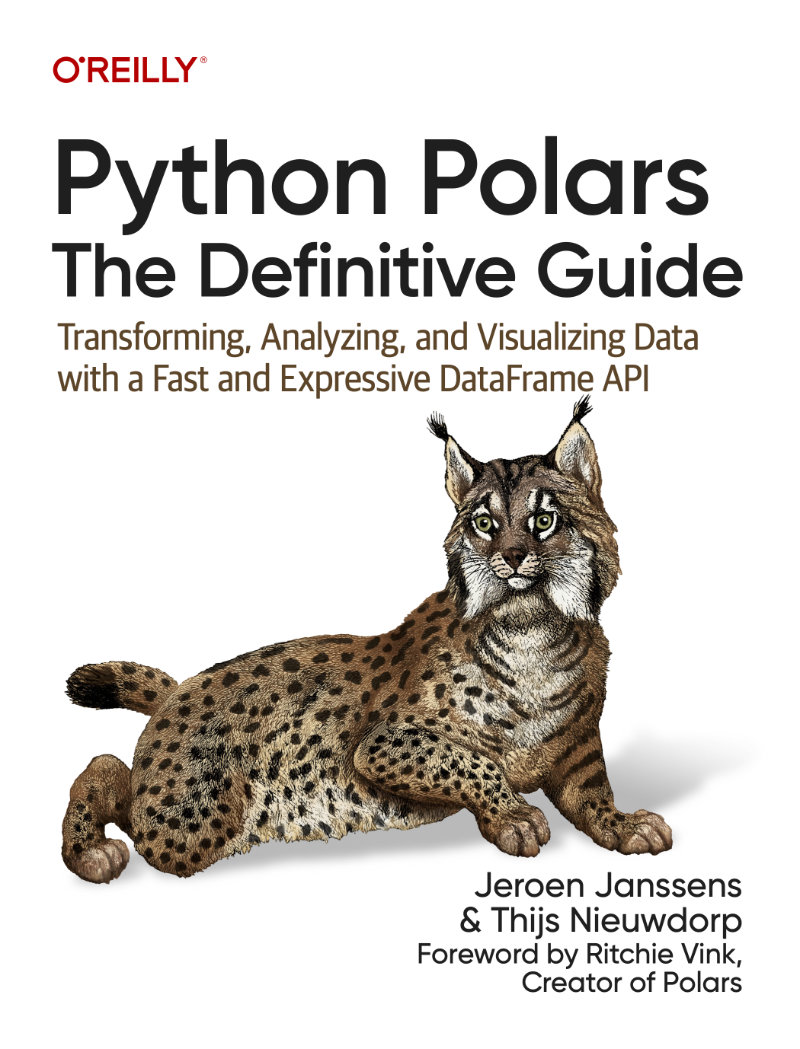
A new cheatsheet for the popular Python DataFrame library, Polars, has been released. This resource is based on content from the recently published O'Reilly book, offering a practical guide for developers looking to master Polars. The cheatsheet aims to provide quick access to common operations, syntax, and best practices, serving as a valuable companion for both beginners and experienced users.
Core DataFrame Operations
Polars, known for its speed and memory efficiency, leverages Apache Arrow and Rust for its backend. The cheatsheet covers fundamental DataFrame manipulations. This includes creating DataFrames from various sources like dictionaries, lists, and files (CSV, Parquet). Key operations such as selecting columns, filtering rows based on conditions, and sorting data are detailed with concise code examples. The library's lazy evaluation paradigm is also highlighted, emphasizing how Polars builds an execution plan before data is processed, leading to significant performance gains.
Data Transformation and Manipulation
Beyond basic selection, the cheatsheet delves into more advanced data transformation techniques. This encompasses grouping data using the `group_by` method, performing aggregations (sum, mean, count, etc.), and joining DataFrames with different join strategies (inner, left, outer). Techniques for handling missing values, such as filling or dropping NaNs, are also covered. The library's expressive syntax for creating new columns or modifying existing ones, often using the `with_columns` method, is demonstrated with practical use cases.
Expressive Querying with Expressions
A cornerstone of Polars' power lies in its expression API. The cheatsheet dedicates a section to understanding and utilizing these expressions. Expressions allow for complex data transformations to be defined in a declarative manner. They can be chained together to build sophisticated queries. Examples include applying custom functions, string manipulation, date and time operations, and conditional logic within a single expression. This approach not only enhances readability but also allows Polars' query optimizer to generate highly efficient execution plans. The cheatsheet provides clear syntax for common expression patterns, making it easier for users to translate their analytical needs into Polars code.
Performance and Efficiency
The cheatsheet underscores Polars' commitment to performance. It touches upon how Polars achieves its speed through parallel execution across multiple CPU cores and its efficient memory management, largely thanks to its Arrow-based columnar storage format. Users are guided on how to leverage these features, such as avoiding unnecessary data copying and understanding when to use eager versus lazy execution. The benefits of Polars over other DataFrame libraries in specific scenarios, particularly those involving large datasets that strain system memory, are implicitly conveyed through the provided examples and the library's design principles.
Integration and Advanced Topics
The resource also briefly touches upon integration with other Python libraries, such as NumPy and Pandas, and advanced functionalities like window functions and time-series analysis. The goal is to equip users with the knowledge to tackle a wide range of data manipulation tasks efficiently. By providing a structured overview of Polars' capabilities, this cheatsheet, derived from the O'Reilly book, serves as an indispensable tool for anyone working with tabular data in Python.
Why Polars?
Polars has rapidly gained traction in the data science community due to its performance advantages, particularly when dealing with datasets that exceed available RAM. Unlike Pandas, which is primarily single-threaded and can struggle with large memory footprints, Polars is built from the ground up for parallelism and efficient memory utilization. Its query optimization engine, combined with a robust expression API, allows for complex operations to be executed with remarkable speed. This makes it an attractive alternative for data engineers and data scientists working on big data problems within a Python environment.
The O'Reilly book and its accompanying cheatsheet are designed to accelerate the learning curve for Polars. They offer practical, actionable advice that developers can immediately apply to their projects. The focus is on real-world usage, providing examples that are directly relevant to common data analysis and manipulation tasks.