The Challenge of AI Agent Production Monitoring
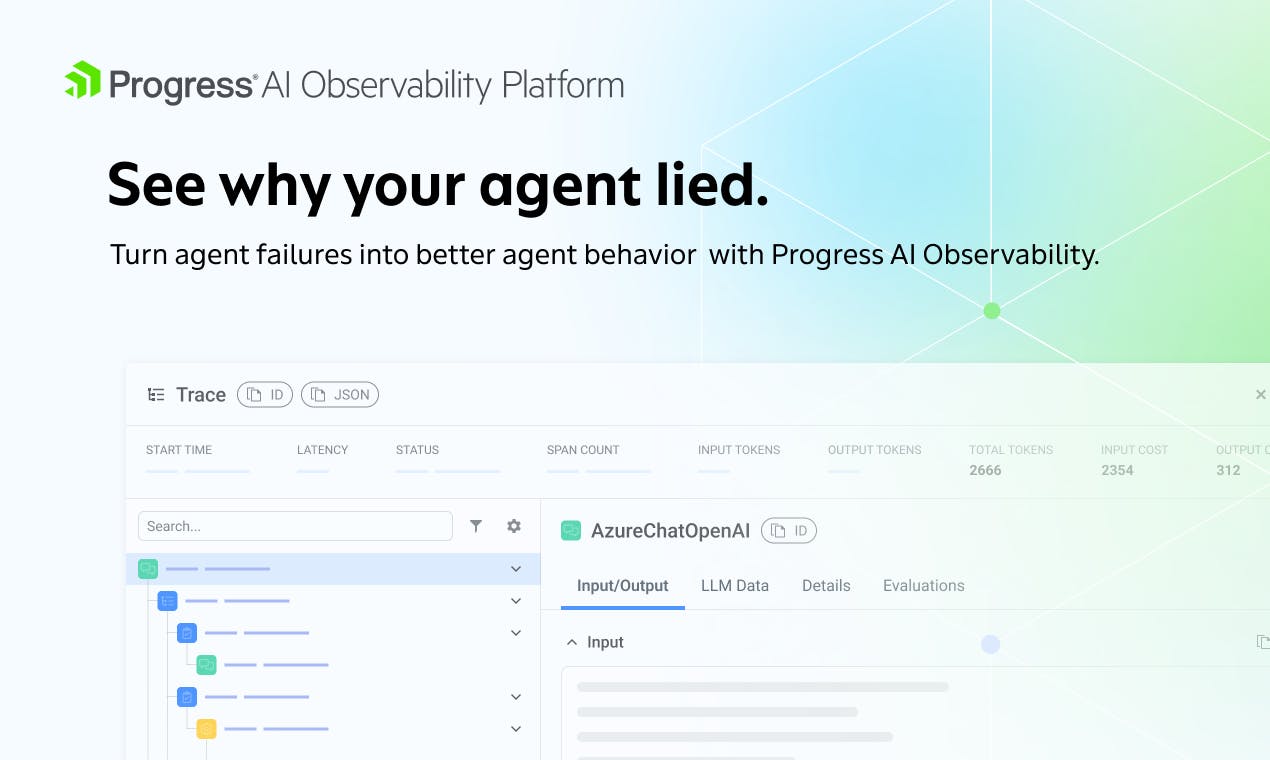
As AI agents move from research labs into real-world applications, a critical gap has emerged: the ability to reliably monitor, evaluate, and improve their performance once deployed. Unlike traditional software, AI agents operate with a degree of stochasticity and emergent behavior that makes standard logging and monitoring tools insufficient. Understanding why an agent made a particular decision, identifying performance degradation, or pinpointing the root cause of errors requires a specialized approach. This is the problem that Progress AI aims to solve with its new AI Observability platform.
The platform is designed to provide developers and MLOps teams with deep insights into the operational health and effectiveness of their AI agents. This includes tracing the flow of data, evaluating the quality of outputs, and identifying areas for improvement. The core challenge lies in the complexity of AI models and the dynamic nature of their interactions with real-world data, which can lead to unexpected outcomes that are difficult to diagnose using conventional methods.
Key Features of Progress AI Observability
Progress AI's platform offers a suite of features tailored to the unique demands of AI agent observability. At its heart is the ability to trace AI agent execution paths. This means that for every interaction or task an agent performs, users can see the sequence of operations, the data inputs and outputs at each stage, and the internal decision-making processes. This level of detail is crucial for debugging and understanding the agent's behavior, much like a distributed tracing system for microservices, but adapted for the probabilistic nature of AI.
Beyond tracing, the platform focuses on evaluation and improvement. Users can define custom metrics and benchmarks to assess the quality of the AI agent's responses or actions. This could range from accuracy and relevance for language models to task completion rates for autonomous agents. The system allows for the comparison of agent performance over time, against different datasets, or even against different versions of the agent itself. This continuous evaluation loop is essential for iterative development and ensuring that agents meet business objectives.
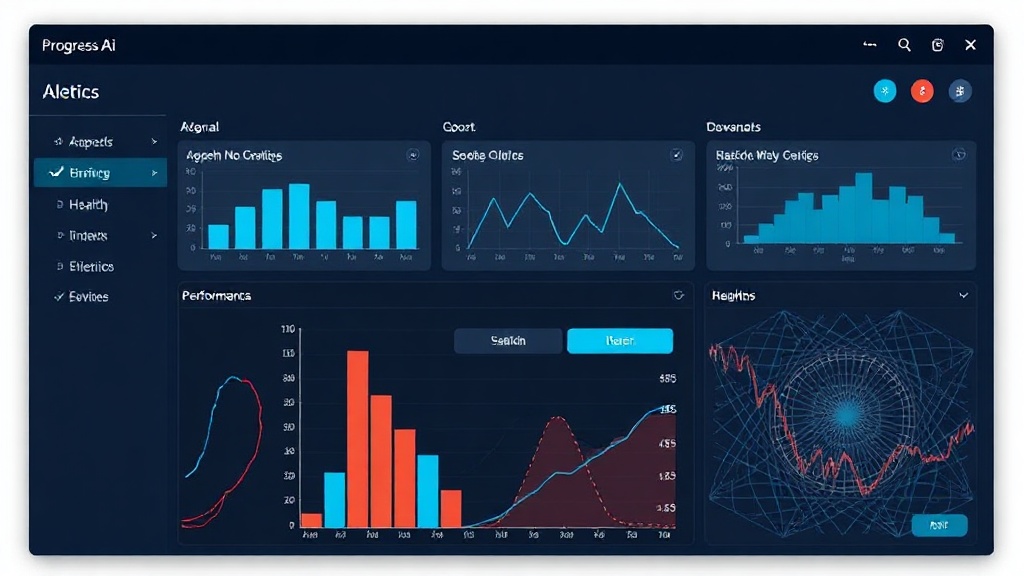
Another significant aspect is the production monitoring capability. Progress AI provides real-time dashboards and alerts that notify teams of anomalies, performance dips, or critical failures. This proactive approach allows for swift intervention before issues impact users or business operations. The platform aims to consolidate these disparate monitoring needs into a single, unified view, reducing the cognitive load on teams responsible for maintaining these complex systems.
Bridging the Gap Between Development and Production
The journey of an AI agent from a trained model to a production-ready system is fraught with challenges. Often, models that perform exceptionally well in controlled development environments falter when exposed to the messiness of real-world data and user interactions. This phenomenon, sometimes referred to as “model drift” or “data drift,” is difficult to detect and even harder to diagnose without the right tools. Progress AI's observability platform acts as a crucial bridge, providing the necessary visibility to detect these issues early and implement corrective measures.
Think of it less like a traditional software monitoring tool and more like a sophisticated diagnostic system for a complex biological organism. You can’t just check if the heart is beating; you need to understand the blood flow, the cellular activity, and the environmental factors influencing its health. Similarly, AI agents require monitoring that goes beyond simple uptime checks, delving into the nuances of their internal states and external interactions.
Implications for AI Development and Operations
The advent of specialized AI observability tools like Progress AI's signals a maturing of the AI development lifecycle. As more organizations rely on AI agents for critical business functions, the need for robust operational frameworks becomes paramount. This platform addresses the need for a dedicated MLOps solution that understands the unique lifecycle of AI models, particularly agents that may exhibit continuous learning or adaptive behaviors.
For developers, this means a more streamlined debugging process and faster iteration cycles. Instead of spending hours sifting through logs or trying to replicate production issues in a staging environment, they can leverage detailed traces and evaluation metrics to pinpoint problems. For product managers and business stakeholders, it offers greater confidence in the reliability and effectiveness of the AI systems powering their products and services.
The broader implication is a move towards more responsible and trustworthy AI deployment. By providing transparency into agent behavior, Progress AI enables teams to identify and mitigate potential biases, fairness issues, or unexpected failure modes. This is not just about performance; it's about building AI systems that are not only effective but also safe and aligned with ethical guidelines.
The Future of AI Agent Management
As AI agents become more sophisticated and integrated into various industries, the demand for comprehensive observability solutions will only grow. Progress AI appears to be positioning itself at the forefront of this emerging field, offering tools that are essential for managing the complexities of AI in production. The ability to trace, evaluate, and improve these agents systematically is no longer a nice-to-have but a necessity for any organization serious about leveraging AI at scale.
The challenge for Progress AI and similar platforms will be to keep pace with the rapid evolution of AI architectures and agent frameworks. As new types of AI agents emerge, the observability tools must adapt to provide meaningful insights into their unique operational characteristics. Early adoption and continuous feedback from development teams will be key to refining these tools and ensuring they remain relevant in a fast-changing landscape.