The Problem: Cloud AI's Data Blind Spot
Developers experimenting with local AI and custom workflows often face a critical dilemma: the desire for powerful AI capabilities versus the need for data privacy and control. Cloud-based AI services, while convenient, frequently come with hidden costs. These include concerns about data leaks, the pervasive nature of cloud telemetry that tracks user interactions, and vendor lock-in that limits flexibility. This creates a significant friction point for those prioritizing data sovereignty and wanting to avoid their prompts, history, or sensitive context from ever leaving their local hardware.
Traditional approaches often force a compromise. Either you accept the inherent risks of cloud-based AI and its data practices, or you limit your AI capabilities significantly by avoiding external services altogether. For developers building sophisticated, privacy-sensitive applications or simply wanting peace of mind, this trade-off is unacceptable. The need for a solution that bridges this gap – offering advanced AI functionality without sacrificing data control – has become increasingly apparent.
Introducing Garza Global Graviton (GGG)
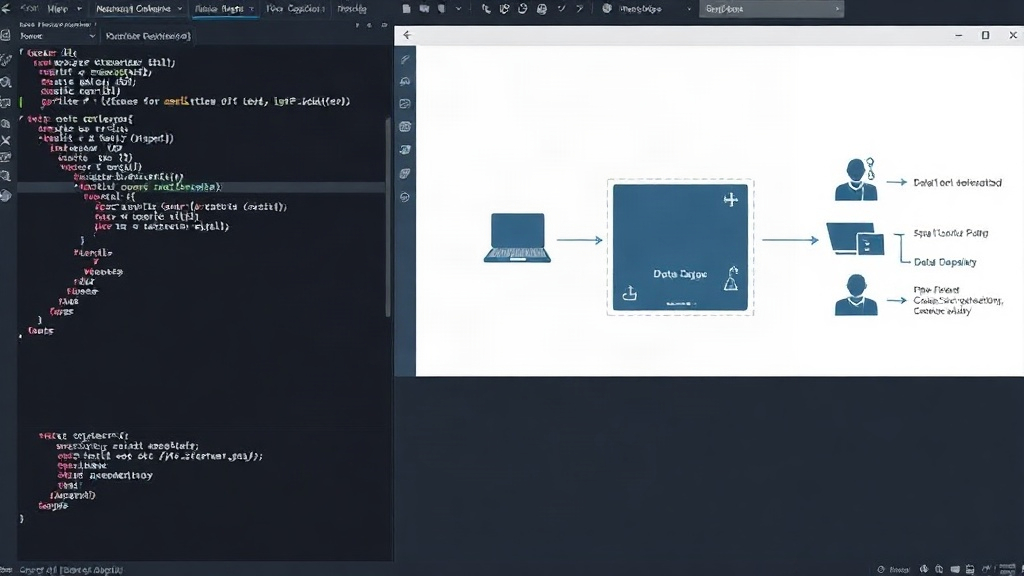
To address these challenges, a new open-source project, the Garza Global Graviton (GGG) Sovereign Edge Daemon, has emerged. This self-contained background daemon is designed from the ground up for absolute data sovereignty. GGG operates entirely locally, functioning as an OpenAI-compatible loopback proxy. It provides an endpoint at http://127.0.0.1:11834, allowing local applications to interact with AI models as if they were communicating with a cloud service, but with all data remaining on the user's machine.
Key Features for Data Sovereignty
The core promise of GGG is its unwavering commitment to data privacy. This is achieved through several key architectural decisions and features:
- Zero Telemetry / Air-Gapped Operation: GGG requires no accounts, has no external cloud dependencies, and crucially, contains zero tracking code by design. Every piece of data—prompts, conversation history, and context vaults—is confined to the user's hardware. This makes it suitable for highly sensitive applications or for users who simply wish to maintain complete control over their digital footprint.
- Sovereign Math Framework: Beyond simply keeping data local, GGG incorporates features to ensure data integrity. It includes a metadata pacer, which helps manage and timestamp interactions. More significantly, it employs HMAC-SHA256 cryptographic response branding. This feature allows users to cryptographically verify the authenticity and integrity of AI responses, ensuring they haven't been tampered with in transit or at rest.
- Bring Your Own AI (BYOAI): GGG is designed to be agnostic to the underlying AI model. It acts as a proxy, meaning users can connect it to any compatible local AI model or even different cloud endpoints if they choose to reintroduce external dependencies for specific tasks. This flexibility empowers users to leverage their preferred AI models without being tied to a single vendor's ecosystem.
- Local Context Management: The daemon facilitates the creation and management of local context vaults. These vaults allow users to store and retrieve relevant information for AI interactions, enabling more personalized and context-aware responses. By keeping these vaults local, GGG ensures that sensitive user data used for context never leaves the user's control.
Technical Underpinnings and Architecture
GGG is built as a single, self-contained executable. This simplifies deployment and management, as there are no complex dependencies or installation processes to navigate. The daemon listens on a local port, acting as a transparent intermediary between applications and AI models. When an application sends a request to the GGG endpoint, the daemon processes it, potentially adding its cryptographic branding, and then forwards it to the configured AI backend. The response is then processed by GGG before being returned to the application, ensuring that all data passes through the local, telemetry-free proxy.
The use of an OpenAI-compatible API makes integration straightforward for many existing AI applications and development frameworks. Developers familiar with OpenAI's API can simply point their applications to the local GGG endpoint instead of the cloud-based one. This low barrier to entry means that integrating GGG into existing projects or starting new ones is a minimal effort, maximizing the immediate benefit for users.
The Sovereignty Advantage
The primary advantage of GGG is the absolute data sovereignty it provides. In an era where data privacy is a growing concern, and regulatory landscapes around data usage are constantly evolving, having a local, zero-telemetry solution is invaluable. Developers can experiment with advanced AI functionalities without the nagging worry that their proprietary code, sensitive business logic, or personal data might be inadvertently collected, stored, or analyzed by a third party. This is particularly crucial for companies handling confidential information, researchers working with sensitive datasets, or individuals who simply value their privacy.
The cryptographic branding feature adds another layer of assurance. It’s akin to having a tamper-evident seal on every AI response. This ensures that the output received is precisely what the AI model generated, without any modification or injection of external information. For applications where accuracy and authenticity are paramount, this feature is a significant differentiator.
Who is GGG For?
The Garza Global Graviton Sovereign Edge Daemon is targeted at a broad audience within the developer and tech-savvy user community:
- Developers building AI-powered applications: Those who need to integrate AI capabilities while maintaining strict data privacy standards for their users or their own intellectual property.
- Security-conscious individuals: Users who are wary of cloud telemetry and want to ensure their AI interactions remain private.
- Researchers and academics: Individuals working with sensitive data that cannot be shared with third-party cloud providers.
- Hobbyists and tinkerers: Anyone interested in exploring local AI models and custom workflows without external dependencies.
The open-source nature of GGG means that its development is transparent, and the community can contribute to its improvement and audit its code for security and privacy assurances. This collaborative approach further solidifies its commitment to user control and data sovereignty.
The Future of Local AI Control
GGG represents a significant step towards a future where local AI processing is not only feasible but also secure and privacy-preserving. By offering an OpenAI-compatible interface with a strong emphasis on zero telemetry and data integrity, it lowers the barrier to entry for private AI development. As AI models continue to grow more powerful and accessible for local deployment, tools like GGG will become essential for developers seeking to harness this power responsibly and maintain absolute control over their data.