Micron Enters High-Density DDR5 Arena with 512GB Modules

Miron Technology has officially entered the high-density DDR5 memory market with the announcement of its new 512GB DDR5-9200 memory modules. This move directly challenges Samsung's existing 512GB DDR5 offerings, which have been the sole option in this capacity tier for approximately five years. The new modules from Micron promise not only increased density but also enhanced performance, with speed bins reaching up to 9200 MT/s. This positions them as a significant upgrade for servers and high-performance computing environments. The primary advantage Micron emphasizes is power efficiency. The company claims its 512GB DDR5-9200 modules consume only 16W of power per module. This is a substantial improvement over previous generations, particularly when considering the aggregate power draw in densely populated server racks. Micron asserts that a server equipped with these modules can achieve up to 12TB of total memory capacity, while consuming 60% less energy compared to a system using four 128GB modules. This focus on energy reduction is critical for hyperscalers and large data centers, where power consumption and thermal management are major operational costs.
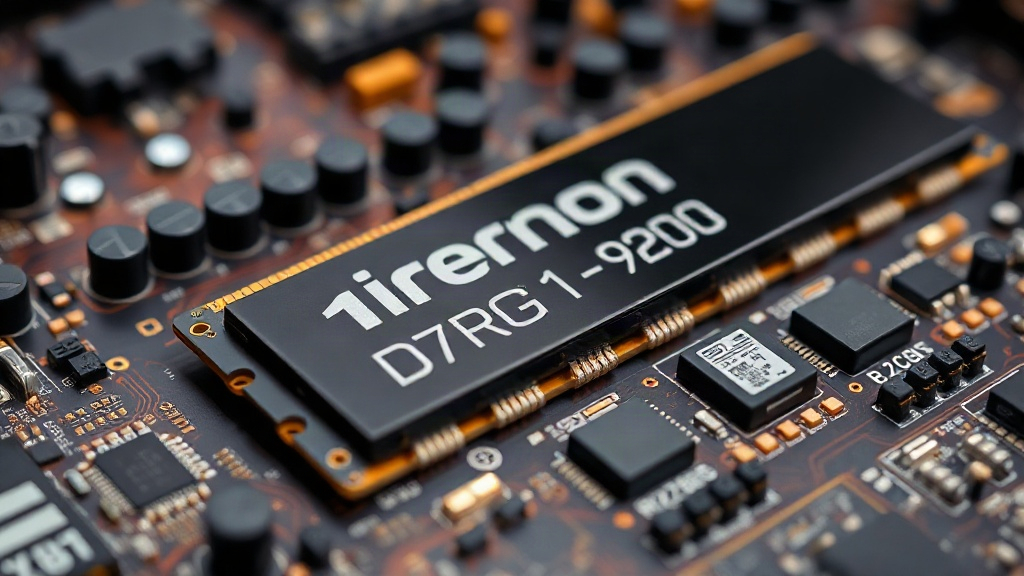
Micron 512GB DDR5-9200 memory module showcasing its high-density design

Technical Specifications and Performance Gains

The DDR5-9200 designation indicates a theoretical peak data transfer rate of 9200 million transfers per second. This represents a significant leap in memory bandwidth compared to earlier DDR5 standards, which typically topped out at 4800 MT/s or 5600 MT/s. Higher bandwidth is crucial for workloads that are memory-intensive, such as large-scale data analytics, in-memory databases, artificial intelligence training, and high-performance computing simulations. By increasing both the capacity per module and the speed, Micron is enabling servers to handle larger datasets and more complex computations with greater efficiency. The 16W power draw per 512GB module is a key differentiator. To put this into perspective, older 128GB DDR4 modules often consumed around 3-5W each. While DDR5 is inherently more power-efficient per gigabyte than DDR4, achieving 16W for a 512GB module that is 4x the capacity of a common DDR5 module (128GB) suggests advanced power management techniques and potentially new memory architectures. The claim of a 60% reduction in energy intensity compared to four 128GB modules highlights the aggregated benefits. If a server previously used four 128GB DDR5 modules (assuming ~8-10W each for 128GB), the total might be 32-40W for 512GB. Micron's 512GB module at 16W for the same capacity represents a substantial saving. This translates directly to lower electricity bills and reduced cooling requirements, which are significant factors in the total cost of ownership for data centers.

Market Implications and Competitive Landscape

Micron's entry into the 512GB DDR5 market intensifies competition. For years, Samsung has held a near-monopoly in this high-capacity segment. Micron's offering, particularly with its focus on efficiency and performance, provides a viable alternative for server manufacturers and cloud providers. The timing is also significant, as the demand for higher memory capacities and greater power efficiency continues to grow with the expansion of AI and big data workloads. However, the article from Tom's Hardware hints at a potential barrier: price. While not explicitly stated in the excerpt, the implication is that these cutting-edge modules may come with a premium price tag, potentially limiting their initial adoption to those with the most demanding requirements and the largest budgets, such as hyperscale cloud providers. The question remains how Micron will price these modules to balance the advanced technology and manufacturing costs against market demand. If the price is too high, it could slow down the adoption rate, even with the compelling efficiency gains. What nobody has fully detailed yet is the specific manufacturing process or die architecture that enables Micron to achieve this density and power efficiency. Whether it relies on advanced packaging techniques like 3D stacking, novel materials, or a refined internal chip design remains to be seen, but it represents a significant engineering feat in memory technology. For system architects, this development offers new possibilities for designing more powerful and sustainable server infrastructure. The ability to pack more memory into fewer DIMM slots, while simultaneously reducing the overall power footprint, is a critical step forward for data center efficiency and scalability. This could lead to denser server configurations, fewer required DIMM slots per CPU socket, and ultimately, more compute power within the same physical footprint and power budget.