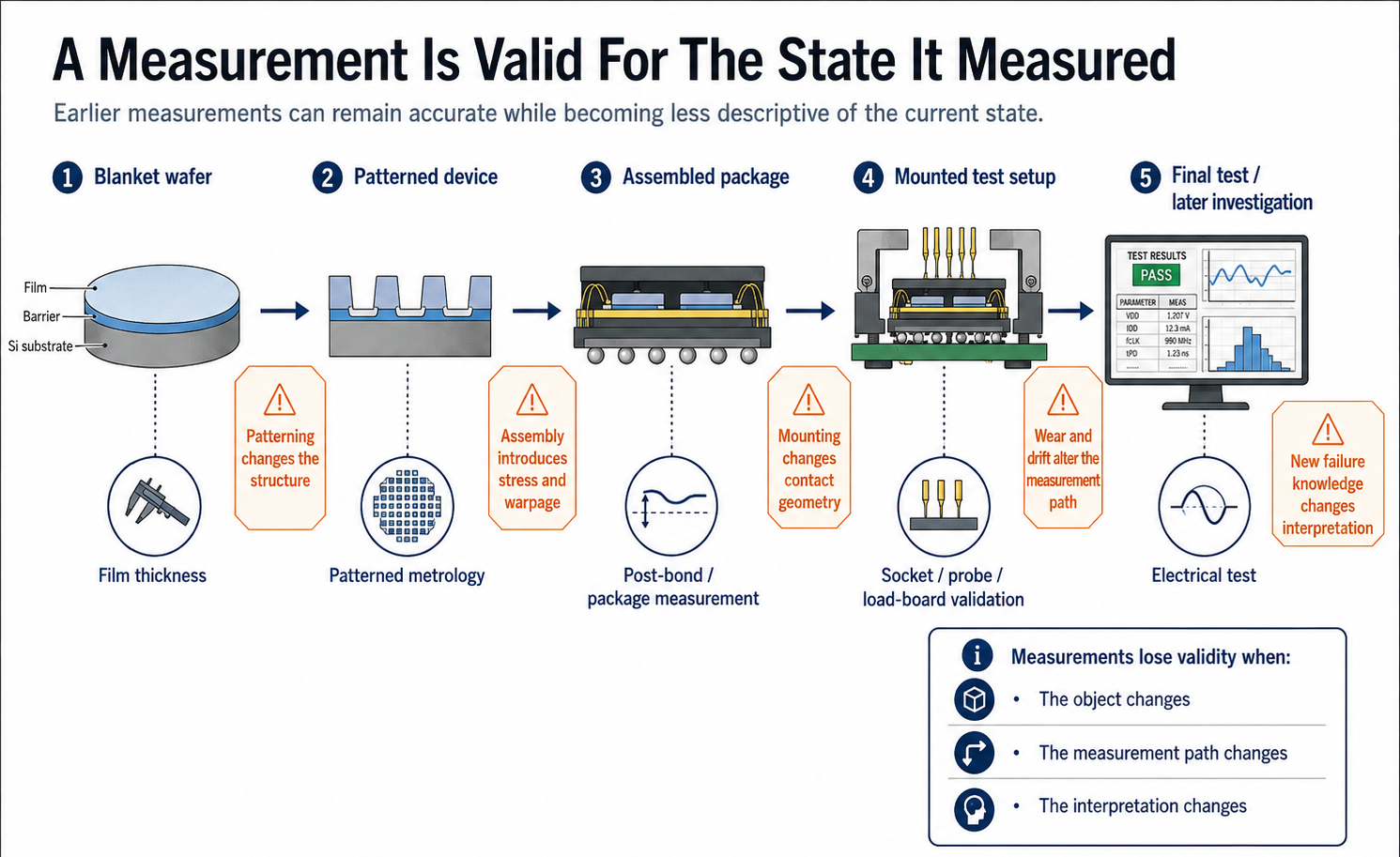
The Ephemeral Nature of Semiconductor Measurements
In the intricate world of semiconductor manufacturing and testing, a measurement is rarely a static truth. Its validity is a fleeting property, susceptible to erosion from a variety of sources. The chip itself, the pathway through which it is tested, and the fundamental assumptions underpinning the measurement process can all change, rendering previously reliable data obsolete or, worse, misleading. This dynamic environment demands a constant re-evaluation of what a measurement truly signifies and for how long it remains relevant.
Consider a measurement taken today on a specific chip design. Tomorrow, a minor design revision might be implemented to improve power efficiency or address a subtle performance bottleneck. This revision, however small, can alter the electrical characteristics of the chip, potentially shifting the very parameters that were being measured. If the test setup remains unchanged, the historical data might no longer accurately reflect the current chip's behavior. This is not a hypothetical scenario; it is a daily reality for engineers working with complex integrated circuits.
The test path, the collection of hardware and software that facilitates the measurement, is another significant factor. As test equipment ages, it requires calibration, and newer generations offer enhanced precision, speed, or capabilities. A change in test equipment, even if intended to improve accuracy, can introduce a new baseline or alter the nuances of the measurement. If the transition is not managed carefully, with proper correlation studies between old and new systems, historical data can become incompatible with current readings. This can lead to confusion, incorrect conclusions about product quality, and delays in production.
Furthermore, the assumptions behind a measurement are critical. These might include environmental conditions (temperature, humidity), the expected operating parameters of the chip, or even the statistical models used to interpret the results. For instance, if a chip is designed to operate at a certain clock speed under specific thermal conditions, and these conditions change in the target application, the original measurements might not hold true. Similarly, if the underlying statistical assumptions about yield or defect distribution are based on older technologies, they may not accurately predict the behavior of newer, more advanced nodes.
The semiconductor industry is characterized by rapid innovation. New materials, advanced packaging techniques, and more complex architectures are introduced regularly. Each of these advancements can subtly or dramatically impact how a chip performs and how it is measured. For engineers and managers, understanding the shelf life of a measurement is paramount. It requires a holistic view that encompasses not just the immediate reading, but the entire ecosystem surrounding it: the silicon, the test infrastructure, and the conceptual framework applied to the data.
Challenges in Maintaining Measurement Relevance
The challenge lies in the interconnectedness of these elements. A change in one area can have cascading effects on others. For example, the drive towards smaller process nodes (e.g., from 7nm to 5nm and beyond) introduces new physical phenomena and requires more sensitive measurement techniques. Equipment that was adequate for previous nodes may struggle to capture the subtle variations in current or voltage at these advanced levels. This necessitates investment in new, more sophisticated test hardware and software. Without such investment, measurements taken with older equipment on newer chips will inherently be less valid.
Moreover, the complexity of modern chips means that a single measurement often represents a narrow slice of the chip's overall functionality. A measurement of static leakage current, for instance, might be perfectly valid under static conditions but tells us little about the chip's dynamic behavior under heavy workload. As applications become more demanding, so too must the measurement strategies. Relying on outdated measurement suites or interpretation methods can lead to missed failure modes, resulting in field failures and reputational damage.
The concept of design-for-test (DFT) plays a crucial role here. Incorporating testability features directly into the chip design can help maintain the relevance of measurements over time. However, even sophisticated DFT strategies need to be adapted as technology evolves. The overhead associated with DFT, in terms of silicon area and performance impact, must be balanced against the need for reliable and relevant test data.
The assumptions behind a measurement are also subject to change. Historically, many semiconductor tests relied on simplified electrical models. However, as feature sizes shrink and quantum effects become more pronounced, these models can become inadequate. Engineers must constantly update their understanding of the physics of semiconductor devices and the statistical distributions of process variations. What was considered a 'normal' variation a few years ago might be an indicator of a significant issue with current technology.
Strategies for Preserving Measurement Validity
To combat the erosion of measurement validity, several strategies can be employed. Firstly, rigorous change management is essential. Any modification to the chip design, the test hardware, or the test software must be accompanied by a plan to re-validate measurements. This includes correlation studies between old and new systems, benchmarking, and potentially re-running historical test cases on the new setup to ensure continuity.
Secondly, continuous monitoring and recalibration of test equipment are non-negotiable. Equipment manufacturers provide guidelines for calibration intervals, but the actual environment and usage patterns can necessitate more frequent checks. Implementing automated diagnostic routines within the test software can also flag anomalies in equipment performance before they significantly impact measurement accuracy.
Thirdly, fostering a culture of critical data analysis is vital. Engineers should not blindly trust historical data. Instead, they should regularly question whether the current measurement context aligns with the context in which the data was originally collected. This involves staying abreast of technological advancements, understanding the limitations of existing test methodologies, and being prepared to invest in new approaches when necessary. The surprising detail here is not the cost of new equipment, but the potential cost of not investing in it – which can manifest as product recalls and loss of market trust.
Finally, documentation is key. Comprehensive records of test setups, software versions, environmental conditions, and any changes made are invaluable for troubleshooting and for understanding the historical context of measurements. When a measurement taken today deviates from historical trends, this detailed documentation can help pinpoint whether the cause lies in the chip, the test system, or a change in underlying assumptions.
Ultimately, maintaining the validity of semiconductor measurements is an ongoing process, not a one-time task. It requires vigilance, adaptation, and a deep understanding of the complex interplay between silicon, software, and science.