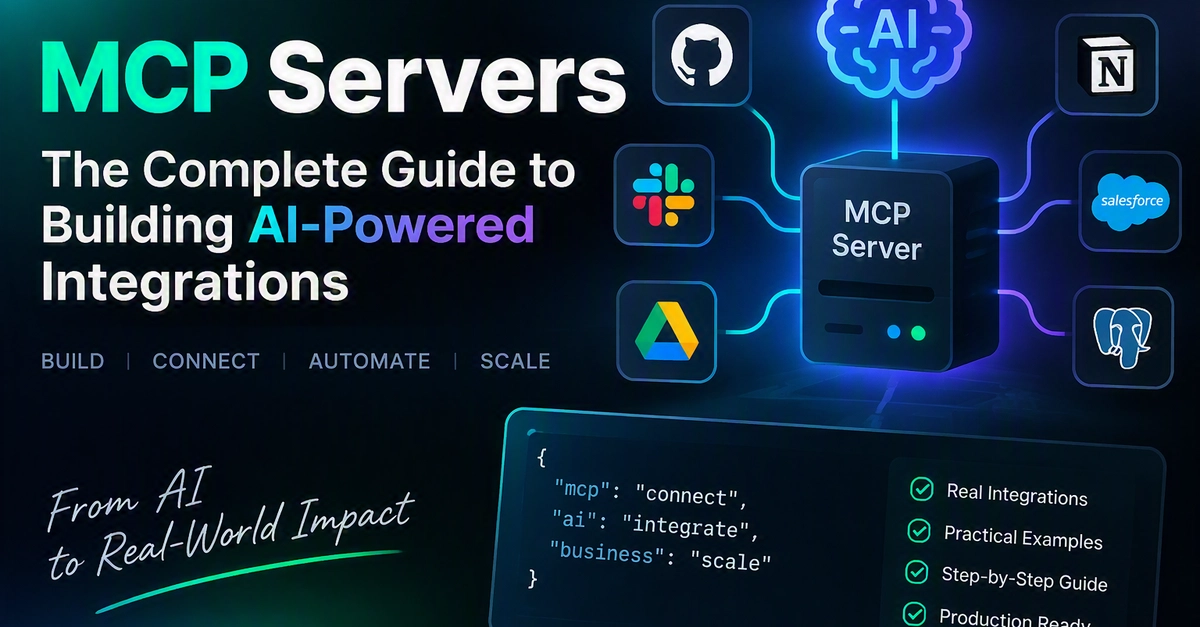
The Rise of LLMs and the Need for Standardized Integration
Large Language Models (LLMs) are rapidly becoming foundational components in modern software development. Their ability to understand and generate human-like text unlocks new possibilities across applications, from customer support chatbots to sophisticated content generation tools. However, LLMs operate within a defined context window and possess inherent limitations. To truly harness their power, developers need robust mechanisms to connect them with external data, APIs, and services. This is where standardized communication protocols become critical.
The Model Context Protocol (MCP) is emerging as an open standard designed to address this integration challenge. It aims to provide a seamless, secure, and scalable way for AI models to interact with the broader digital ecosystem. MCP servers act as the bridge, enabling AI assistants to access real-time information, execute actions, and retrieve context that extends beyond their training data.
What is Model Context Protocol (MCP)?
MCP is an open standard protocol that defines how AI models and external tools or services can communicate. Think of it less like a complex API specification and more like a universal translator for AI. Instead of each AI model needing bespoke integrations for every external service, MCP provides a common language and structure for these interactions. This allows AI models to request specific pieces of information or trigger actions on external systems in a standardized format. Conversely, external systems can provide structured responses that the AI model can readily understand and utilize.
The core idea behind MCP is to enable AI models to operate with richer, more dynamic context. This context can include:
- Real-time data: Fetching current stock prices, weather updates, or news headlines.
- User-specific information: Accessing a user's calendar, contacts, or past interactions (with appropriate permissions).
- Tool execution: Triggering actions like sending an email, booking a meeting, or performing a database query.
- Knowledge retrieval: Querying internal company knowledge bases or external encyclopedic resources.
By facilitating these interactions, MCP servers empower developers to build AI applications that are more intelligent, responsive, and capable than standalone LLMs alone.
Building an MCP Server: Key Components and Considerations
Developing an MCP server involves several key considerations. While the specific implementation details can vary, the fundamental architecture typically includes:
1. Request Handling and Parsing
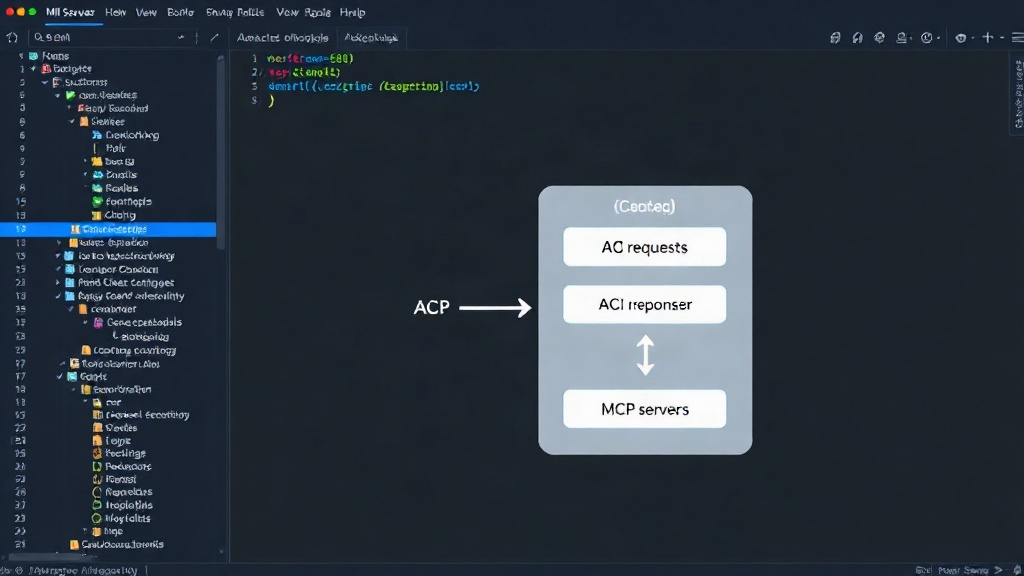
The MCP server must be able to receive incoming requests from an AI model. These requests will typically be formatted according to the MCP specification, often using JSON. The server needs to reliably parse these requests to understand the intent, the data being requested, or the action to be performed.
2. Contextual Data Retrieval or Action Execution
This is the core logic of the MCP server. Based on the parsed request, the server interacts with the relevant external data sources, APIs, or internal systems. This might involve querying a database, calling a third-party API, or executing a specific function within the application. The goal is to gather the necessary information or perform the requested action accurately and efficiently.
3. Response Formatting
Once the data is retrieved or the action is completed, the MCP server must format the result according to the MCP specification. This structured response is then sent back to the AI model, allowing it to integrate the information into its output or decision-making process. The response format is crucial for ensuring that the AI model can easily interpret and utilize the provided context.
4. Security and Authentication
Given that MCP servers often interact with sensitive data and perform actions on behalf of users or systems, security is paramount. The server must implement robust authentication and authorization mechanisms to ensure that only legitimate AI models can send requests and that these requests are permitted. This might involve API keys, OAuth, or other secure authentication protocols.
5. Scalability and Performance
As AI adoption grows, MCP servers will likely experience increasing load. The server architecture should be designed for scalability, capable of handling a high volume of concurrent requests without significant performance degradation. Efficient data retrieval and processing are key to maintaining low latency, which is critical for a good user experience with AI applications.
Use Cases for MCP Servers
The applications for MCP servers are vast and continue to expand as LLM capabilities mature. Some key use cases include:
- Enhanced Chatbots and Virtual Assistants: Enabling customer service bots to access order history, product catalogs, or user account details to provide more personalized and effective support.
- Automated Content Creation: Allowing AI models to pull real-time data, such as market trends or scientific findings, to generate more accurate and up-to-date articles, reports, or social media posts.
- Intelligent Data Analysis Tools: Empowering AI assistants to query databases, run analytical scripts, and retrieve specific datasets to assist data scientists and analysts in their work.
- Personalized Recommendation Engines: Connecting AI models to user profiles, browsing history, and product inventories to generate highly tailored recommendations.
- Workflow Automation: Integrating AI into business processes, allowing models to initiate tasks like scheduling meetings, sending follow-up emails, or updating CRM records.
The Future of AI Integration with MCP
MCP represents a significant step towards a more interconnected and capable AI ecosystem. By providing a standardized way for AI models to access and act upon external information, it breaks down the silos that have historically limited their utility. As the protocol matures and gains wider adoption, we can expect to see increasingly sophisticated AI-powered applications emerge. Developers who understand and implement MCP servers will be at the forefront of building the next generation of intelligent tools and services.
The surprising detail here is not the existence of a new protocol, but the focus on standardization itself as the key to unlocking broader AI utility. For too long, integrating AI has been a bespoke, often painful process. MCP aims to make it as straightforward as calling any other API, thereby democratizing the ability to build powerful AI-driven features.
What nobody has addressed yet is the long-term governance of the MCP standard. As it evolves, who will ensure its continued relevance and prevent fragmentation into competing dialects? This will be crucial for its sustained success.