Introducing the MCP Gateway: Bridging the Gap
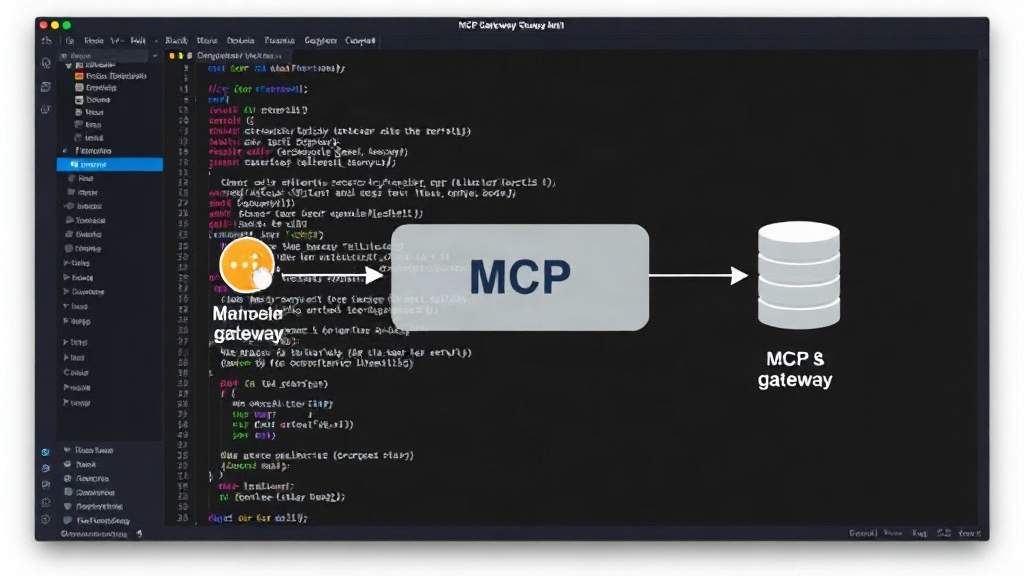
A raw MCP server handles the core functionalities of processing requests and interacting with tools. However, it lacks crucial capabilities for managing access, enforcing usage policies, and auditing interactions. This is where the MCP gateway steps in. It acts as a vital intermediary layer between client applications (agents) and the MCP server, introducing a suite of features that transform a basic server into a manageable and controlled service. Think of it less like a simple network switch and more like a sophisticated traffic controller for your AI agents, ensuring smooth, secure, and accountable operations.
The fundamental difference lies in ownership: the MCP gateway owns the policy, while the MCP server owns the tools. A raw server can list available tools and execute them, but it has no inherent mechanism to dictate who can use which tool, how frequently, or at what cost. The gateway injects this governance, making it possible to implement granular controls that are essential for production environments.
Granular Control and Unified Access
One of the primary advantages of the MCP gateway is its ability to provide a single, unified endpoint for all clients, regardless of their origin or type. Applications like Claude Desktop, Cursor, Windsurf, and OpenClaw, along with any generic client, all connect to the same gateway URL. The distinction between different hosts is handled through a simple configuration filename, streamlining the connection process and simplifying client management.
This unified access point is critical for consistent policy application. Instead of managing separate access rules for each client type or deployment, the gateway centralizes this logic. This means that any policy changes or updates are applied uniformly across all connected agents, ensuring a coherent and predictable user experience.
Enforcing Limits and Budgets
The MCP gateway introduces sophisticated mechanisms for limiting and capping resource usage. These limits are designed to prevent abuse, manage costs, and ensure fair access for all users. Two primary types of limits are enforced:
- Per-key request limits: This is a fine-grained control that targets individual API keys. It prevents a single runaway agent or a compromised key from overwhelming the system or incurring excessive costs. If an agent associated with a specific key exceeds its allocated request rate, the gateway will block further requests from that key.
- Per-team ceilings: This is a broader control mechanism that applies to entire teams or groups of agents. It sets an overall budget or usage ceiling for a team. If the collective usage of agents within a team reaches this limit, the gateway will refuse requests from any agent within that team. This is crucial for managing fleet-wide costs and ensuring that no single team's usage depletes resources for others.
Beyond request limits, the gateway also enforces budget caps clamped to the plan. This means that the usage limits are directly tied to the subscription plan or service tier the user or team is on. The gateway ensures that usage never exceeds the defined budget for that plan, providing a predictable cost structure and preventing unexpected overages. This feature is invaluable for SaaS providers and platform operators who need to manage their own infrastructure costs and offer clear pricing to their customers.
Comprehensive Auditing and Visibility
A significant addition provided by the MCP gateway is detailed auditing. For every tool call made through the gateway, a dedicated audit row is generated. This provides a granular log of all interactions, including who made the call, which tool was used, when it was called, and potentially the associated cost or resource consumption.
This level of visibility is absent in a raw MCP server. A plain proxy might forward the same bytes, but it has no understanding of the context or the specific actions being performed within the MCP framework. The gateway, by understanding the MCP protocol and its tool calls, can log each interaction comprehensively. This audit trail is essential for:
- Security monitoring: Detecting suspicious activity or unauthorized access attempts.
- Debugging: Tracing the source of errors or unexpected behavior in agent interactions.
- Cost allocation: Accurately attributing resource usage to specific users, teams, or applications.
- Compliance: Meeting regulatory requirements that mandate detailed logging of system interactions.
The audit row specifically captures information about the tool call, providing a rich dataset for analysis. This data can be used to optimize tool usage, identify underutilized or overutilized resources, and refine usage policies based on real-world patterns.
The Policy vs. Tools Distinction
The clear separation of concerns between the gateway and the server is a key architectural principle. The MCP server remains focused on its core competency: providing access to and executing AI models and tools. It's the engine. The MCP gateway, on the other hand, acts as the driver and the dashboard, managing how the engine is used, by whom, and under what conditions. This division of labor leads to a more robust, scalable, and manageable system.
Developers building applications that rely on MCP services benefit from this separation. They can focus on integrating with the unified gateway endpoint and leveraging its policy enforcement features, without needing to understand the intricate details of the underlying MCP server's tool execution logic. Similarly, platform administrators can manage policies, limits, and auditing through the gateway, keeping the core MCP server infrastructure lean and focused.
In essence, the MCP gateway transforms a powerful but unmanaged set of tools into a controlled, auditable, and cost-effective service. It adds the necessary layers of governance that are indispensable for any production-grade AI service, enabling developers and organizations to deploy and scale their AI agent-based applications with confidence.