The Deceptive Offer
A developer seeking a new role encountered a sophisticated supply-chain attack disguised as a job take-home assignment. The company, Antfarm DAO, presented a polished online facade, complete with a professional website, a DEV.to presence, and what appeared to be a standard engineering recruitment process. The individual who extended the offer also maintained a seemingly robust online footprint, featuring profiles on DEV.to, GitHub, LinkedIn, and Stack Overflow. This careful curation of a digital identity aimed to establish credibility and lull the candidate into a false sense of security.
The assignment itself involved cloning a repository and running a script. This is a common practice in technical assessments, designed to evaluate a candidate's ability to set up a development environment and understand a codebase. However, in this instance, the repository contained a malicious npm package, poised to execute upon installation.
Unmasking the Malice
The critical moment of discovery came when the developer noticed an unusual npm package being installed as a dependency. Instead of the expected, clearly named packages related to the front-end framework (like React or Vue), a package with a name similar to a legitimate dependency, but with a subtle difference, appeared in the installation logs. This is a classic technique in supply-chain attacks: using typosquatting or slightly altered names to trick developers into installing malicious code.
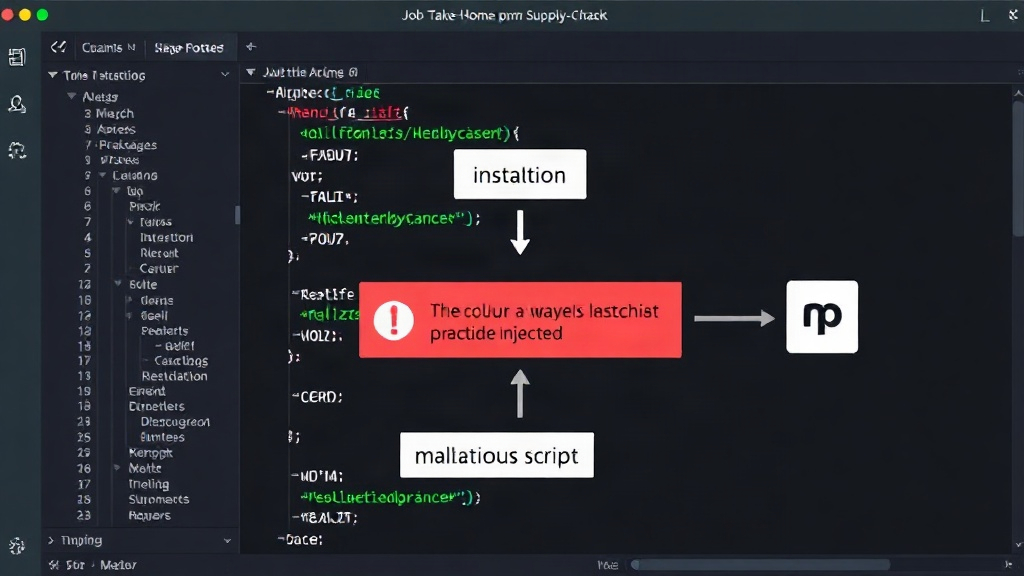
Upon closer inspection, the developer found that this suspicious package was designed to execute a script during its post-install phase. This phase is a common target for attackers because it runs automatically after the package is successfully installed, often without direct developer intervention or scrutiny. The script, once executed, was intended to exfiltrate sensitive information from the developer's machine. This could include environment variables, session tokens, or other credentials, effectively giving the attacker access to the developer's associated accounts and projects.
The sophistication of this attack lies in its integration into a seemingly legitimate process. Most developers are accustomed to cloning repositories and running `npm install` as part of their daily workflow, especially during job interviews. The attackers exploited this trust and routine. They weaponized a standard development practice to deliver their payload. The carefully crafted online personas of the recruiters and the company added another layer of deception, making the entire operation appear authentic.
The Broader Implications for npm Security
This incident highlights a growing and concerning trend in software supply-chain attacks. npm, as the default package manager for Node.js, is a foundational component of the JavaScript ecosystem. Millions of developers rely on it daily to manage dependencies for their projects. A compromise of npm or its ecosystem has far-reaching consequences.
Attackers are increasingly targeting package managers because a single successful compromise can affect thousands, if not millions, of downstream users. The allure of npm lies in its vastness and the speed at which developers often integrate new packages. This rapid integration, coupled with the trust developers place in the registry, creates fertile ground for malicious actors. The Antfarm DAO incident is a stark reminder that even seemingly benign interactions, like a job application, can be weaponized.
The techniques observed are not entirely new, but their application within a recruitment context represents an evolution in attack vectors. Previously, many npm supply-chain attacks focused on typosquatting legitimate packages or compromising popular, well-maintained packages with a long history. This approach, however, targets the developer directly through a process they are actively participating in, blurring the lines between a job search and a security risk. The attackers effectively leveraged social engineering within a technical context.
Defensive Measures and Developer Vigilance
For developers, this incident underscores the critical need for heightened vigilance. While it's impractical to manually audit every single line of code in every dependency, several practices can mitigate risk:
- Scrutinize Dependencies: Pay close attention to package names, especially during installations for new projects or assessments. Look for subtle typos or unusual naming conventions.
- Review `package.json` and `package-lock.json` Carefully: Before running `npm install`, review the dependencies listed. Understand why each package is there.
- Utilize Lockfiles: `package-lock.json` (or `yarn.lock`) ensures that exact dependency versions are installed, preventing unexpected updates that could introduce malicious code. Always commit your lockfile.
- Isolate Assessment Environments: For job take-home assignments, consider using a dedicated virtual machine or a clean, isolated development environment that has no access to sensitive credentials or production systems.
- Scan with Security Tools: Employ tools like `npm audit` or third-party vulnerability scanners to identify known vulnerabilities in dependencies. While these tools won't catch novel malicious packages, they are a crucial first line of defense.
- Verify Source Authenticity: For critical dependencies or during sensitive processes like job assessments, try to verify the authenticity of the source if possible, though this is difficult with public registries.
The Antfarm DAO incident is a wake-up call. It demonstrates that supply-chain attacks are becoming more sophisticated and are now infiltrating even the job application process. Developers must treat every new dependency, especially in unfamiliar contexts, with a degree of skepticism. The convenience of package managers comes with an inherent responsibility to remain vigilant against the evolving threats within the software supply chain.
The Unanswered Question
What remains unclear is the ultimate goal of Antfarm DAO and the individuals behind it. Was the primary objective to harvest credentials for further system compromise, or was it a test of the candidate's security awareness? The execution of a credential-stealing script suggests the former, but the context of a job interview makes the latter a plausible, albeit highly unethical, possibility. Without further investigation or more victims coming forward, the precise motivation behind weaponizing a take-home assignment remains a critical unknown.