The Unspoken Worry
The question lingered for months, a quiet dread that speaking aloud would make it real: Is AI making my 10-year DevOps career obsolete? This wasn't a casual thought; it was a persistent concern for many in the tech industry, particularly those with established careers in rapidly evolving fields like DevOps.
The setting for this pivotal conversation was mundane yet perfect. It was during an annual company conference, a time when the usual professional guardrails often soften. Amidst the clinking glasses and networking chatter at the Marriott Hotel, the author found himself with a drink in hand and a knot of anxiety in his stomach. He recognized that the conversations that truly reshape careers often happen not in formal presentations, but in informal settings – hallways, between sessions, or late in the evening when genuine thoughts surface.
He decided to pull his engineering manager aside, confronting the fear head-on.

The Manager's Perspective: Evolution, Not Obsolescence
The manager's response was not dismissive, but rather a profound reframing of the situation. He acknowledged the transformative power of AI but immediately pivoted to its role as an augmentative tool, not a replacement. His core message was that AI would automate the mundane, repetitive tasks that had become a significant part of a DevOps engineer's daily grind.
Think of it less like AI taking over your job and more like a highly efficient assistant that handles all the filing, scheduling, and basic data entry, freeing you up for complex problem-solving, strategic planning, and creative design. This assistant doesn't make you obsolete; it makes you more effective and valuable by allowing you to focus on higher-level cognitive work.
The manager elaborated that AI's strength lies in pattern recognition, rapid data analysis, and execution of predefined workflows. This is precisely what many routine DevOps tasks involve: monitoring logs, identifying common anomalies, deploying standard configurations, and managing routine infrastructure updates. By offloading these to AI, engineers are liberated from the toil that often consumes their time and mental energy.
Shifting Skillsets: From Execution to Strategy
The implication of this shift is clear: the value of a DevOps engineer will increasingly be measured not by their ability to perform repetitive tasks, but by their capacity for strategic thinking, complex problem-solving, and system design. The manager emphasized that AI tools, while powerful, require human direction, oversight, and integration. They need engineers who can:
- Design and implement AI workflows: Understanding how to set up, configure, and manage AI agents to perform specific DevOps functions.
- Interpret AI outputs: Analyzing the data and insights provided by AI to make informed decisions.
- Troubleshoot complex, emergent issues: Addressing problems that AI cannot solve or that arise from AI-driven processes.
- Ensure security and compliance: Overseeing AI systems to maintain robust security postures and regulatory adherence.
- Optimize and strategize: Using AI-generated data to drive continuous improvement and long-term system architecture planning.
This perspective suggests a career evolution rather than a termination. The 10 years of experience the author had accumulated were not in performing tasks that AI could now replicate, but in understanding the intricate systems, the potential failure points, and the strategic goals that AI tools are meant to serve. This deep understanding is precisely what AI lacks and what makes human engineers indispensable.
The Future of DevOps: Human-AI Collaboration
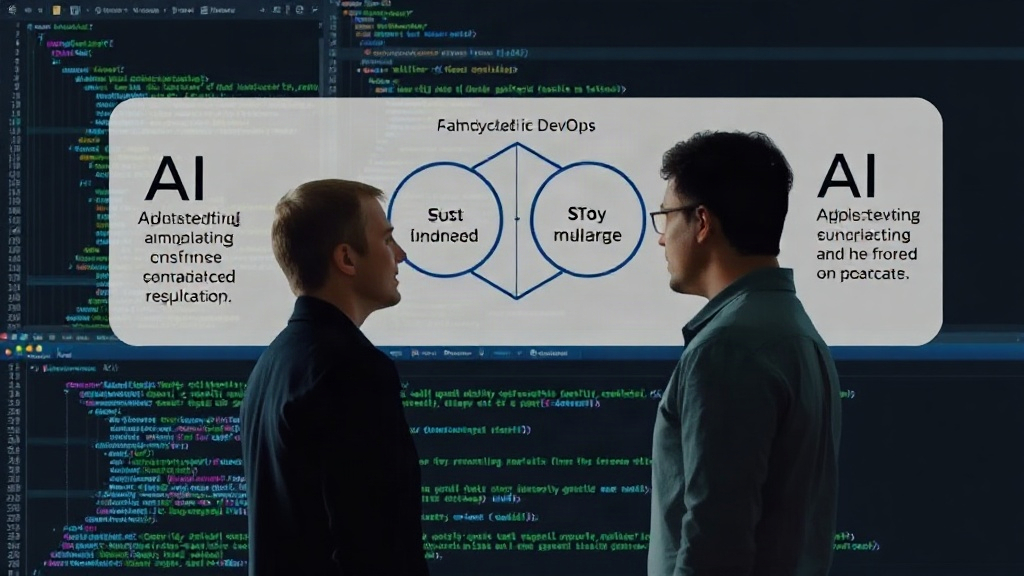
The conversation concluded with a powerful affirmation: AI is not a competitor but a collaborator. The manager articulated a vision where DevOps engineers become conductors of an AI-powered orchestra, orchestrating complex systems with greater efficiency and insight. The fear of obsolescence began to recede, replaced by a sense of opportunity.
This shift demands a proactive approach from professionals. It means embracing continuous learning, not just in new technologies, but in the strategic application of AI. It involves developing skills in prompt engineering, AI model management, and understanding the ethical implications of AI in system operations. The goal is to leverage AI to amplify human capabilities, leading to more resilient, efficient, and innovative systems.
The manager's answer fundamentally changed the author's perspective. It wasn't about fighting AI; it was about integrating it. The 10 years of experience in DevOps provided a robust foundation of system knowledge, problem-solving acumen, and strategic understanding. These are the very qualities that AI amplifies, making experienced engineers more critical, not less. The future of DevOps isn't human vs. AI; it's human with AI, building and managing systems at a scale and efficiency previously unimaginable.