The Problem: Webhook Failures Are Inevitable
In an event-driven architecture, webhooks are the connective tissue. They enable asynchronous communication, allowing systems to react to events in real-time. However, the reality of distributed systems is that failures happen. Network glitches, temporary service outages, malformed payloads, or downstream system errors can all cause webhook deliveries to fail. Without a robust mechanism to handle these failures, critical data can be lost, leading to inconsistent states and broken workflows. This is where a Dead-Letter Queue (DLQ) becomes essential.
InstaWebhook, a platform focused on enterprise webhook solutions, has introduced a new Dead-Letter Queue (DLQ) architecture designed to address these challenges head-on. The system aims to provide fault-tolerant webhook processing by ensuring that no event is truly lost, even when initial delivery attempts fail.
InstaWebhook's DLQ Architecture Explained
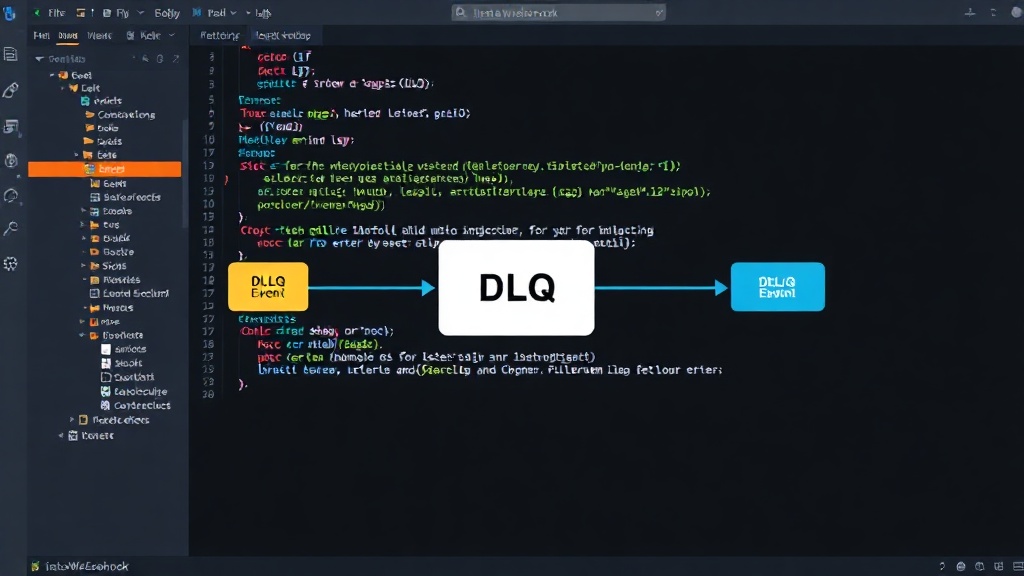
At its core, InstaWebhook's DLQ acts as a holding pen for events that could not be successfully delivered to their intended recipients. Instead of simply discarding failed messages, the system routes them to a dedicated queue. This architecture is built upon several key principles:
- Asynchronous Event Processing: Webhook events are processed asynchronously, decoupling the sender from the receiver. This prevents a single slow or failing receiver from blocking the entire system.
- Event Persistence: All incoming events are persisted before attempted delivery. This ensures that even if the processing pipeline experiences issues, the original event data is not lost.
- Automated Retry Policies: The DLQ doesn't just store failed events; it actively attempts to re-deliver them. InstaWebhook implements automated retry policies, typically employing an exponential backoff strategy. This means that after an initial failure, the system waits progressively longer between subsequent retry attempts. This is crucial for handling transient network issues or temporary downstream service unavailability. For instance, a webhook that initially fails with a 500 error might be retried after 1 minute, then 5 minutes, then 15 minutes, and so on, up to a configurable limit.
- Handling Permanent Failures: While retries are vital, some failures are permanent. This could be due to a malformed request that the receiver consistently rejects, or a receiver that has been permanently disabled. The DLQ needs a strategy for these cases. InstaWebhook's design allows for policies to define when an event is considered permanently failed and should be archived rather than continuously retried.
Alerting and Monitoring for Proactive Issue Resolution
A DLQ is only effective if its contents are visible and actionable. InstaWebhook emphasizes robust monitoring and alerting to keep developers informed about webhook processing health.
- DLQ Monitoring: The system provides dashboards and metrics that track the number of messages in the DLQ, the rate of incoming failed messages, and the success rate of retries. This visibility is critical for understanding the overall health of webhook integrations.
- Alerting Mechanisms: Customizable alerts can be configured to notify relevant teams when certain thresholds are breached. For example, an alert might trigger if the number of dead-lettered events exceeds a certain percentage of the total traffic, or if a specific webhook endpoint consistently experiences high failure rates. This proactive alerting allows teams to investigate and resolve issues before they impact end-users or critical business processes.
- Debugging Failed Webhooks: When an alert is triggered, developers need tools to debug. The DLQ provides access to the original event payload, request headers, and the specific error response received from the downstream service. This detailed information is invaluable for pinpointing the root cause of the failure, whether it’s an issue with the payload format, authentication, or the downstream service itself.
Manual Replay for Event Recovery
While automated retries and alerting are powerful, there are scenarios where manual intervention is necessary. InstaWebhook’s DLQ incorporates manual replay capabilities to provide fine-grained control over event recovery.
- Batch Replaying Dead Letters: Instead of replaying individual failed events one by one, the system supports batch replay. This allows developers to select a subset of messages from the DLQ – perhaps all events that failed within a specific time window or for a particular recipient – and trigger a re-delivery attempt for the entire batch. This significantly speeds up recovery after an incident.
- Event Replay Workflow: The replay process is designed to be straightforward. Developers can access the DLQ interface, filter messages based on various criteria (e.g., recipient, timestamp, error type), select the desired messages, and initiate a replay. The system then attempts to deliver these selected events again.
- Idempotent Processing: A critical consideration for any webhook system, especially one involving retries and replays, is idempotency. Downstream services should be designed to handle duplicate deliveries gracefully. If a webhook is replayed and the original delivery eventually succeeded but the acknowledgment was lost, the downstream service should not perform the action twice. InstaWebhook encourages and supports idempotent processing by providing unique event IDs that can be used by receivers to detect and ignore duplicate deliveries.
The Importance of DLQ Retention Policies
Deciding how long to retain events in the DLQ is a crucial architectural decision. InstaWebhook’s approach balances the need for recovery with storage costs and data governance.
- Archiving Dead-Lettered Events: Events that have been retried multiple times and are deemed permanently failed are typically archived. This archival process moves the data from the active DLQ to a more cost-effective, long-term storage solution, such as object storage (e.g., S3, Azure Blob Storage). This keeps the active DLQ clean and performant while preserving the event data for auditing or historical analysis.
- Configurable Retention: The retention policy for both the active DLQ and the archived data can be configured based on business requirements. This allows organizations to comply with data retention regulations or simply define how long they need to be able to recover events.
Broader Implications for Enterprise Webhook Platforms
InstaWebhook's focus on a comprehensive DLQ solution highlights a growing trend in enterprise software: the need for resilience and recoverability in event-driven systems. For businesses relying on webhooks for critical integrations – whether for payment processing, CRM updates, or IoT data ingestion – a robust error-handling strategy is no longer a nice-to-have, but a necessity. This DLQ implementation provides a blueprint for how to build more fault-tolerant webhook processing pipelines, reducing data loss and improving the overall reliability of interconnected systems.