The Case Against the Traditional Portfolio
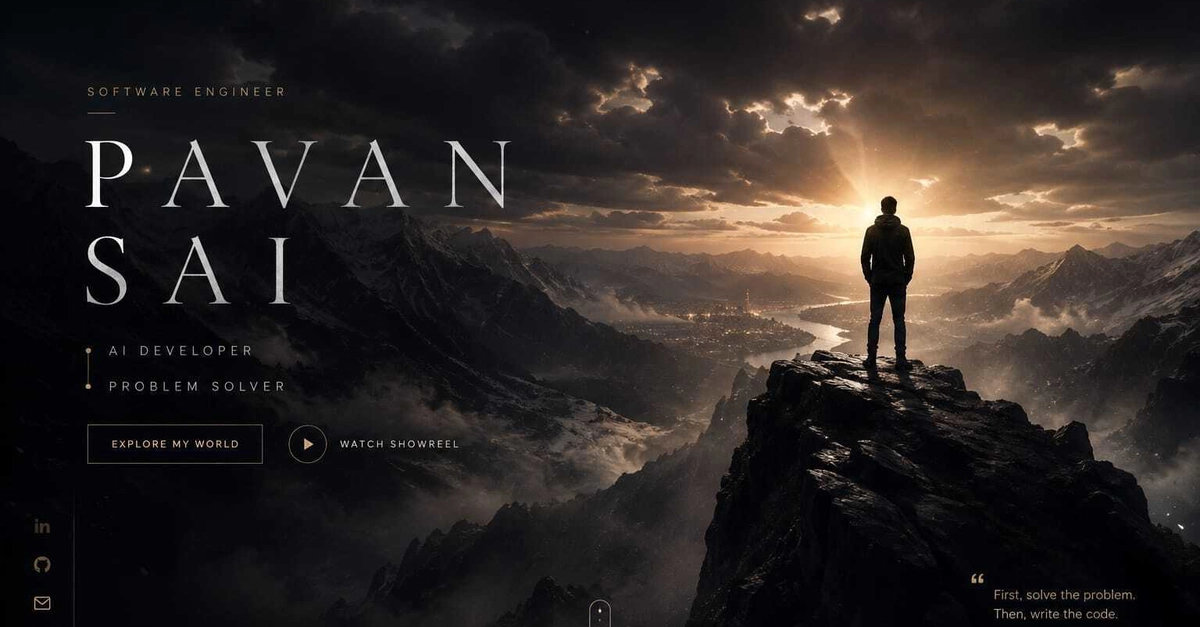
Most developer portfolios adhere to a predictable structure: About, Skills, Projects, Contact. While functional, this format often presents a developer's work as a static list, failing to capture the narrative of their journey or the depth of their experience. Pavan Sai, a Software Engineer and AI Developer, recognized this limitation when rebuilding his own portfolio. He aimed to move beyond a mere collection of sections and create an immersive experience that felt like entering a story.
This ambition led to the development of a cinematic, interactive portfolio that emphasizes his journey as a developer. The live portfolio, accessible at https://pavan-sai-portfolio-xi.vercel.app, serves as a testament to this approach.
Crafting a Narrative Experience
The core idea was to make visitors feel as if they were embarking on a narrative, rather than simply browsing a resume. This meant rethinking the user flow and introducing elements that evoke a sense of progression and discovery. The final experience is designed to guide the user through Pavan's professional story, making each interaction meaningful.
The cinematic approach involved integrating elements that are typically found in storytelling mediums. This could include animated transitions, interactive timelines, or even subtle background music and sound effects that shift based on the user's progress. The goal is to create an emotional connection and a memorable impression that a standard list of bullet points cannot achieve.
By focusing on the 'experience' rather than just the 'content,' the portfolio transforms from a passive document into an active engagement. This is particularly relevant in a crowded job market where standing out is crucial. A developer's ability to communicate their passion, problem-solving process, and growth journey can be as important as their technical skills. A cinematic portfolio aims to showcase these intangible qualities more effectively.
Technical Implementation and Design Choices
Building such an experience requires a blend of front-end development skills and a keen eye for design. Technologies that facilitate rich animations, smooth transitions, and interactive elements are key. Frameworks like React, coupled with animation libraries such as Framer Motion or GSAP, would be well-suited for creating the dynamic and engaging UI required for a cinematic portfolio. WebGL or Three.js could also be employed for more advanced 3D elements or immersive visual effects, although this would significantly increase complexity.
The design process likely involved storyboarding the user's journey, mapping out key interactions and visual cues. This iterative process would ensure that the narrative flows logically and that the interactive elements enhance, rather than detract from, the overall story. Careful consideration of user interface (UI) and user experience (UX) is paramount. Every animation, every transition, and every interactive component must serve the narrative and guide the user intuitively.
For instance, instead of a static skills section, a user might interact with a visual representation of skills being unlocked or upgraded as they progress through the portfolio. Project showcases could move beyond simple descriptions and screenshots to include interactive demos or animated walkthroughs of the development process. The 'About' section could be presented as a personal narrative, perhaps with animated character representations or a visual timeline of career milestones.
The choice of a live portfolio hosted on Vercel suggests a focus on modern deployment practices and accessibility. Vercel's platform is known for its ease of use and performance, making it an excellent choice for deploying dynamic, front-end heavy applications. This allows the developer to showcase not only their creative portfolio but also their proficiency with contemporary web development tools and infrastructure.
Lessons Learned: Beyond the Code
The primary lesson learned from building a cinematic developer portfolio is the power of storytelling in professional presentation. It demonstrates a willingness to think outside the box and a dedication to crafting a unique brand identity. This approach can differentiate a candidate significantly from others who present standard resumes or portfolios.
Furthermore, the process itself is a valuable learning experience. It pushes developers to explore new technologies, hone their design sensibilities, and think critically about how to communicate complex technical information in an engaging manner. It requires a holistic understanding of user experience, visual design, and narrative structure, in addition to core programming skills.
What remains to be seen is how widely this approach will be adopted. While effective for standing out, a highly cinematic portfolio might not be suitable for all industries or roles, and it certainly requires a greater investment of time and effort than a traditional one. The balance between engaging storytelling and clear, concise presentation of technical qualifications is a delicate one.
Ultimately, Pavan Sai's cinematic portfolio serves as an inspiring example of how developers can leverage creativity and technology to build a more impactful and memorable professional presence. It shifts the focus from merely listing accomplishments to actively demonstrating passion, ingenuity, and a unique approach to problem-solving.