The Problem: Debugging GitHub Webhook Failures is Painful
Receiving a POST request from GitHub to trigger an action is the easy part of setting up webhooks. The real challenge emerges when things go wrong, and developers are left scrambling to answer critical questions: Did GitHub actually send the event? Which repository and event type were involved? Was the signature X-Hub-Signature-256 validated correctly? Did the payload arrive intact? Was there a duplicate delivery? And crucially, who has access to view this data?
In typical development workflows, these issues are often tackled by littering terminals with temporary logs. This approach is inefficient, unscalable, and quickly becomes unmanageable, especially in production environments. The lack of a dedicated, centralized tool to inspect and debug webhook events leaves developers in the dark when integrations fail.
Introducing GitHub DevLog AI: A Private Webhook Investigation Hub
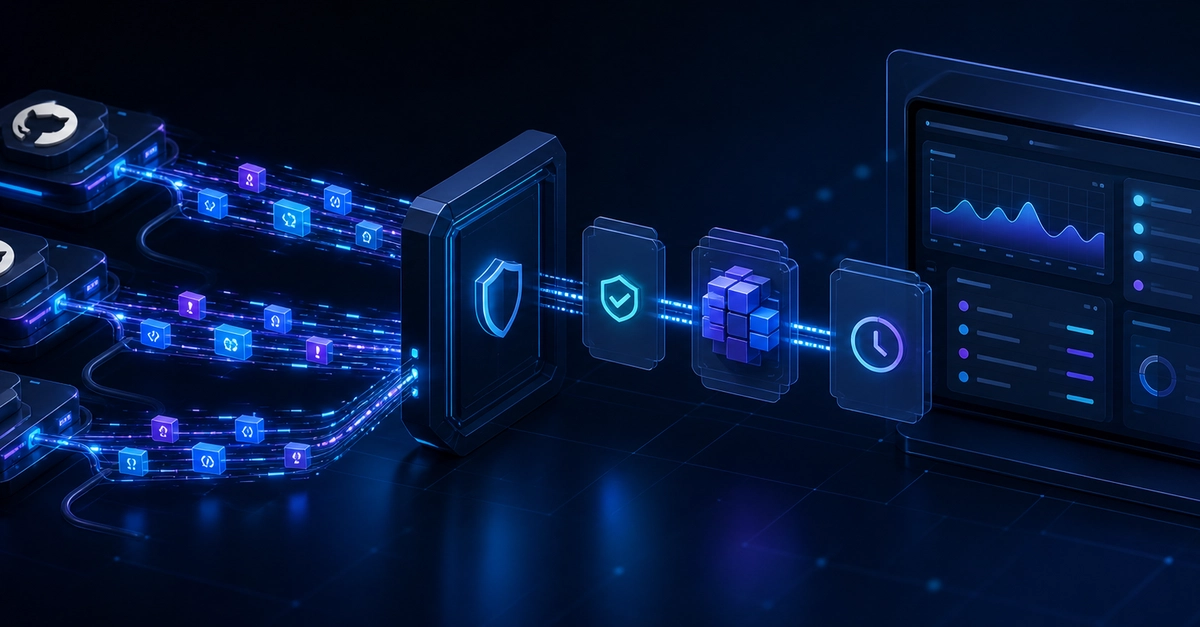
GitHub DevLog AI emerges as a solution to this pervasive problem. The project aims to provide a private, dedicated space for developers to receive, validate, and investigate GitHub webhooks. The core idea is to move beyond ephemeral terminal logs and establish a persistent, queryable record of all incoming webhook events.
The tool is designed to be more than just a logging service. It's an investigation hub. By centralizing webhook data, DevLog AI allows developers to perform detailed analysis. This includes verifying the authenticity of incoming requests through signature validation, inspecting the complete payload, identifying duplicate deliveries, and understanding the context of each event (repository, event type, etc.).
Building this product in public, as the creator Asllan Maciel emphasizes, doesn't mean exposing sensitive company code or client data. Instead, it involves sharing the problem definition, the constraints faced, and the lessons learned throughout the development process. This transparency aims to benefit other developers facing similar challenges.
Key Features and Functionality
While specific implementation details are still evolving, the vision for GitHub DevLog AI centers on several key functionalities:
- Private Ingestion: A secure endpoint to receive all GitHub webhook POST requests. This ensures that sensitive data remains within a controlled environment.
- Signature Validation: Automated verification of the
X-Hub-Signature-256header to confirm the request genuinely originated from GitHub and was not tampered with. This is a critical security measure. - Event Contextualization: Automatically parsing and storing essential metadata about each event, such as the repository name, the specific event type (e.g., `push`, `pull_request`), the timestamp, and the GitHub delivery ID.
- Payload Inspection: Providing an interface to view the full JSON payload received for each webhook event. This allows developers to see exactly what data GitHub sent.
- Duplicate Detection: Implementing logic to identify and flag potential duplicate deliveries, a common issue with webhook systems that can lead to unintended side effects if not handled correctly.
- Access Control: Mechanisms to control who can view the logged webhook data, ensuring privacy and security for different teams or individuals within an organization.
- Search and Filtering: Powerful search capabilities to quickly find specific webhook events based on repository, event type, date range, or payload content.
The project acknowledges that simply receiving a POST request is trivial. The real value lies in the ability to reliably debug and understand the flow of information when integrations break. GitHub DevLog AI aims to fill this gap by providing a robust platform for webhook observability.
The 'Public Building' Philosophy
Maciel's approach to developing GitHub DevLog AI embodies a philosophy of 'building in public.' This means that while the product itself is designed to handle private data securely, the development journey is transparent. The creator shares the problem statement, the technical hurdles, the architectural decisions, and the learnings. This transparency is intended to foster community engagement and provide educational value to other developers who might be grappling with similar integration challenges.
This contrasts with traditional software development where project progress and challenges are often kept internal until a product is ready for launch. By sharing the process, Maciel hopes to solicit feedback, identify potential edge cases early on, and build a community around the tool. It's less about revealing proprietary secrets and more about collaboratively solving a common developer pain point.
Future Implications and Potential
The success of GitHub DevLog AI could significantly streamline the development and maintenance of GitHub integrations. Developers would no longer need to rely on ad-hoc logging solutions or complex debugging setups. A centralized, searchable log of webhook events would drastically reduce the time spent diagnosing integration issues.
For founders, this translates to more reliable automation and fewer engineering hours wasted on debugging. For security professionals, the built-in signature validation and access control features offer enhanced security posture for webhook-driven systems. Creators leveraging GitHub for their workflows could benefit from more stable and predictable automated processes.
The project's focus on privacy is also a key differentiator. In an era where data security is paramount, offering a solution that prioritizes private ingestion and controlled access is crucial for adoption, especially by businesses.
The journey of GitHub DevLog AI, shared publicly, offers a compelling case study in modern software development, emphasizing community, transparency, and solving real-world developer problems with focused tooling.