
The Shrinking Edge of Proprietary AI
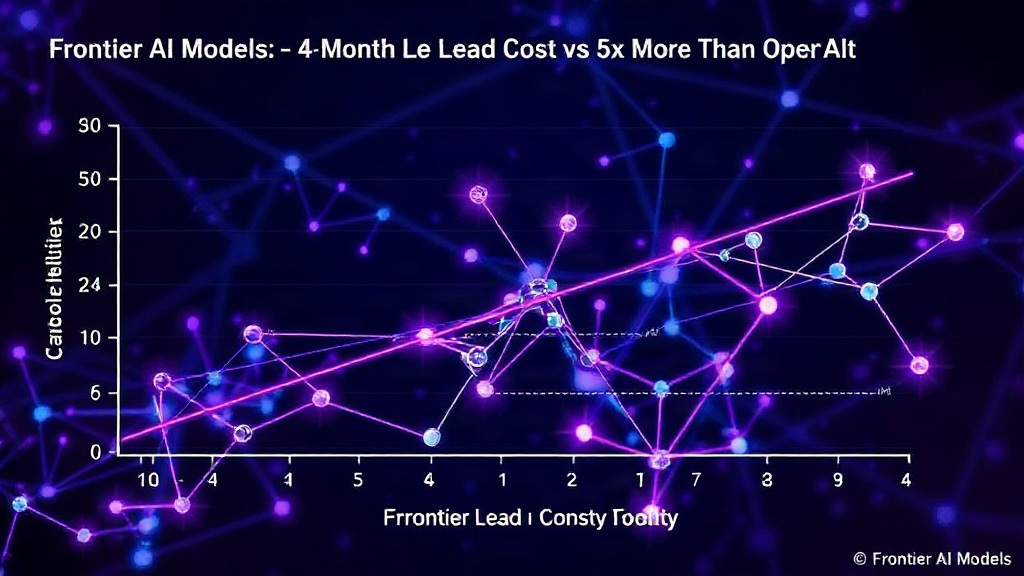
The race for artificial intelligence dominance is often portrayed as a David-and-Goliath battle, with well-funded Silicon Valley giants wielding immense computational power and vast datasets against a scattered field of open-source contenders. However, new analysis from Mozilla suggests this narrative is rapidly becoming outdated. Proprietary, or "frontier" AI models, while still leading, offer diminishing returns for their immense cost, granting only a marginal, four-month lead over their rapidly improving open-source counterparts, according to a preview of the report obtained by Ars Technica.
This finding directly challenges the assumption that the massive investment in closed, frontier models translates into an insurmountable technological advantage. The report, which has not yet been publicly released, indicates that the pace of innovation in the open-source community is such that the capability gap is closing faster than anticipated. This has significant implications for developers, researchers, and businesses that have historically relied on or competed with the leading proprietary models.
Cost vs. Capability: A Diverging Trend
The core of Mozilla's analysis lies in the stark contrast between the cost and the incremental benefit gained from using the most advanced, closed AI models. While companies like OpenAI, Google, and Anthropic continue to pour billions into developing larger, more complex models, the report suggests that the performance gains from these investments are becoming increasingly marginal. The cost to train and deploy these frontier models can be astronomical, often running into tens or hundreds of millions of dollars.
In contrast, open-source models, often trained with significantly fewer resources and by distributed communities, are demonstrating an impressive ability to replicate and even surpass the capabilities of their proprietary cousins within months. This rapid iteration and improvement cycle in the open-source ecosystem means that the four-month lead offered by the most advanced proprietary models comes at a premium that is often five times higher than the cost of accessing comparable open-source alternatives.
The Open-Source Acceleration Engine
Several factors contribute to this accelerated catch-up by open-source models. Firstly, the collaborative nature of open-source development allows for rapid identification and patching of vulnerabilities, as well as quick integration of new research and techniques. A diverse global community of researchers and developers can experiment and innovate at a pace that is difficult for even the largest, most well-funded corporate labs to match.
Secondly, the availability of pre-trained open-source models, such as those from Meta's Llama series or Mistral AI, provides a robust foundation for further fine-tuning and adaptation. Developers can take these powerful base models and tailor them to specific tasks with relatively modest computational resources, democratizing access to high-performance AI capabilities. This is akin to having access to a well-stocked workshop; while a giant corporation might build its own bespoke factory, an open-source user can leverage existing tools and machinery to achieve similar, or even superior, results for a fraction of the price.
Implications for the AI Landscape
The findings from Mozilla's report signal a potential shift in the AI landscape. For businesses and developers, the decision to adopt proprietary versus open-source models becomes less about inherent capability and more about strategic considerations such as support, integration, and specific feature sets. The exorbitant cost of frontier models may become harder to justify when open alternatives offer near-equivalent performance with greater transparency and flexibility.
This trend could also foster greater innovation by lowering the barrier to entry for AI development. Startups and smaller research groups, previously priced out of competing with AI giants, can now leverage powerful open-source models to build novel applications and services. This increased competition could ultimately benefit end-users through a wider array of AI-powered tools and more competitive pricing across the board.
The Unanswered Question of Long-Term Strategy
What remains to be seen is how the major AI labs will respond to this evolving dynamic. Will they continue to chase ever-larger models, or will they pivot to differentiating on factors beyond raw capability, such as specialized tooling, enterprise-grade support, or unique data integrations? The current trajectory suggests that the economic model of simply paying a premium for incremental capability gains may soon become unsustainable for many.
Mozilla's report, even in its preview, offers a critical perspective on the economics of AI development. It suggests that the perceived insurmountable lead of frontier AI models is an illusion, or at least a rapidly decaying one. The true value may lie not just in the cutting edge, but in the accessibility and rapid evolution of the open-source ecosystem, forcing a re-evaluation of where true innovation and economic advantage reside in the AI race.