The Lean E-commerce Mandate
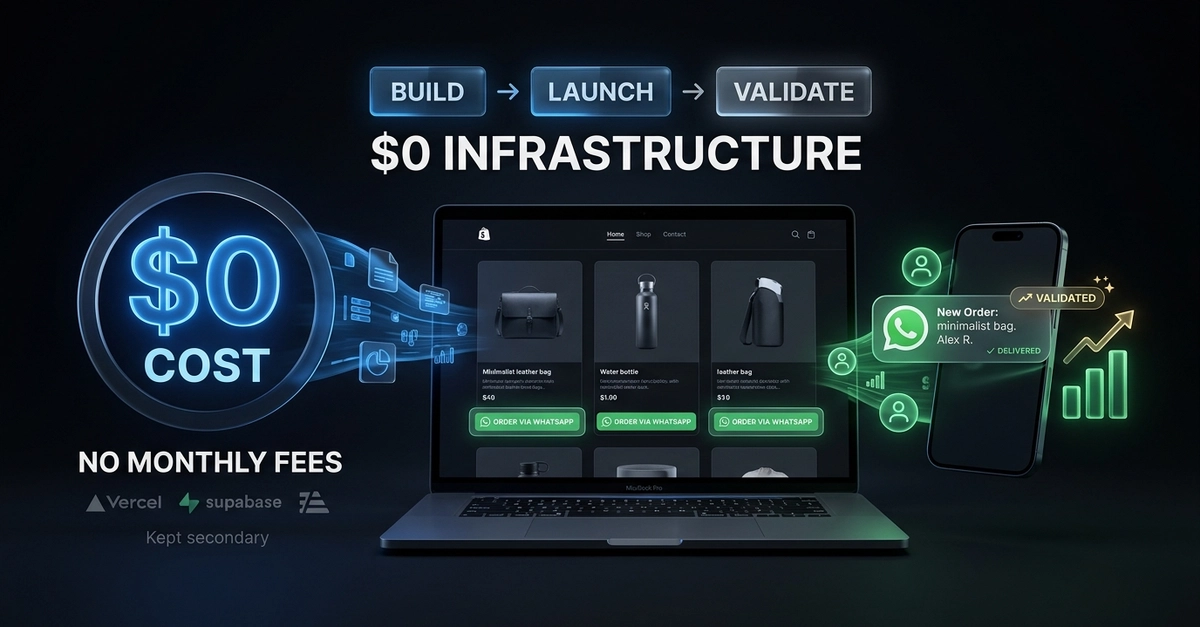
A founder approached with a clear, albeit unconventional, set of requirements for an e-commerce Minimum Viable Product (MVP): over 100 products to display, a browsing experience for customers, and the ability to place orders directly via WhatsApp. Crucially, the mandate included no online payment processing and, significantly, no monthly subscription fees typically associated with platforms like Shopify. This wasn't a call for a full-fledged e-commerce suite; it was a demand for a streamlined system focused on two core functions: showcasing products and capturing orders.
The initial temptation might be to envision a traditional e-commerce application, complete with user accounts, authentication, a shopping cart, a complex checkout process, payment gateway integration, order management systems, email notifications, robust product management, inventory tracking, and the underlying hosting infrastructure. However, a closer examination revealed that most of these features were, for this specific MVP, unnecessary overhead. The fundamental need was a direct pipeline: Products

Architecting the Minimalist Solution
To meet the $0/month requirement and the core functional needs, a combination of free-tier services and simple static site generation was employed. The product catalog was built using a static site generator, specifically Hugo, known for its speed and flexibility in creating static websites. This allowed for easy management of over 100 products, including descriptions, images, and pricing, without needing a dynamic backend or database for the catalog itself.
Each product page was designed to include a clear call to action: a button or link that would initiate a WhatsApp message. This message was pre-formatted to include the product name and quantity, streamlining the ordering process for the customer and providing immediate context to the seller. The user experience was deliberately kept simple: browse products, select what you want, and initiate an order via WhatsApp. There was no need for a persistent shopping cart state managed by cookies or server-side sessions, as the order was finalized immediately upon initiating contact.
The core of the ordering system relied on the WhatsApp Business API or, more simply for an MVP, direct WhatsApp messaging. When a customer clicked the order button on a product page, their WhatsApp application would open with a pre-populated message. The founder would then receive these messages, manually confirm the order details, and arrange payment and delivery offline. This manual intervention for order fulfillment and payment collection was key to avoiding subscription fees for payment gateways and e-commerce platforms.
The Technology Stack: Free and Flexible
The technology choices prioritized cost-effectiveness and simplicity:
- Static Site Generator: Hugo was chosen for its performance and ease of use in managing a large number of product pages. It generates plain HTML, CSS, and JavaScript files, which are incredibly lightweight and fast to load.
- Hosting: The static files were hosted on Netlify, a platform that offers a generous free tier suitable for MVPs. Netlify provides continuous deployment from a Git repository (like GitHub or GitLab), HTTPS, and global CDN delivery, all at no cost for low-traffic sites.
- Product Data Management: Product information (images, descriptions, prices) was managed in Markdown files within the Git repository. This version-controlled approach allows for easy updates and rollbacks.
- Ordering Mechanism: Deep links to WhatsApp were generated for each product, pre-filling the message content. This eliminated the need for any server-side logic or complex API integrations for order submission.
The surprising detail here is not the technology itself, but the deliberate exclusion of features commonly considered essential for e-commerce. By reframing the problem from "how to build an e-commerce site" to "how to display products and receive orders," the solution became dramatically simpler and cheaper. This approach is akin to building a physical storefront with a well-organized display and a direct line to the shopkeeper's phone, rather than a fully automated retail complex.
Scaling Beyond the MVP
While this MVP successfully met the founder's initial requirements, it laid the groundwork for future scaling. As the business grows, the static site could be replaced with a more dynamic solution, or the manual order fulfillment process could be automated. Potential next steps might include:
- Integrating a simple form submission service (like Formspree or a free tier of a CRM) to collect orders if WhatsApp proves too cumbersome for higher volumes.
- Implementing a basic inventory management system within the Git repository or a simple spreadsheet that can be parsed.
- Eventually, migrating to a more robust e-commerce platform or building a custom backend if transaction volume justifies the cost and complexity.
The success of this $0/month MVP demonstrates that for many businesses, especially in their nascent stages, the most effective path forward is to build only what is strictly necessary. This lean methodology not only saves money but also accelerates time to market, allowing founders to validate their business model with real customers before investing heavily in infrastructure.
What nobody has addressed yet is the potential for customer confusion when transitioning from this simple WhatsApp order system to a more complex, automated checkout process later on. Managing that user experience shift will be critical for retention.